Get Full Government Meeting Transcripts, Videos, & Alerts Forever!
Get email alerts on the Special Revenue Funds topic
No spam. Unsubscribe anytime.
Council hears FY26 special‑revenue budget: parking revenue, stormwater options, Prescott Park and community campus updates
Summary
Presenters reviewed parking, stormwater and other special‑revenue funds and proposed uses, including returning Hanover garage capacity, continuing stormwater monitoring and exploring a stormwater utility; staff also confirmed HUD CDBG funding for FY25.
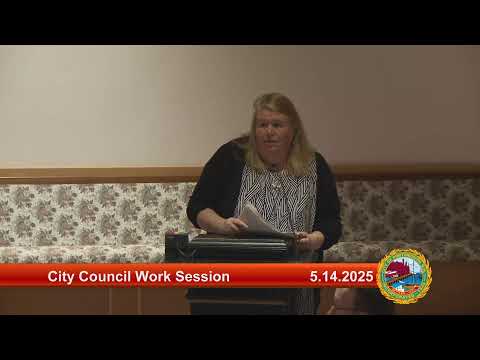
City staff presented FY26 proposals for the city’s special‑revenue accounts Wednesday, highlighting parking and transportation, stormwater, Prescott Park and the community campus — plus a one‑time confirmation of federal CDBG funding for FY25.
Ben Fletcher, parking and transportation director, told the council parking revenues fund a large share of downtown services and said returning Hanover Garage’s 300 spaces to service will materially increase available inventory. “A median household in Portsmouth actually is going to realize a nearly $500 decrease in property taxes, due to the fact that we use these outside funds to support these programs and services,” Fletcher said, describing wide uses of parking revenues that go beyond enforcement and maintenance.
Stormwater, funding and a utility study Jamie McCarty, GIS and stormwater manager, said stormwater is funded about 50% from the general fund and 50% from sewer enterprise funds for FY26, with supplemental use of fund balance planned. “Almost everything we do is driven by regulatory compliance,” McCarty said, listing inspections, catch‑basin cleanings, wet‑ and dry‑weather sampling and a street‑sweeping program that averages about seven passes per year on some streets. McCarty said the city has moved much water‑quality sampling in‑house, reducing costs from an estimated $60,000 annually to under $10,000.
McCarty also recounted the city’s 2022 feasibility work on a dedicated stormwater utility and said the issue remains under study; the Great Bay Total Nitrogen General Permit requires municipalities to consider sustainable stormwater funding. Deputy City Attorney Suzanne Woodland added that the city had delayed pursuing an ordinance while monitoring Conservation Law Foundation and EPA actions around regional permitting, and that if council wishes to proceed staff can bring materials for further sessions in early fall.
Parking inventory and revenue Fletcher said returning Hanover Garage to roughly 903 spaces (from about 600 during renovation) will help absorb parking demand displaced by private construction projects downtown and increase transient turnover capacity. He described in‑house signage work and a plan to implement recommendations from a 2025 parking utilization study. Fletcher said fiscal 2025 gross parking revenue is tracking toward about $11.3 million and that restoring Hanover capacity contributed to the FY26 budget projection of about $12.8 million.
Community campus, pools and Prescott Park Todd Henley, recreation director, said the ongoing $2.5 million community campus improvement project will add a third indoor pickleball court and other renovations, and that nonprofit tenants have signed multiyear lease extensions. Henley said the indoor pool has expanded open hours, doubled open‑swim time since hiring a full‑time lifeguard, and runs substantial Red Cross instruction programming.
CDBG confirmation Staff reported that formal HUD authorization for the FY25 Community Development Block Grant arrived the afternoon of the work session; the FY25 CDBG award is “just over $500,000,” staff said, and will fund community programs in that grant year.
Public questions and concerns Councilors asked about parking pricing, neighborhood permit programs, and whether stormwater should move to an enterprise utility model. McCarty and Woodland said much of the technical analysis from a 2022 feasibility study exists (parcel counts, impervious‑area estimates) and that implementation would likely take a year and require billing‑system changes and council policy decisions. Woodland said the city has been coordinating with EPA and the Conservation Law Foundation on regional permitting questions and would propose a timeline for council consideration after summer.
Resident comments urged caution on raising parking rates and highlighted downtown retail impacts; a resident noted that privatization of certain off‑street parking has reduced formerly available free spaces used by residents. Staff said piloted neighborhood permit and street‑sweeping programs are planned before any city‑wide rollouts.
Ending note Staff said they will continue work sessions and offer more detailed proposals if council requests further analysis on a stormwater utility, parking pricing changes or schedule adjustments for the Hanover reopening. The budget schedule remains: budget public hearing May 19, deliberation May 28 and anticipated adoption June 9.