Get Full Government Meeting Transcripts, Videos, & Alerts Forever!
Get email alerts on the Career Technical Education topic
No spam. Unsubscribe anytime.
Pleasant Valley highlights Spartan Auto Tech program; students earn college credit and paid internships
Summary
Pleasant Valley staff and students presented the district's Spartan Auto Tech career pathway, a multi-level program that awards up to 17 concurrent college credits and connects juniors and seniors to paid internships at local dealerships.
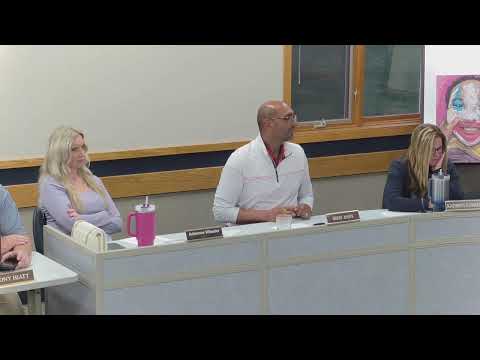
Pleasant Valley High School presented an overview of its Spartan Auto Tech program on Tuesday, outlining a multi-year career pathway that includes classroom instruction, concurrent college credit through Scott Community College and paid work-based learning with local dealerships.
Industrial-technology teacher Matt Stutenberg told the school board the program now offers a progression from a foundational semester class through junior- and senior-level capstone experiences. Juniors take brakes, steering and suspension plus a shop-safety class; seniors take two college-level automotive electrical courses at Scott Community College’s Belmont campus. The district said the combined junior- and senior-year sequence can yield about 17 college credits and an automotive service certificate from Scott Community College.
Stutenberg described hands-on learning in the high-school shop including small-engine teardown and rebuilds, welding/fabrication and “clip” cars (vehicles shortened to free shop space for focused systems work). He showed examples of donated engines and disassembled units used to teach diagnostics, measurement and reassembly. Enrollment is substantial: roughly 80 students pass through the foundational and maintenance offerings annually, according to the presentation.
The program also emphasizes employer partnerships. Stutenberg described a summer-to-senior-year internship pipeline: students work full time over the summer between junior and senior years and then continue with adjusted school schedules to work afternoons with a dealership. He said internships typically pay in the $15–$18 per hour range; some employers are also funding further training for students and paying for college-level programs. Recent graduates described moving directly into paid positions at local dealerships and shared that brand-specific training and factory schools (for brands such as BMW and Ford) are a common next step.
Board members praised the program’s integration with Scott Community College and local employers and said the work-based opportunities align with state priorities to expand career and technical education and work-based learning. No formal board action was required; the presentation was informational.
Ending: Board members said they would reference the presentation in upcoming district career-and-academic planning and that administrators will continue to cultivate employer partners and report outcomes of internships and concurrent-credit completion to the board.