Get Full Government Meeting Transcripts, Videos, & Alerts Forever!
Get email alerts on the Special Assessment Sids topic
No spam. Unsubscribe anytime.
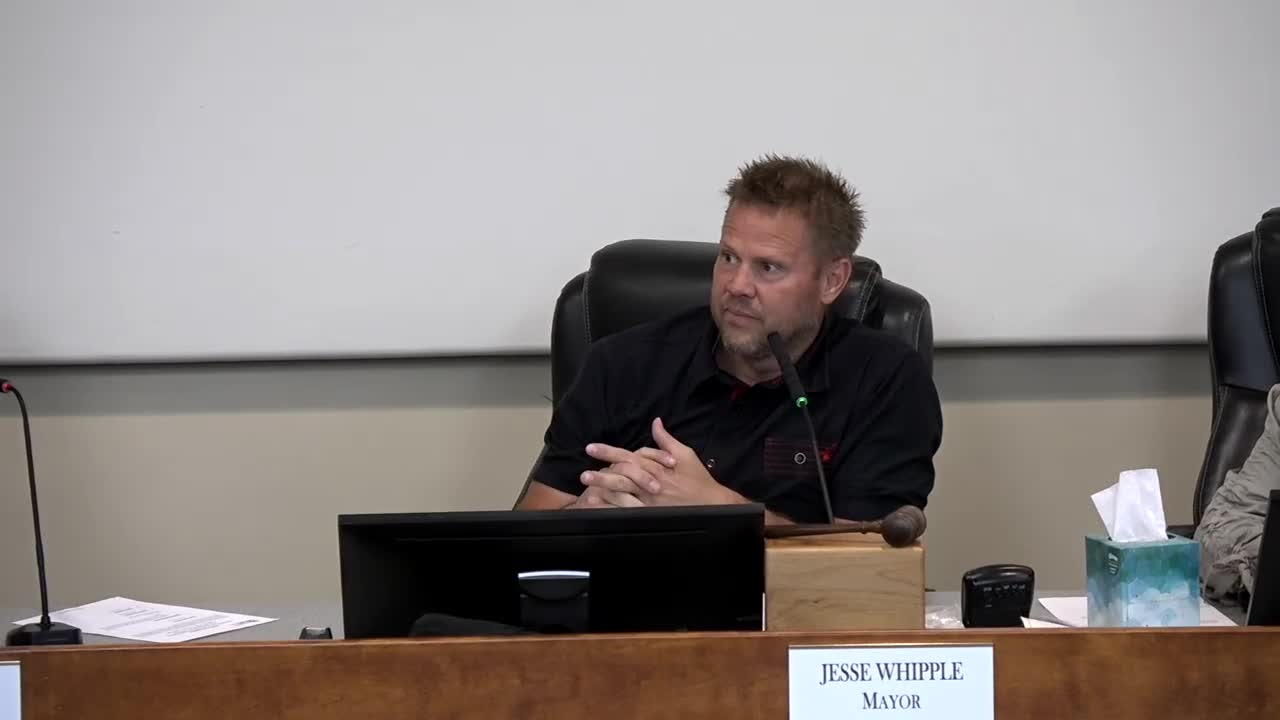
Council considers resolution R25-13 on delinquent special-assessment liens; staff says sale is procedural and rare
Summary
The council considered Resolution R25-13, a periodic report on potential sale of properties subject to delinquent special-assessment liens in the Canyon Crest and Anthem special improvement districts; staff said actual sales are uncommon and the process follows Nevada Revised Statutes procedures.
The Mesquite City Council considered Resolution R25-13, which approves a report from the finance director and city treasurer regarding potential sale of a property subject to lien for delinquent special-assessment payments in the Canyon Crest and Anthem special improvement districts.
Vicki, identified in the meeting as the finance director and city treasurer, explained the process: special-assessment payments are due in June and December, and if parcel holders do not pay the assessment the city follows a statutorily authorized process under Nevada Revised Statutes (NRS) using a third-party assessment-management firm. Vicki said that in many cases the third party contacts the parcel holder, the owner pays prior to sale, and the city has not conducted a sale in approximately 10 to 15 years.
Council members asked about outreach to owners who may live out of state or whose parcels have passed to heirs. Vicki and the assessment-management representative said the firm generally uses sanitation-account contact information and multiple notices; in a prior case council members described contacting an owner or family directly to ensure payment and avoid loss of property for modest sums.
The council then opened the item for public comment and, seeing none, moved on. The item was presented as a routine report and procedural step required by state law; staff emphasized the sale is a last resort and that the third-party firm typically secures payment before a sale is held.