Get Full Government Meeting Transcripts, Videos, & Alerts Forever!
Get email alerts on the Hb96 Transgender Provisions topic
No spam. Unsubscribe anytime.
Trans Rights Groups and Medical Providers Warn Senators Against Anti‑trans Provisions in HB96
Summary
Trans-advocacy groups, clinicians and individuals urged the Senate to remove provisions in House Bill 96 that they said would restrict gender-affirming care, disrupt youth shelters and legally codify a binary definition of sex.
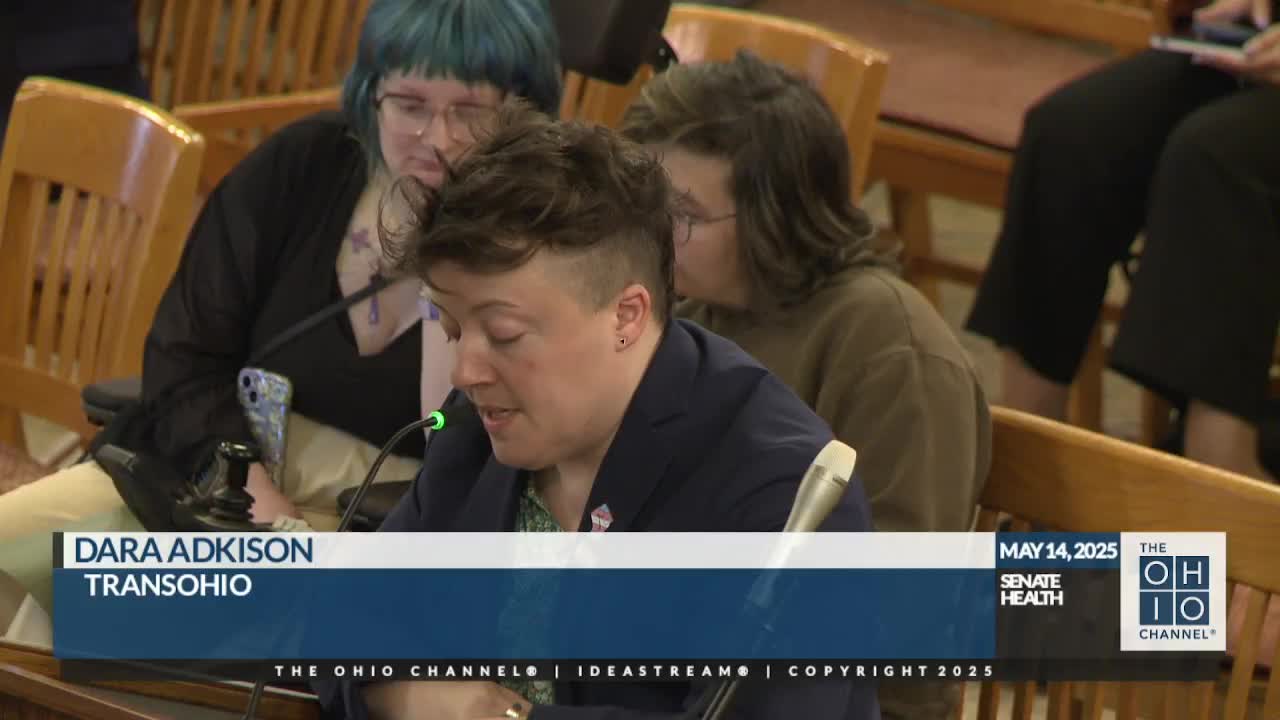
Dara Adkisson of TransOhio urged the committee to “reject sections 7 57 to 7 59 of the proposed budget” and said the language declaring “the state of Ohio to recognize two sexes” would deny the lived reality of trans, nonbinary and intersex people and invite legal challenges.
Health professionals and parents described specific clauses they said would harm patients. Catherine LaPree, a nurse practitioner who said she provides LGBTQIA+ primary care including gender medicine, said sections 333.13 and 9.05 would “disrupt not only the role of providers in offering evidence based care but also obstruct patients and parental rights in shared decision making.” She cited guidance from the American Psychological Association opposing bans on gender-affirming care.
Advocates warned of immediate, concrete harms. Evelyn Hulbert, a transgender woman who testified for Trans Unity Coalition, said provisions that force youth shelters to refuse gender-affirming supports would “force [shelters] to refuse to help trans children and force them back to their abusers.” Cookie Dixon said bluntly, “This will kill trans youth,” citing elevated suicide and violence risks when supportive services are removed.
Witnesses also opposed a House-added provision that would ban menstrual products in men’s restrooms of public buildings; advocates said that would block access to needed supplies for transgender men, fathers and people assisting children or disabled partners.
TransOhio and other groups noted pending federal litigation over similar executive‑order language and warned the committee it could invite state-level legal challenges. Multiple witnesses asked the Senate either to strike the anti‑trans sections from the budget or to remove the contested language before final passage.
The committee did not take votes on these provisions during the hearing. Advocates urged senators to consider public‑health guidance from professional organizations and the legal risk of enacting provisions they said would reduce access to care and shelter for vulnerable youth.