Get Full Government Meeting Transcripts, Videos, & Alerts Forever!
Get email alerts on the Child Welfare Placement Crisis topic
No spam. Unsubscribe anytime.
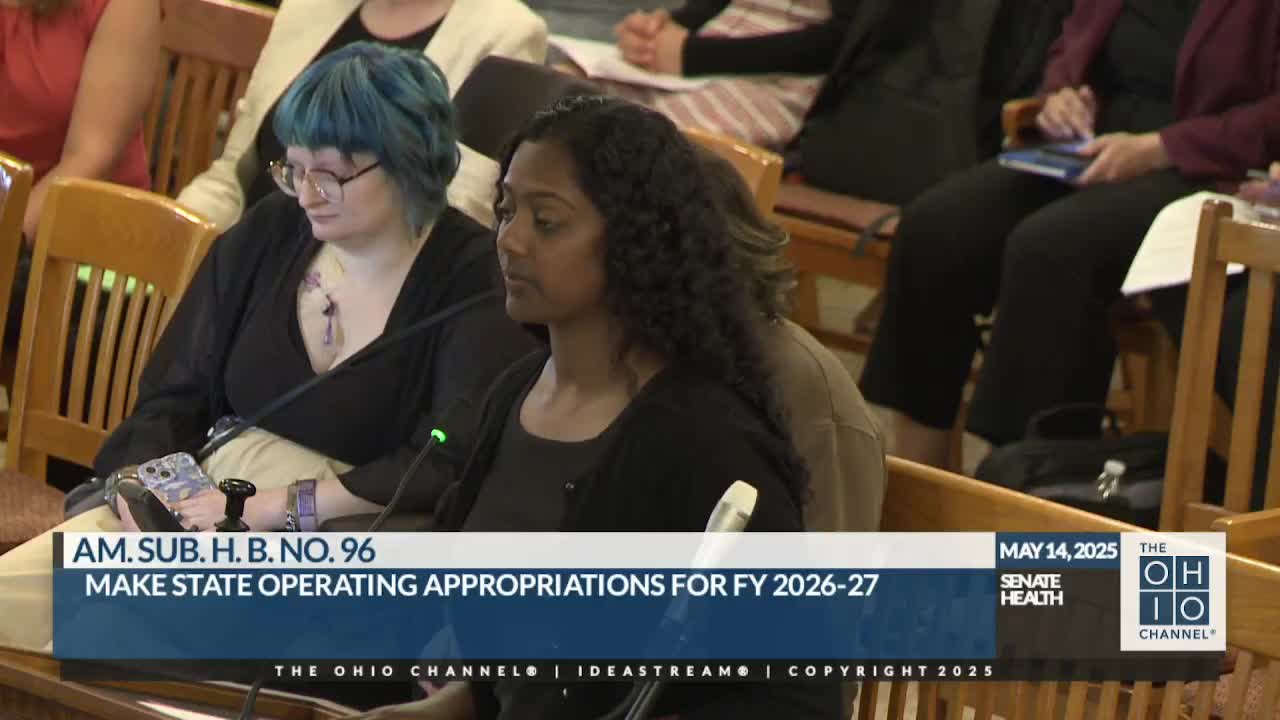
County Leaders, Providers Tell Senate Health Panel the State Must Address Child-Placement Crisis
Summary
County commissioners, child-welfare providers and the Public Children Services Association urged the Senate to preserve funding and policy changes in HB96 to address a statewide placement and treatment capacity crisis for children in custody.
Jack Everson, representing the County Commissioners Association of Ohio, told senators counties are facing “a statewide crisis in our child welfare system” driven not by the number of children in care but by the increased complexity of needs and sharply rising placement costs.
“Placement costs have increased all across the settings and now have outpaced inflation,” Everson said, citing a 68% increase in room-and-board costs over five years and higher per-diem charges for foster, group and residential placements.
Christina Massey, executive vice president of Buckeye Ranch, told the committee that Ohio is one of nine states with county-run child welfare systems and warned that the foster care rate-card language in HB96, which would give DCY authority to standardize rates, “fails to address the real cost drivers” including staffing shortages, liability insurance and county-specific regulatory costs. Massey asked the Senate to replace the rate-card provision with a legislator-led study committee (amendment SC0716) so the state can analyze cost reports and design data-driven solutions.
Angela Sasse of the Public Children Services Association of Ohio said House Bill 96 includes one-time funding to establish regional short-term crisis stabilization centers (referred to as Child Wellness Campuses). She told the committee those centers would prevent children from spending nights at county agencies when no placement is available and would provide assessments and stabilization while counties seek appropriate placements.
Jeremy Ratcliffe, a local director, said county agencies “cannot say no” to ordered custody placements and are seeing extreme variation in provider per-diem rates for comparable services. He gave examples in which similar staffing levels produced widely different charges in different counties. Ratcliffe supported the bill’s proposed policy changes to bring consistency and transparency to placement rates while urging careful implementation.
Senators and witnesses discussed funding levels in the house-passed budget and the governor’s proposal. Jack Everson thanked the administration for proposed increases and asked that the Senate maintain the house’s placements and administrative funding, saying earlier investments would help counties and PCSAs respond to placement needs.
No committee vote occurred during the hearing. Witnesses urged the Senate to preserve or restore proposed funds for regional crisis stabilization, maintain the state–county partnership on placement costs, and adopt a deliberative approach to rate standardization that accounts for local cost drivers.