Get Full Government Meeting Transcripts, Videos, & Alerts Forever!
Get email alerts on the Gender Policy Hb96 topic
No spam. Unsubscribe anytime.
Trans advocates, clinicians and families oppose gender-related language and shelter restrictions in HB 96
Summary
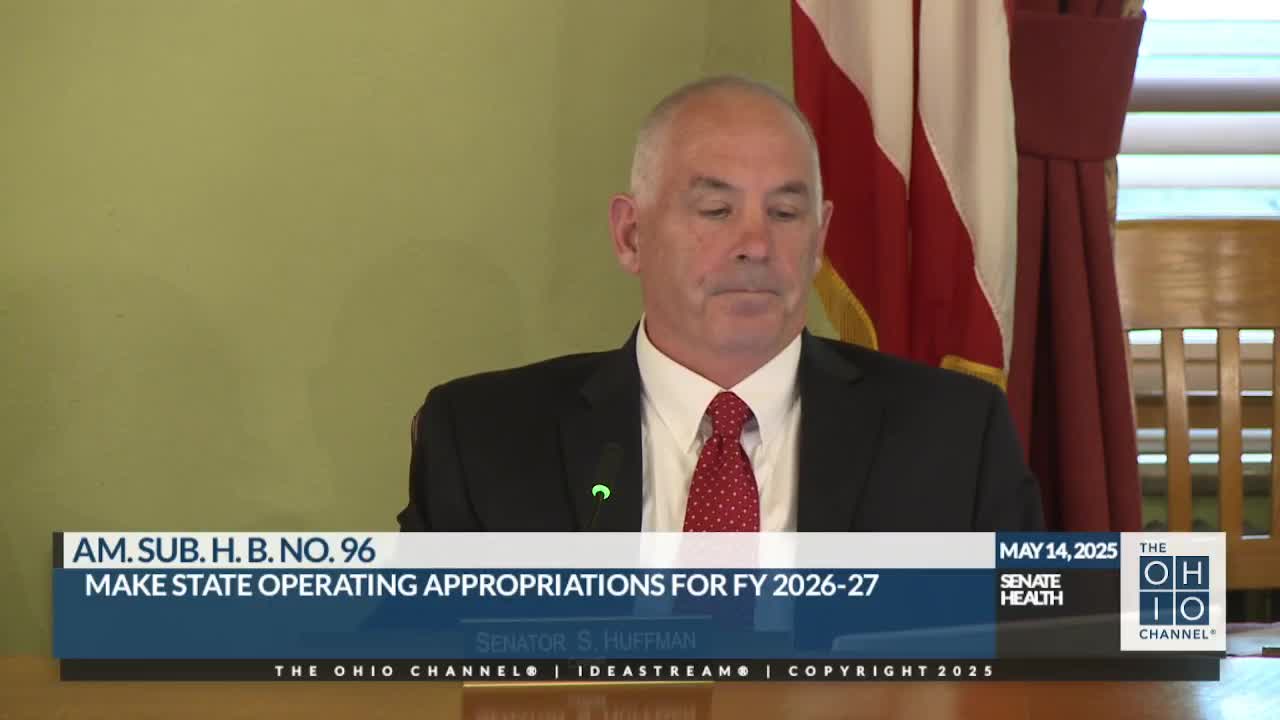
Multiple witnesses — including TransOhio, clinicians, parents and people with lived experience — testified against provisions in the House version of HB 96 that would define sex as binary, restrict gender-affirming care in certain settings, and limit services for trans youth at shelters.
A wide range of witnesses — including clinicians, parents, transgender advocacy organizations and people with lived experience — urged the Senate Health Committee to remove or revise several provisions in House Bill 96 that they said would harm transgender, nonbinary and intersex Ohioans.
What is in dispute: Witnesses opposed provisions described in testimony as sections 7.57–7.59, a policy provision (cited by witnesses as section 9.05) declaring the state recognizes only two sexes, and language that would restrict funding or services that "promote or affirm" social gender transition in some mental health or youth shelter settings. Witnesses also objected to a separate House provision banning menstrual products from men’s restrooms in public buildings.
Clinical and legal arguments: Catherine LaPree, a nurse practitioner who provides LGBTQIA+ primary care, cited the American Psychological Association’s February 2024 guidance and said state bans on gender-affirming care "disrupt the role of providers in offering evidence-based care" and "obstruct patients and parental rights in shared decision making." Dara Adkisson of TransOhio and other witnesses warned that the provisions are inconsistent with established medical and legal practice and could invite litigation; Adkisson cited the U.S. Supreme Court's Bostock decision in testimony.
Personal testimony: Several trans Ohioans and family members testified about personal harm. Evelyn Hulbert and other speakers described histories of abuse and the life-saving effect of gender-affirming care. Geraldine (Geri) Hartman, a transgender woman and SSDI recipient, asked senators to remove the language that would erase trans and intersex people from legal recognition.
Youth shelters and menstrual-product rule: Trans advocates said the youth-shelter language could force shelters to refuse to help gender-diverse youth or to send them back to unsafe homes. Multiple witnesses called the menstrual-product prohibition in men’s restrooms an unnecessary and stigmatizing measure.
What witnesses asked: Remove the cited sections from HB 96, preserve access to evidence-based gender-affirming care, and retain funding for organizations serving trans youth. Many witnesses warned the provisions would have immediate consequences for health and safety; several said passage would invite legal challenges.
Ending: Testimony included clinical citations and personal narratives; there was no committee vote during the hearing. Witnesses urged Senate consideration during budget negotiations to protect services and clarify that the budget should not be used to adopt contested social-policy language.