Get Full Government Meeting Transcripts, Videos, & Alerts Forever!
Get email alerts on the Transgender Rights topic
No spam. Unsubscribe anytime.
Transgender advocates tell Senate HB96 provisions would harm youth and erase identities
Summary
Multiple transgender advocacy groups and medical professionals opposed provisions in House Bill 96 that would define sex as binary, restrict gender‑affirming care in certain settings, and limit youth‑shelter services, urging the Senate to strike the language.
A coalition of transgender advocates, medical professionals and affected Ohioans urged the Senate Health Committee to strike several provisions added to House Bill 96 that testified speakers said would erase transgender, non‑binary and intersex Ohioans and restrict services.
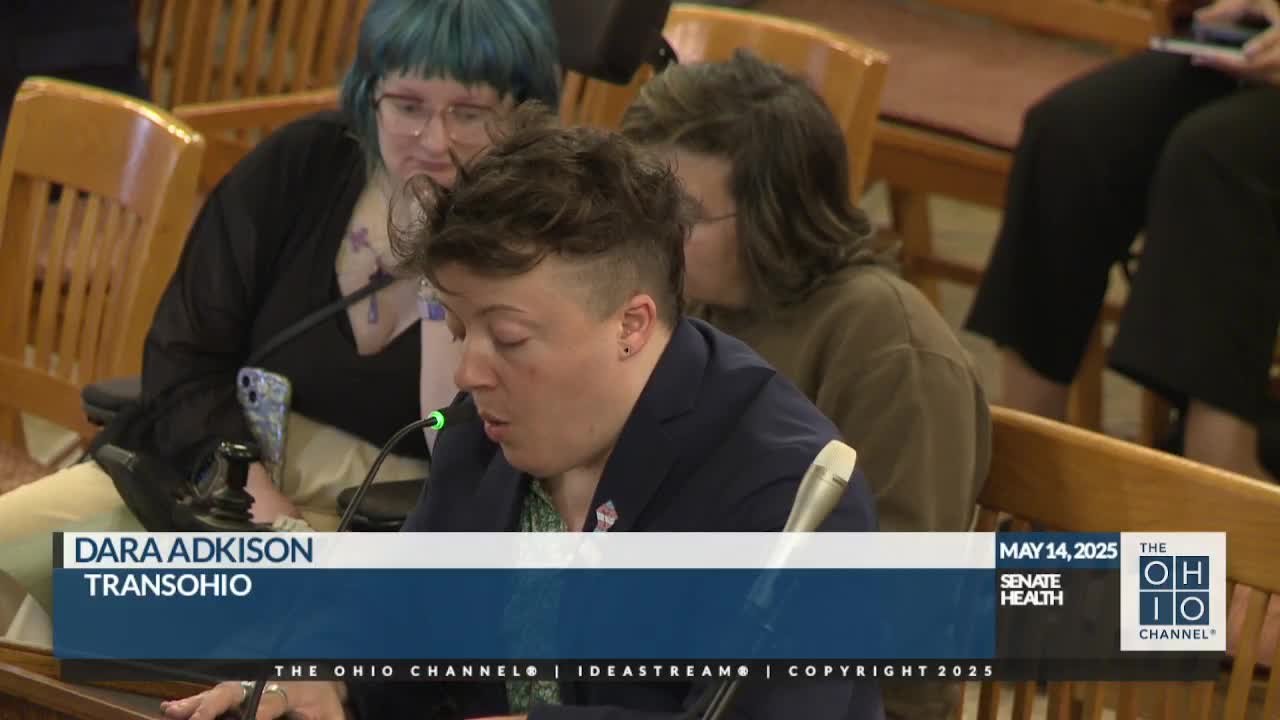
Dara Adkisson of TransOhio, Evelyn Hulbert and Bree Taylor of Trans Unity Coalition, and others testified against provisions they identified by section numbers (testimony listed 7.57–7.59 and related paragraphs) that would declare Ohio policy to recognize only two sexes, prohibit funds for services that “promote or affirm social gender transition” and restrict youth shelters and mental‑health facilities from providing gender‑affirming care.
Catherine LaPree, a nurse practitioner and mother of a transgender daughter, cited the American Psychological Association’s February 2024 guidance and said bans on gender‑affirming care interfere with evidence‑based practice and parental decision‑making. “Bans on gender affirming care… are contrary to evidence based health care,” LaPree told the committee.
Trans advocates described personal experiences of family rejection, homelessness and suicide risk among trans youth, and warned the provisions would force shelters to choose between serving trans youth or risking funding — a choice advocates said would increase harms and deaths. Speakers also criticized a House provision that would bar menstrual products from men’s restrooms as impractical and discriminatory.
Why it matters: Witnesses said the language threatens access to health care, shelters and legal recognition for an identifiable minority and could invite legal challenges. Several speakers said the language conflicts with mainstream medical associations’ guidance and would harm vulnerable youth.
No committee actions were reported on these provisions during the hearing.