Get Full Government Meeting Transcripts, Videos, & Alerts Forever!
Get email alerts on the Civil Rights Transgender topic
No spam. Unsubscribe anytime.
Dozens tell Senate Health Committee HB 96 provisions on gender identity would harm trans youth and adults
Summary
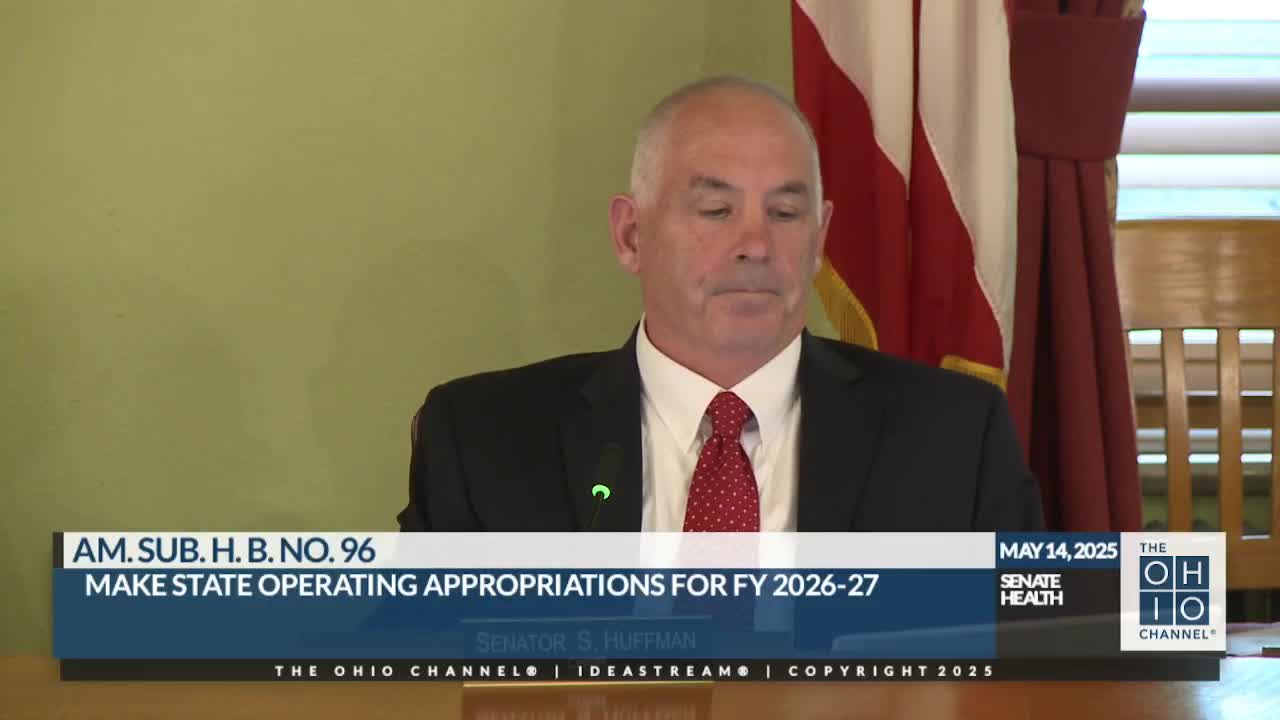
Clinicians, trans-led groups and transgender Ohioans told the Senate Health Committee that multiple provisions added to the House-passed HB 96 defining sex and limiting gender-affirming care would cause harm to youth and adults and should be removed or debated separately from the budget bill.
A string of witnesses—health-care providers, trans-led groups and people with lived experience—told the Senate Health Committee that several provisions added to the House-passed version of House Bill 96 would harm transgender, non‑binary and intersex Ohioans and would disrupt health and safety services.
Catherine Lacree, a nurse practitioner who said she provides LGBTQIA+ primary care including gender medicine, told the committee she opposed sections 333.13 and 9.05 of HB 96. She said the American Psychological Association’s February 2024 statement shows that "bans on gender-affirming care disrupt not only the role of providers in offering evidence based care but also obstruct patients and parental rights in shared decision making." Lacree warned the provisions "have nothing to do with the budget" and said peer‑reviewed research contradicts the bill’s binary framing.
Dara Adkisson, with TransOhio, urged the committee to reject sections 7.57 to 7.59 that witnesses said declare Ohio’s policy to recognize only two immutable sexes. Adkisson said the language is “not only factually incorrect, it is inherently dangerous,” and noted pending federal litigation over similar language contained in a prior executive order.
Evelyn Hulbert and members of the Trans Unity Coalition described harms they said would flow from provisions that limit youth shelters and mental-health care for trans youth. Hulbert said bans on gender-affirming care for youth “are a death sentence,” linking untreated gender dysphoria with elevated suicide risk. Multiple witnesses said language prohibiting menstrual products in men’s restrooms would disadvantage transgender men and other people who may need those supplies.
Several witnesses argued the budget bill is not the correct vehicle to enact the measures and urged senators to strike the provisions or reject House changes. The committee heard personal testimony from Ohioans who said the measures would erase legal recognition and access to care; several witnesses referenced national medical association positions and court decisions (for example, Bostock) in support of their arguments.
The committee did not take immediate action on the provisions during the hearing; testimony was offered as part of the HB 96 budget review.