Get Full Government Meeting Transcripts, Videos, & Alerts Forever!
Get email alerts on the Childcare Preschool topic
No spam. Unsubscribe anytime.
Early childhood advocates push Senate to expand childcare eligibility and preserve preschool supports in HB96
Summary
Advocates from Pre for CLE, Future Ready 5 and the Children's Defense Fund urged the Senate to restore childcare eligibility expansions, preserve Child Care Choice vouchers and retain mandatory use of the Kindergarten Readiness Assessment for districts.
Representatives of Pre for CLE, Future Ready 5 and the Children's Defense Fund told the Senate Health Committee that Ohio must expand publicly funded child care eligibility and sustain investments in high‑quality preschool to improve kindergarten readiness and long‑term outcomes.
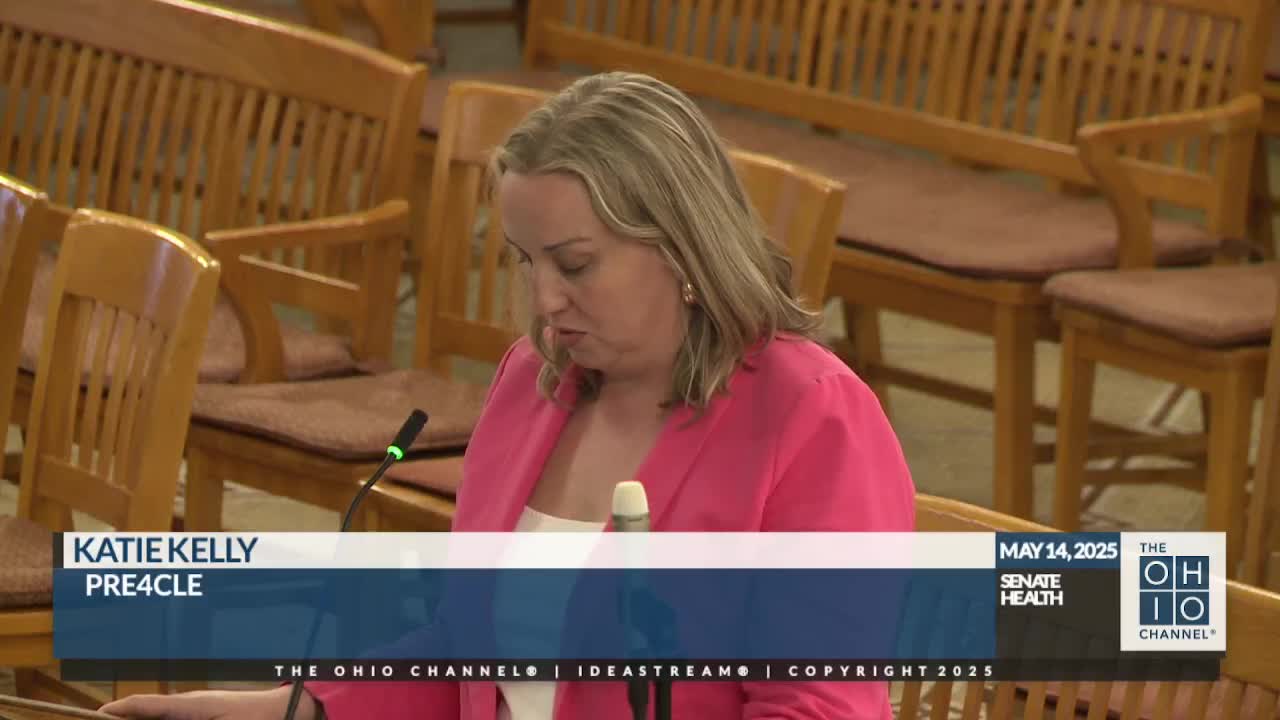
Katie Kelly of Pre for CLE outlined a decade of local work in Cleveland that increased access to high‑quality preschool from about 25% to over 50% of preschool‑aged children in the city and said children who attend high‑quality Pre for CLE programs enter kindergarten roughly 20 percentage points better prepared than peers who do not. She urged the Senate to restore the House‑passed proposal to expand initial eligibility for publicly funded child care to 160% of the federal poverty level and to return $25 million the House removed from Child Care Choice vouchers.
Mario Basura of Future Ready 5 asked for a $2 million amendment to scale a kindergarten readiness program that aligns preschool assessments to the kindergarten readiness assessment (KRA). Basura said students in their program increased literacy assessment scores by 77% in three months in one cohort and asked for state funding to grow from 500 to 2,000 children.
The Children's Defense Fund emphasized that Ohio’s eligibility for publicly funded child care is among the lowest in the nation and asked the Senate to increase initial eligibility up to 300% of the federal poverty line to reduce family costs and support workforce participation.
Why it matters: Witnesses framed early childhood investment as both a child‑development and economic policy issue: better early learning improves later academic outcomes and supports parental employment. They asked the Senate to restore House or governor proposals that expand eligibility and funding for vouchers and preschool supports.
No committee votes were recorded on these requests.