Get Full Government Meeting Transcripts, Videos, & Alerts Forever!
Get email alerts on the School Finance topic
No spam. Unsubscribe anytime.
School treasurers and analysts tell Senate cap on carryover would destabilize districts; experts urge tailored policies
Summary
Economists, superintendents and treasurers warned the Senate Education Committee that a proposed 30% cash‑balance cap and rollback provision could force rollbacks, reduce bond ratings and disrupt school planning; experts recommended locally set minimums/maximums or policy alternatives.
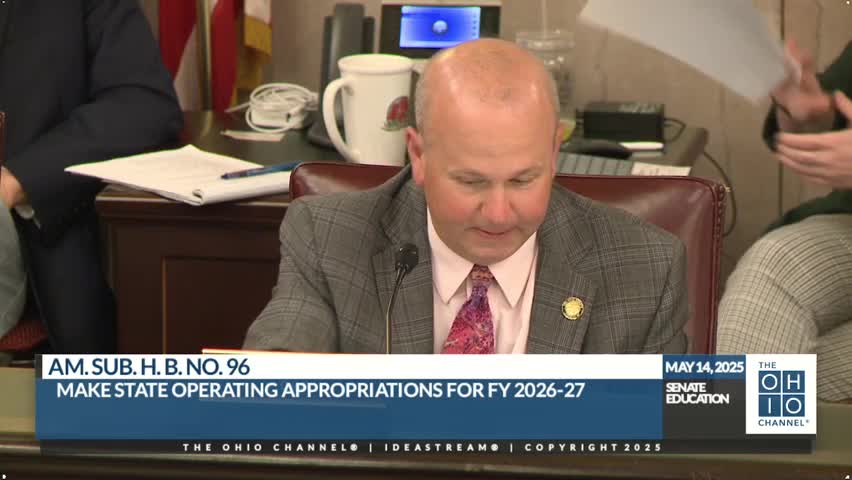
A proposed change in the state budget to cap school district cash balances at 30 percent drew sustained pushback Tuesday from analysts and district leaders, who told the Senate Education Committee the rule could destabilize finances and force unintended consequences.
“In more than 30 years of school‑finance work in Ohio this is the single most problematic policy proposal I’ve ever seen,” Howard Fleeter, a consultant to the Ohio Education Policy Institute, told the panel. Fleeter said a July analysis found 478 districts were above a 30 percent threshold and that $3.73 billion could be at risk of rollback by county budget commissions.
Fleeter and multiple treasurers and superintendents said the cash balance varies by district for legitimate reasons — levy cycles, timing of property tax collections, capital projects and local policy — and a single statewide percentage would be a blunt instrument. Fleeter warned the cap could lower districts’ bond ratings, prompt more levies on local ballots and increase the numbers of districts eligible for fiscal watch or emergency in following years.
“Where you are in the levy cycle matters,” Fleeter said, noting some districts receive major property tax payments that span two fiscal years; capping balances on June 30 could trigger reductions whose effect would not be felt until collections 18 months later. Streetsboro’s treasurer, Brian Haynes, told the committee the cap would create confusion for budgeting and weaken predictability.
Several witnesses recommended alternatives. Katie Johnson of the Ohio Association of School Business Officials and other finance officers proposed requiring districts to adopt transparent local reserve policies — minimums and maximums tied to documented plans — and to submit action plans if their balances move outside those locally adopted ranges. Warren Local CFO Melcy Wells and other rural district leaders said a higher percentage, such as 50 percent, might be appropriate in some places, but they favored local discretion.
Committee members asked whether any single percentage could work statewide. Fleeter replied that no single number fits every district but endorsed the concept of meaningful floor and ceiling policies set locally and accompanied by required action plans and greater transparency.
The debate unfolded as members also considered how to implement the Fair School Funding Plan. Analysts told the committee fully funding the formula and updating cost inputs is essential for long‑term stability; they urged lawmakers not to update only property and income data without adjusting the base cost inputs that define state and local shares.
No committee vote on the cash‑balance language occurred during the hearing; the budget debate continues. Advocates asked senators to remove the 30 percent cap or replace it with a policy that requires local reserve policies and state review, rather than an across‑the‑board rollback mechanism.