Get Full Government Meeting Transcripts, Videos, & Alerts Forever!
Get email alerts on the H2ohio topic
No spam. Unsubscribe anytime.
Lawmakers Hear Wide Support to Restore H2Ohio Wetlands and Water‑quality Funding
Summary
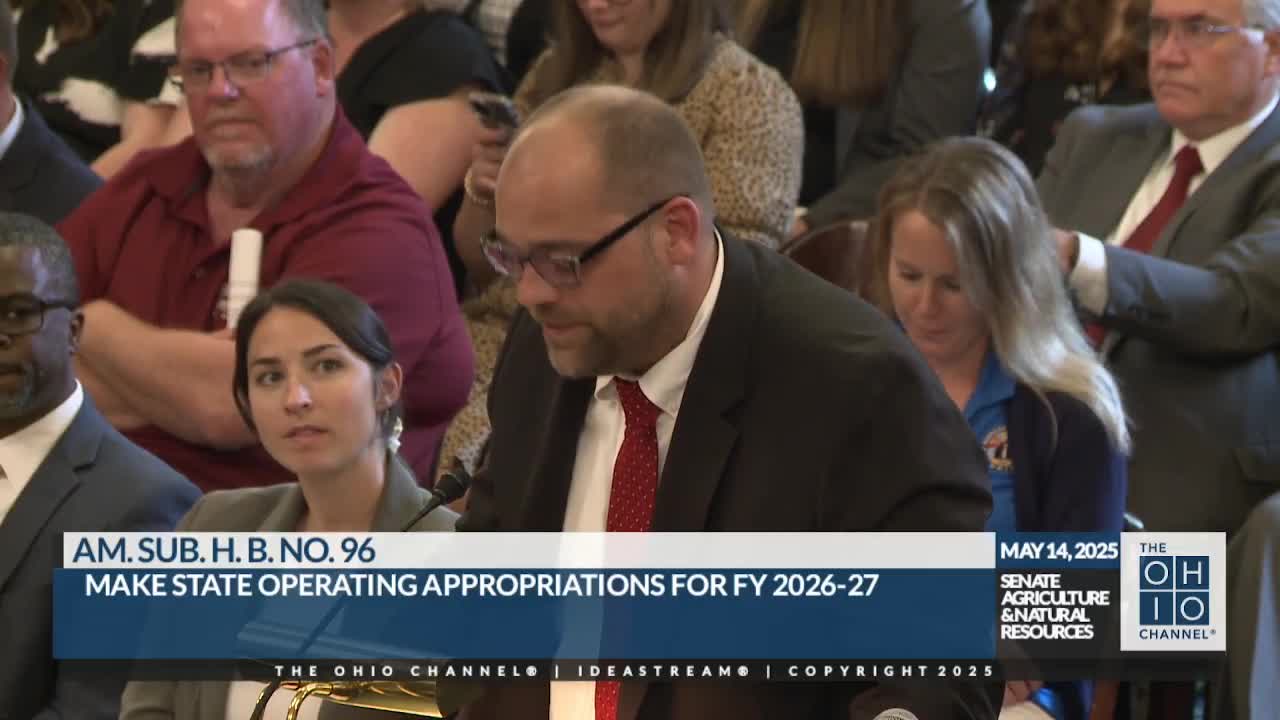
Scientists, conservation groups, farmers and local officials urged the Senate Agriculture and Natural Resources Committee to restore the H2Ohio budget to the administration's original proposal so wetland restorations, farm conservation and other projects can continue.
Supporters of Ohio's H2Ohio water‑quality program told the Senate Agriculture and Natural Resources Committee that cutting the program's funding would imperil ongoing wetland restorations, conservation practices and related research. Testimony emphasized that the program's results take multiple years to develop and that funding uncertainty slows work and discourages landowner participation.
Why it matters: H2Ohio funds a mix of wetland construction, farm conservation incentives and local infrastructure projects aimed at reducing nutrient runoff that fuels harmful algal blooms, including in Lake Erie and Grand Lake St. Marys. Witnesses said the program leverages federal and private funds and supports a conservation delivery network across the state.
Several speakers described technical and economic reasons the program needs sustained support. Dr. Steven Jackman, professor of water quality at Wright State Lake Campus, told the committee that wetlands and other conservation practices have produced measurable improvements at Grand Lake St. Marys but that those projects require years of permitting, construction and recovery before full benefits appear. "Water quality can be improved and real benefits can be realized," Jackman said. Theresa Dirkson, Mercer County Agricultural Natural Resources Director, likewise told the committee that wetland projects and conservation ditches take years to design, permit and perform and requested restoring the H2Ohio appropriation to $270 million.
Researchers called for continuing the monitoring work that evaluates projects. Dr. Lauren Kinsman Costello of Kent State University, who leads the H2Ohio wetlands monitoring program, said her team needs multiyear datasets to judge nutrient removal at restored wetlands. "A bare minimum of three years, usually more, is necessary to adequately assess nutrient removal in wetlands," she said, noting dry weather in recent seasons has limited what monitoring can yet demonstrate.
Conservation and agricultural groups also urged restoration of the program's funding levels. Bob Midden of Bowling Green State University's Great Lakes center and representatives of Ducks Unlimited, the Nature Conservancy, Ohio Farm Bureau and the Ohio Conservation Federation described wetlands as a high‑value option to remove phosphorus and called the program an effective generator of public‑private leverage. Jim Samuel of the Ohio Water Partnership said H2Ohio is "one of the most comprehensive and forward‑looking water quality initiatives in state history."
Farmers and farmer organizations told the committee H2Ohio encouraged participation and innovation on farms. Jeff Dooling, chair of the Ohio Agricultural Conservation Initiative, said 3,200 farmers have enrolled and 2.2 million acres have been involved in the Western Lake Erie Basin portion of the program; cuts would reduce enrollment and acres covered, he warned. Growers and cooperatives added that uncertainty over cost‑share availability discourages adoption of practices such as cover crops and subsurface manure application.
Program design and land protection: Several witnesses asked the Senate to preserve H2Ohio's ability to use funds for strategic land acquisitions and conservation easements. The Nature Conservancy and Ducks Unlimited told the committee that acquisitions and easements secure permanent conservation benefits and help leverage federal and private funding.
What the committee heard about scale and timing: Scientists and ODNR partners described H2Ohio projects ranging from a few acres to larger coastal restorations. Because wetlands are biogeochemical "hot spots," they said, a relatively small area can have outsized nutrient‑removal benefits when properly sited.
Next steps: Multiple witnesses asked the Senate to restore H2Ohio funding to the amounts in the executive budget and to maintain coordinated funding across ODNR, the Ohio Department of Agriculture and Ohio EPA so agencies can continue projects, monitoring and leveraging of federal funds.