Get Full Government Meeting Transcripts, Videos, & Alerts Forever!
Get email alerts on the H2ohio Wetlands topic
No spam. Unsubscribe anytime.
Speakers urge Senate to restore H2Ohio funding for wetlands, water-quality work
Summary
Scientists, farmers and conservation groups told the Ohio Senate Agriculture and Natural Resources Committee that the state's H2Ohio program and related ODNR wetland projects need the originally proposed $270 million to sustain wetland restoration, nutrient-reduction work and long-term monitoring.
Dozens of scientists, agricultural leaders and conservation groups testified to the Ohio Senate Agriculture and Natural Resources Committee urging restoration of the H2Ohio appropriation and sustained funding for wetland restoration and monitoring. They said short-term cuts would undercut long-term progress in reducing nutrient runoff that drives harmful algal blooms in Lake Erie and other Ohio waters.
Dr. Steven Jackman, professor of water quality at Wright State Lake Campus, said H2Ohio-backed wetland and conservation projects have improved local water quality in Grand Lake St. Marys and elsewhere but remain early in their timelines. "Water quality can be improved and real benefits can be realized," Jackman said, adding that wetlands and other conservation practices require years to design, permit and mature before they deliver full benefits.
Testimony from Theresa Dirkson, Mercer County agricultural and natural resources director, and researchers at Ohio State and Heidelberg University emphasized that wetland construction and conservation practices need steady, predictable funding. Dirkson told senators that wetlands constructed under H2Ohio "are processing water to remove nutrients and improve water quality," and noted construction and permitting are multi-year efforts.
Researchers leading the H2Ohio wetlands monitoring program at universities said monitoring requires multi-year datasets to show outcomes. Dr. Lauren Kinsman Costello of Kent State, who coordinates the monitoring effort, said that new wetlands need time to establish and that dry years can complicate short-term assessments: "A bare minimum of three years, usually more, is necessary to adequately assess nutrient removal in wetlands." She said sustained investment in monitoring will help target the most cost-effective projects.
Conservation organizations including Ducks Unlimited, the Nature Conservancy and local watershed groups described how H2Ohio grants leverage federal dollars and private funds to deliver land protection, wetland restoration and habitat work. Jim Samuel of the Ohio Water Partnership and representatives of Ducks Unlimited said the program attracts matching funds and generates local jobs and recreation benefits.
Several ag-sector witnesses and farm-conservation partnerships said farmers are participating in H2Ohio at scale: the Ohio Farm Bureau and the Ohio Agricultural Conservation Initiative reported thousands of farmers and more than two million acres enrolled, and said cuts would reduce the number of participating operations and acres.
Speakers urged the committee to restore the governor's requested H2Ohio level ($270 million) and to allow funds to be used for land acquisition or easements where appropriate so investments remain protected. They emphasized that wetlands are strategic, high-return investments that act as "kidneys" for the landscape and that cutting funds now would slow momentum and reduce federal matching opportunities.
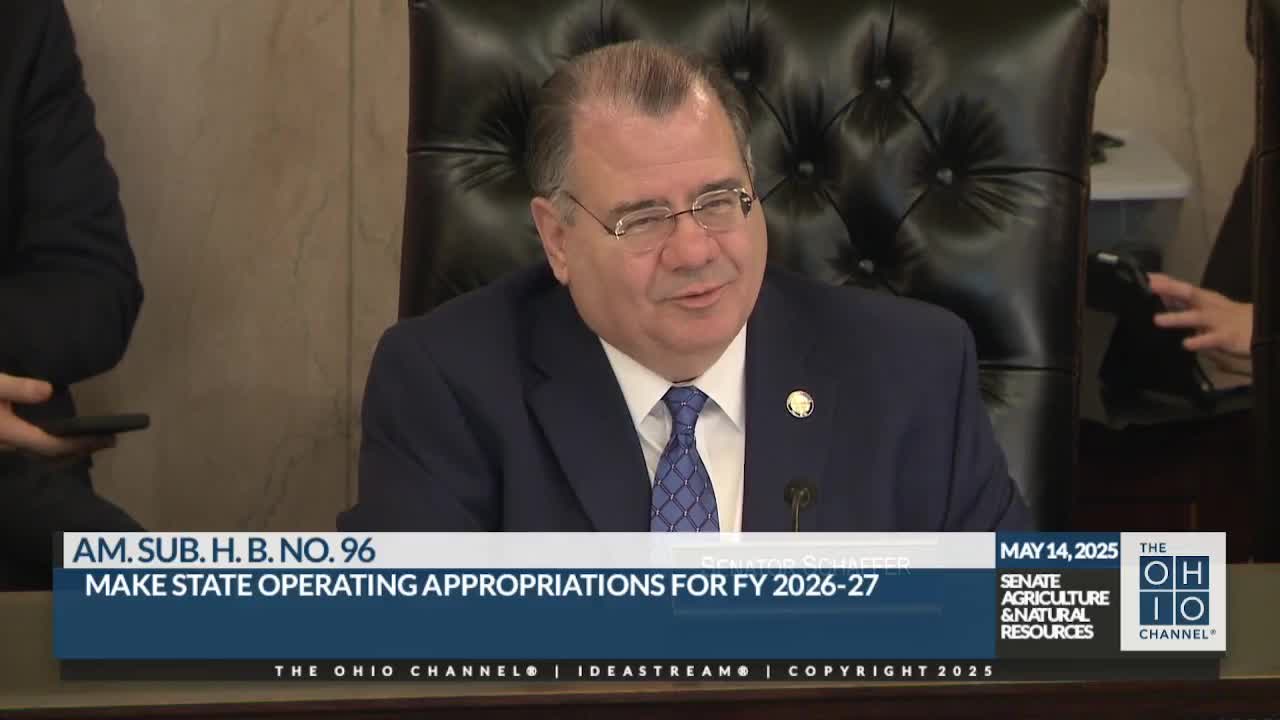
The committee did not vote on funding during the hearing; witnesses were providing proponent and interested-party testimony on the operating budget language.
Ending: Advocates asked senators to maintain the H2Ohio commitment while directing oversight and continued scientific monitoring to ensure the projects deliver measurable nutrient reductions over multiple years.