Get Full Government Meeting Transcripts, Videos, & Alerts Forever!
Get email alerts on the Sheriff Budget Staffing topic
No spam. Unsubscribe anytime.
Sheriff presents $15.6 million FY26 budget, requests deputies and detention nursing amid staffing and airport coverage concerns
Summary
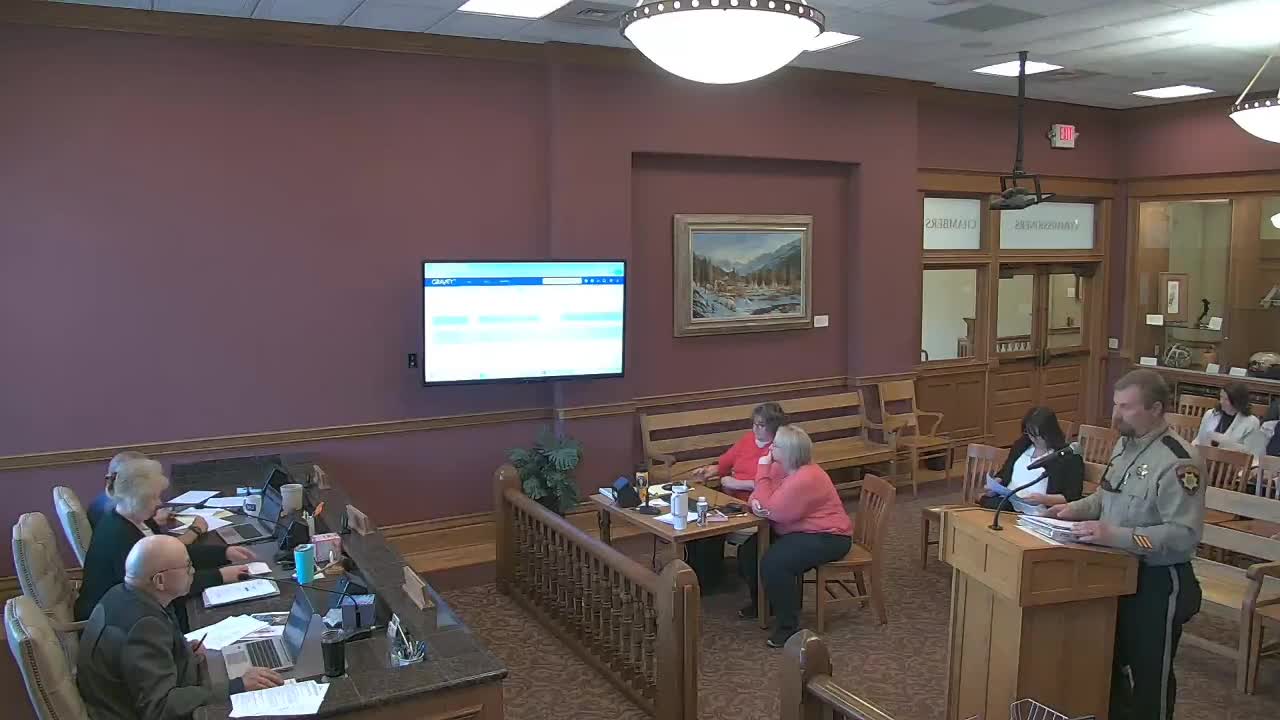
Sheriff Brian Hino told the Flathead County Commission on Wednesday the sheriff’s office is proposing a roughly $15.6 million operating budget for fiscal 2026 and asked commissioners to consider new positions and equipment to address rising call volume, detention needs and specialized capabilities.
Sheriff Brian Hino told the Flathead County Commission on Wednesday the sheriff’s office is proposing a roughly $15.6 million operating budget for fiscal 2026 and asked commissioners to consider new positions and equipment to address rising call volume, detention needs and specialized capabilities.
The sheriff said the proposed budget—about $300,000 higher than last year’s revenue—includes requests for additional sworn positions, a third full‑time nurse for the county jail, continued vehicle purchases and investments in drones, canine teams and radio programming. He also raised a separate staffing question about security at the county airport that he said may require a multi‑person, paid law‑enforcement presence to meet federal screening requirements.
Why it matters: The sheriff argued the additions are tied to population growth, more complex investigations and rising detention and medical costs. Commissioners must weigh new personnel and equipment requests against uncertain state funding changes and competing county priorities.
Hino said the office’s 2026 budgeted revenue is about $15,600,000, compared with roughly $15,300,000 in actual receipts last year. “Staffing is about 10,300,000 of the budget,” Hino said, and then gave a staffing breakdown: “64 sworn deputies, 39 detention officers, 2 nurses…civilian staff at 18.” He said personal services account for the bulk of the budget and noted a 2.59% overall budget increase, including a 1% cost‑of‑living adjustment.
Equipment and capital: Hino told commissioners the sheriff’s office plans about $1.4 million in CIP transfers and purchases this year, with $829,006.65 identified for patrol vehicles. He also described planned purchases and maintenance costs: rifles and standardizing handguns to reduce ammunition complexity, continued acquisition and maintenance of drones and an ongoing replacement/upgrade schedule for radios. On drones, he said the office budgeted about $13,000 and described a mix of smaller interior drones (about $1,100–$1,200) and larger, infrared‑capable platforms.
Canine program and costs: Hino said the department currently has five certified patrol canines and that the initial purchase price for a trained canine is about $26,000, most often paid by private foundations rather than the county. He outlined recurring training and travel expenses and described cost estimates discussed internally: “We have $10,000 for travel for out‑of‑state certifications. We have $7,000 for the training portion,” he said. Estimates of annual per‑dog costs discussed during the meeting varied in the presentation due to donated services and differing line‑item treatments.
Detention medical staffing: Jennifer Wright, detention commander, said the jail currently has two full‑time nurses and does not provide seven‑day coverage. Wright said detention staff must cover medical administration when nurses are not on duty and called that practice a “huge liability.” Wright requested a third full‑time nurse so the jail can provide seven‑day nursing coverage. The sheriff summarized the cost estimate for a nurse position in the packet as roughly $106,000 in salary and benefits.
Airport security and reserves: Hino described an unresolved question about who must provide sworn coverage at the county airport when Transportation Security Administration (TSA) checkpoints are open. He said federal guidance indicates a sworn law‑enforcement presence is required when screening is active and noted host‑agency obligations that could make the airport’s director responsible for providing that service. Hino presented a staffing scenario that would require multiple deputies plus supervisory relief and rough annual cost estimates, and said he had begun discussions with airport staff; he recommended further meetings between county and airport officials.
Operational pressures and volunteers: Hino and other presenters noted rising call complexity—longer DUI investigations, more domestic violence investigations and growth in animal control cases—has increased time per incident. The sheriff also credited volunteer and foundation support for specialized programs such as canine teams and some search‑and‑rescue assets, but said volunteers cannot substitute for 24/7 sworn capacity.
Next steps: Commissioners and the sheriff agreed to continue conversations, including a planned meeting with the airport manager to clarify financial responsibility and staffing options. Commissioners emphasized that the final package will depend on countywide budget constraints and pending state funding changes.
Ending: The sheriff’s office presentation closed with commissioners scheduling follow‑up meetings to refine personnel requests and explore airport funding options; no formal decisions or votes were taken at Wednesday’s session.