Get Full Government Meeting Transcripts, Videos, & Alerts Forever!
Get email alerts on the Airport Hangar Development topic
No spam. Unsubscribe anytime.
Rangeley airport commissioners move to study 10‑unit hangar after residents, pilots press for more infrastructure
Summary
Commissioners voted to ask the airport/town manager to conduct a feasibility study for a 10‑unit hangar after a lengthy discussion about T‑hangars, box hangars, FAA funding and private investment. Speakers said improved hangar capacity could boost transient traffic and local economic activity but cautioned about costs and FAA requirements.
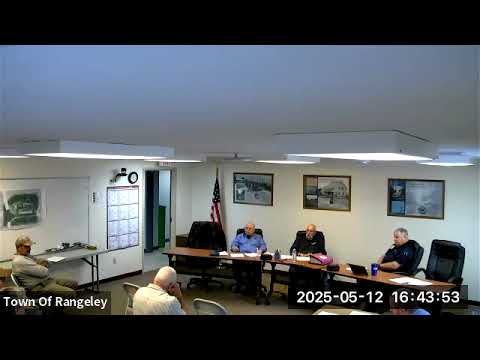
Rangeley’s airport commission voted to request a feasibility study into construction of a 10‑unit hangar after members of the public, pilots and an outside airport board member described unmet hangar demand and possible funding paths.
Commissioners and several attendees said the town’s limited hangar supply and inconsistent transient services—especially winter access and fuel availability—are limiting use of the airport and potential economic benefits for nearby businesses.
Mark Blaze, an airport board member from the city of Auburn, described recent projects his board supported and urged the commission to pursue site work and taxiway infrastructure that would make private hangar construction more affordable. “When the airports do the infrastructure, it’s a lot easier for private industry to come in and actually build the hangars,” Blaze said. He described one project that converted a larger grant into T‑hangars after a planned commercial operator folded and noted that more reported flights also make airports eligible for additional FAA support.
A member of the public who identified himself as Harold (resident/pilot) gave a detailed account of operational problems for transients, including a recent winter day when plowed taxiways did not reach the fuel farm and visiting pilots could not access fuel. “There’s nothing there for them,” Harold said, describing missing after‑hours contacts and an absent gate code on the airport information service for transient pilots. He and other speakers said improved signage, a posted gate/Unicom code and clearer fuel contact information would help visiting pilots immediately while new hangars are developed.
Discussion covered hangar types and costs. Commissioners and speakers referenced 60‑by‑60 box hangars and smaller T‑hangars; Blaze said 60x60 is a “useful hanger” but that many builders use slightly different footprints (for example, about 50x60). Attendees recalled that older T‑hangars were built for roughly $60,000 each in previous decades but said current construction estimates in recent projects have approached $200,000 per unit. A 10‑unit T‑hangar project underway at another airport was cited as an example of private pilots grouping to fund construction.
Speakers discussed funding paths: federal airport improvement funds and FAA grants (often in an 80/10/10 federal/state/local split), private investment to build site infrastructure, and possible town involvement if investors fall short. Mark Blaze described a model where a private contractor installs infrastructure for multiple pads, then recovers costs by charging later builders a connection assessment similar to local utility or road assessments. He cautioned that FAA involvement can increase engineering and compliance costs, while infrastructure installed without FAA grant strings can lower initial tenant costs.
After discussion, a commissioner moved that the airport manager/town manager prepare a feasibility study for construction of a new 10‑unit hangar and to compile a list of interested investors and prospective renters; the motion was seconded and put to a voice vote. The meeting record shows the motion was moved and seconded and “all in favor” was called; the transcript does not include a roll‑call tally. The motion directed the manager to examine cost estimates, potential use of FAA AIP/BIL funds for site work, a likely investor list, and options for advertising available space to connect interested parties.
Commissioners noted immediate, lower‑cost steps that could improve transients’ experience while hangar plans proceed: restoring the gate/Unicom code on public information channels, adding fuel contact details on the airport website, and clarifying after‑hours contact procedures. One commissioner suggested posting an interest/availability notice on the airport page to connect potential investor‑builders and renters.
Why it matters: Commissioners framed hangar capacity as both an operational need (secure storage, fuel access for visiting pilots) and an economic opportunity (fuel sales, local hotel and restaurant demand). The feasibility study is intended to produce a funding‑aware plan that distinguishes site/infrastructure work (which traditionally qualifies better for FAA funding) from private hangar construction (which may be financed by individual investors or groups).
Next steps and limits: The motion asks the airport manager/town manager to report back with a feasibility study and an investor/renter interest list; any construction or funding commitment by the town would require further policy action by the town board. The meeting transcript records no final funding approval or contract award related to the hangar project.