Get Full Government Meeting Transcripts, Videos, & Alerts Forever!
Get email alerts on the Housing Rezoning topic
No spam. Unsubscribe anytime.
Orinda staff outline rezonings to meet housing element; no action taken
Summary
At a May 13 Planning Commission meeting, staff presented a background update on proposed rezonings of 26 downtown sites and five opportunity sites to meet Orinda's sixth-cycle housing element; commissioners took no action and staff said a formal rezoning proposal is likely in late June.
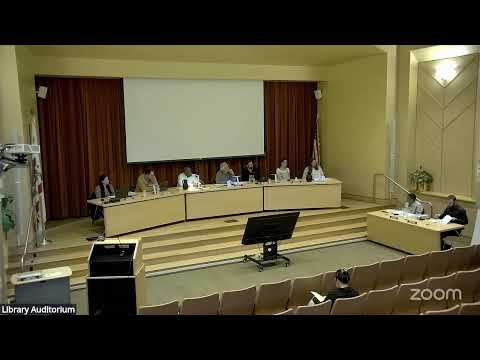
ORINDA, Calif. — The Orinda Planning Commission on May 13 received a staff update on proposed rezonings intended to satisfy the city’s sixth-cycle housing element but took no action.
Associate Planner Darren said the presentation was informational only: “No action is going to be taken tonight.” The presentation summarized how staff proposes to rezone 26 sites in the downtown commercial and downtown office zones and parts of five “opportunity” sites so the city can demonstrate capacity to meet its Regional Housing Needs Allocation (RHNA).
The update matters because the RHNA requires jurisdictions to show they can reasonably accommodate assigned housing units. Staff said the Bay Area region assigned 1,359 units to Orinda for the 2023–2031 cycle and described how the city intends to meet that allocation through a mix of existing capacity, approved projects and targeted rezonings.
Staff listed the current inventory and planned changes: roughly 623 units estimated from vacant lots and single-family parcels; 90 units from approved projects (including Vista Verde senior housing and Wilder Country House memory care); about 421 units attributed to the downtown rezonings; and 286 units from portions of three church properties and Miramonte High School. Staff said a five-acre Caltrans gateway parcel was originally assigned capacity for about 200 units, but HCD no longer counts that site toward Orinda’s RHNA because Caltrans has not decertified the parcel for housing.
Darren described the implementing actions that will be part of proposed zoning changes. Staff proposes two new general-plan land-use categories (residential high density multifamily) and subcategories to distinguish downtown and opportunity-site densities. One category would allow roughly 20–30 units per acre and the other 30–55 units per acre. Proposed zoning changes discussed include a downtown core designation that would allow vertical mixed use and maximums of 30–55 dwelling units per acre, and RH25 and RH40 designations for opportunity sites with maximum heights and stories tied to each designation.
Staff said the rezoning approach will rely on objective design standards adopted earlier in draft form to enable a streamlined, ministerial review pathway for projects that include at least 20 percent affordable housing, a requirement in state law for certain downtown projects. Darren said the objective standards would be decoupled from the downtown precise plan so they can be applied independently while the city considers revisions to the precise plan.
Staff emphasized timelines and next steps. Darren told the commission staff expects to return with a full rezoning proposal for recommendation to the City Council in late June. Two community open houses were announced: the morning session the day after the meeting from 9 a.m. to noon at the Upper Library Terrace and an evening session Thursday from 5 p.m. to 8 p.m. at the Lower Library Plaza; staff requested that commissioners not attend the open houses because of Brown Act constraints.
Public speakers raised local concerns and alternatives. Nick Warrenoff, who said he has participated in Orinda planning matters for years, urged the public to contact state Sen. Tim Grayson to oppose Senate Bill 79. Warrenoff said, “I urge you to call our state senator, Tim Grayson, at his Orinda office and voice your opposition to SB 79,” and warned that the bill, as he described it, could allow 10–12 story buildings by right in areas near BART and limit local land-use authority.
Dennis Synclidico, a resident near the Miramonte site, urged commissioners to visit the neighborhood and offered a morning site walk to show local circulation and school-related impacts; he said adding the proposed capacity would substantially change the feel of the nearby neighborhood during construction and after completion. Susan Cole, another resident, asked for a short history of what has changed since 2023; staff noted that litigation and the recent rescission of the downtown precise plan have affected timing but that the housing element remains certified by HCD.
Commissioners as well as staff noted that the Caltrans gateway parcel remains a priority for attempts at decertification for future housing cycles but currently does not count toward the city’s 2023–2031 RHNA. Commissioner questions also addressed how much of each parcel would be rezoned (staff said only portions of some church properties would be rezoned) and that no specific development proposals have been submitted for the opportunity sites.
Formal commission action on the rezonings was not requested or taken. The Planning Commission approved the meeting agenda and approved amended minutes from March 11, 2025, earlier in the session. Staff said it will return with detailed rezoning maps, proposed text amendments and any required environmental documentation for the commission’s consideration in a future hearing.
For the public record and next steps, staff expects to bring a formal rezoning package to the Planning Commission in late June and continue outreach through the announced open houses; the Caltrans gateway site will remain the subject of ongoing decertification efforts with HCD and Caltrans.