Get Full Government Meeting Transcripts, Videos, & Alerts Forever!
Get email alerts on the Business License Fees topic
No spam. Unsubscribe anytime.
Edmonds council directs attorney to draft ordinance updating business license fees and dropping scaled floor-plan requirement
Summary
After weeks of discussion about revenue options, the Edmonds City Council voted to have the city attorney draft an ordinance that raises origination fees by a 49.5% inflation factor from 2017 and removes the current requirement that applicants submit a scaled floor plan with their business license application.
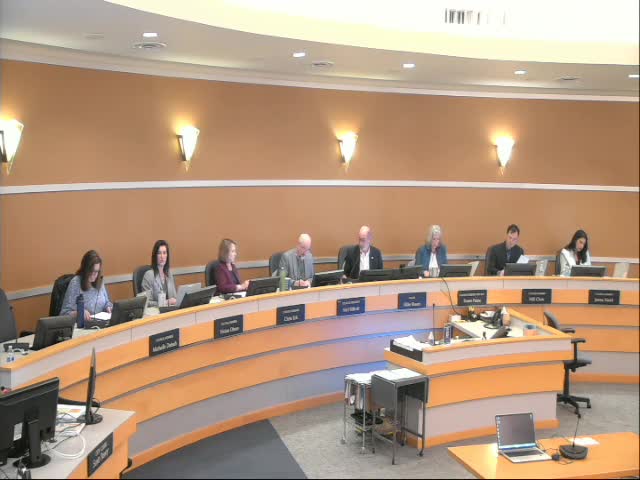
The Edmonds City Council on May 13 directed the city attorney to draft an ordinance updating the city's business license fee structure to reflect a 49.5% inflation adjustment from 2017 and to remove the application requirement that businesses submit a scaled drawing of their floor plan.
The motion, made by Councilmember Payne and approved by a 5-2 vote, follows a multipage staff presentation from Clerk Passi outlining the city's flat-fee business license program, its partnership with the State's Business Licensing Service (BLS) since 2019 and comparisons with neighboring jurisdictions.
Clerk Passi told the council Edmonds collected roughly $250,000 in business license revenue in 2024 from about 4,169 license applications and that the city's flat fees have not been updated since 2009. "If you wanted more analysis on the variable fee model we could probably put something together," Passi said, noting the BLS integration and the administrative trade-offs of any change.
Supporters of a tiered or variable fee model argued it would make fees scale with business size and could be less burdensome to sole proprietors and small Main Street concerns; opponents said more study and outreach to the business community is needed before shifting away from a cost-recovery model. Councilmember Nand had earlier proposed directing the attorney to draft options for a tiered origination fee and to remove the scaled drawing requirement; that earlier motion failed.
Councilmembers who supported the final motion described the inflation adjustment as a near-term step to keep fees current while staff and the council continue studying longer-term options such as employee- or square-footage-based tiers, a head tax or other variable models. Passi noted the city could also choose an annual index/inflation factor rather than a structural shift.
The council also debated and rejected an amendment that would have carved out sole proprietorships from the increase; the amendment failed on a separate vote. Several members urged the administration to engage the Economic Development Commission and the local business community during the drafting process and requested that the City Attorney return ordinance options for council review before final action.
The City Attorney will prepare draft ordinance language and options for the council to review, including the dropped requirement for scaled drawings; the council gave staff direction on elements to include but did not adopt fee rates tonight beyond the inflation factor instruction.
The item drew extensive council discussion on enforcement and administrative capacity: Passi said the employee-count field on the current application is optional and that city staff can access some proprietary gross-revenue reports to check inconsistencies if a variable fee is adopted. He cautioned that business license revenue alone would not fix the city's structural budget gap.
Next steps: the City Attorney and staff will draft ordinance(s) with options and return them to the council for further consideration and public outreach before any fee increases take effect.