Get Full Government Meeting Transcripts, Videos, & Alerts Forever!
Get email alerts on the County Budget topic
No spam. Unsubscribe anytime.
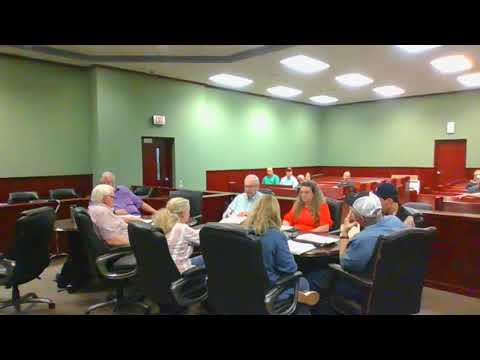
Houston County budget discussion centers on modest tax-rate cut, staff raises and event donations
Summary
At a Houston County budget meeting, a draft plan identified roughly $464,000 of available revenue and proposed a $125,000 tax-rate reduction, new staff hires and donations for local events and facilities; commissioners scheduled a follow-up budget meeting to finalize recommendations to the legislative body.
Teacher Karen outlined a draft Houston County budget that identified about $464,000 in revenue available for new spending and proposed a $125,000 tax-rate reduction while funding several personnel and community items.
Karen told meeting participants she had reviewed the budget with assistance from Rachel, the mayor and the mayor pro tem and worked to identify how the county could reduce its year-end fund balance target without jeopardizing reserves: “I went through the, the budget, and what I was looking for was amount of money, total money that we can actually put together programs for, pay raises, what we needed, in order to move without doing anything that would, jeopardize us ending up in about 3,500,000.0,” she said.
The draft contained several revenue and reallocation suggestions. Karen said $250,000 had been budgeted for legal expenses and proposed reallocating $50,000 of that amount for other uses. She estimated new residential construction — “30 to almost 40 homes built” — could bring an estimated $114,000 in additional property tax revenue. She described current property-tax revenue as roughly $4,100,000 and cited an approximate $20,000 increase in sales-tax receipts directed to the county; she combined those items and the legal reallocation to reach about $464,000 of usable funds.
The plan included a tax-rate reduction Karen framed as modest: lowering a rate she described as “from 1.77 to 1.72,” producing roughly $125,000 in tax relief. Karen said she wanted to “stay at about 3.7” million in reserves while allowing room for employee benefits and other cost increases.
On the spending side, Karen summarized proposed new expenditures totaling $372,415, including several part-time positions, a proposed full-time courthouse bailiff at $43,680 (about $20.21 per hour), and other smaller pay adjustments in a tiered system tied to job duties. She identified two part-time positions with roughly $14,750 and $22,000 price tags and listed $37,040 for building maintenance/recreation/trash-related needs.
Karen reviewed the sheriff’s and school-resource-officer (SRO) budgets. She said the sheriff’s budget had been listed at $498,000 last year, the current request at $636,000, and that she had included $531,000 in her review. She described gasoline for SROs jumping from about $3,000 last year to $30,000 in the request and stated she put $10,000 in the budget for gasoline. Karen said the SRO program’s total cost was “270 some odd thousand dollars” intended to cover five SROs; she said the draft allocated funding for three and that she could not, in good conscience, include an additional $116,080 to cover two more positions.
The draft also included donations and event support: $5,000 for Bethesda, $10,000 for View Sports, and $25,000 proposed for fairground restroom repairs after receiving information from Steven Black about conditions there. Karen described a new idea for the county’s Irish Day festival — an “Irish Community Challenge” concert for local school and community bands — with an estimated cost of $1,200 and a proposed $200 stipend per band, plus a suggested $500 prize to be solicited from local sponsors; she said she had discussed the idea with Dustin Robnett of the Rotary.
Karen asked colleagues to review the proposed figures and prepare for a follow-up meeting: “I want you to take a look, determine, and with the goal in mind back on the first page, can we reduce our tax rate by net? That's what we're looking for,” she said. Meeting participants set a budget meeting for the twentieth at 6 p.m. to discuss the full budget and prepare recommendations for the legislative body.
There was no formal vote on the budget draft itself during the discussion. The only formal action recorded in the transcript was a motion to adjourn, which was moved, seconded and approved by voice vote.
Next steps identified in the meeting: review the draft figures, refine personnel and program requests, and return on the scheduled budget meeting date to finalize recommendations for the legislative body that must approve the county budget.