Get Full Government Meeting Transcripts, Videos, & Alerts Forever!
Get email alerts on the Ev Charging Infrastructure topic
No spam. Unsubscribe anytime.
Supporters argue requiring Level‑3 charging at new/renovated fuel stations would normalize EV charging and reduce range anxiety
Summary
A bill that would require new or renovated fueling stations to include at least one Level‑3 fast charger drew support from EV drivers and advocates, who said chargers at gas stations increase visibility, normalize EVs and spark consumer conversations. A long cross‑country EV trip and private sector examples were cited as evidence that major fuel
An advocacy witness and EV drivers urged the committee to advance legislation that would require gasoline fueling stations that install new pumps or build new sites to include Level‑3 (fast) electric vehicle chargers, saying the requirement would normalize charging, reduce range anxiety and accelerate consumer adoption.
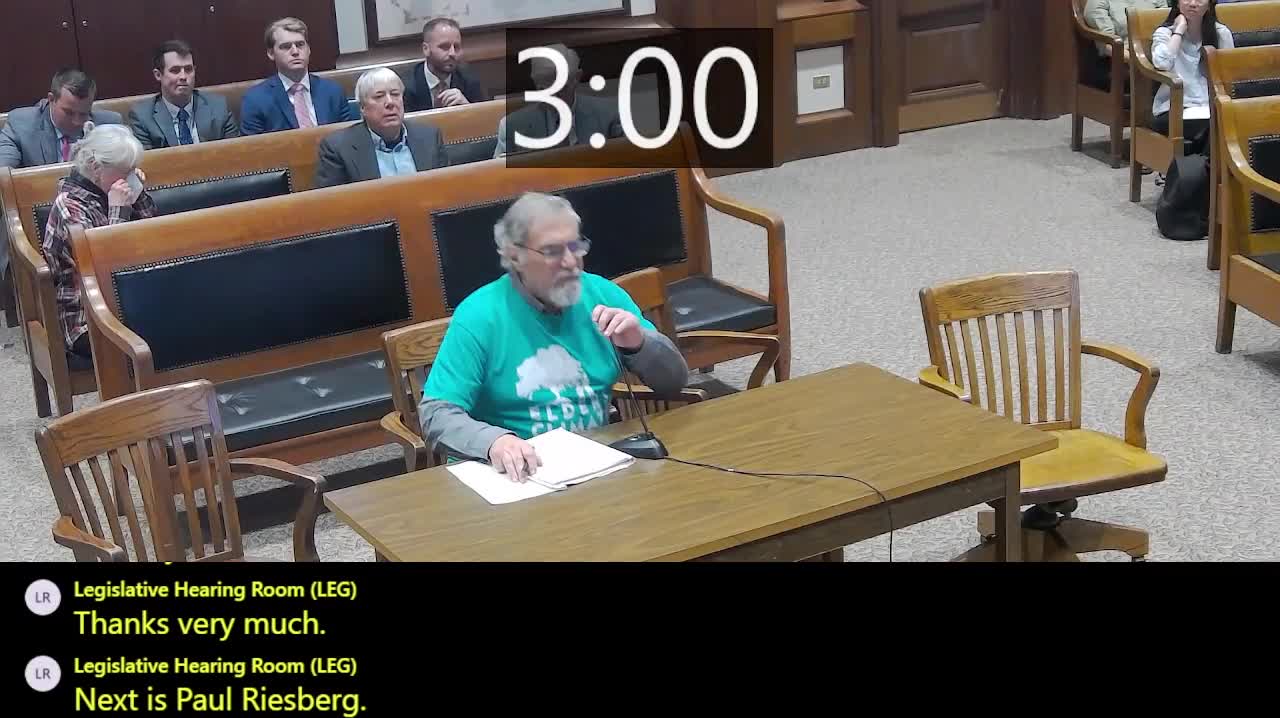
Paul Reisberg, from Elders Climate Action, who described a recent 11,000‑mile road trip in an electric vehicle, said seeing fast chargers at fuel stations provides visibility that normalizes EV charging, encourages conversations and addresses myths about range. Reisberg pointed to existing private sector moves—Shell, Cumberland Farms and other fuel retailers have begun installing fast chargers in other jurisdictions—and to Canada’s coast‑to‑coast fuel network that includes Level‑3 chargers as evidence the model is scalable.
Supporters said colocating fast chargers at fuel stations provides psychological benefits: it makes charging familiar to drivers, offers convenience (food, restrooms), and gives price comparisons that highlight EV savings. They argued that even a modest rollout through station renovations would create visible charging points in many towns and help rural motorists feel more confident about EV trips.
Discussion only: the testimony supported Rep. Roy’s bill (H.3558 was cited in testimony). The committee did not take formal action.
Ending: Advocates called the requirement a practical way to expand public fast charging, normalize EV use and support the broader transition to cleaner transportation.