Get Full Government Meeting Transcripts, Videos, & Alerts Forever!
Get email alerts on the Fleet School Bus Electrification topic
No spam. Unsubscribe anytime.
Advocates push deadlines and funding for public fleet and school bus electrification; charging companies offer depot solutions
Summary
Nonprofit advocates, charging providers and school‑bus researchers urged the Telecom, Utilities and Energy Committee to back H.3448, which would set electrification timelines for public fleets and school buses and fund charging deployment.
Nonprofit advocates, charging providers and school‑bus researchers urged the Telecom, Utilities and Energy Committee to back H.3448, a bill that would set electrification timelines for public fleets and school buses and create programs to support fleet charging deployment.
Anna Vanderspeck, electric vehicle program director at Green Energy Consumers Alliance, told the committee that electrifying public fleets is the “main lever” Massachusetts can use to cut transportation emissions and that the bill recognizes different timelines for light‑duty and medium/heavy‑duty vehicles. She cited existing state programs that help fleets electrify, including the Mass EVIP charging incentives and other state fleet incentives, and urged clear timelines and steady funding so public entities “lead by example.”
Emily Kelly, U.S. policy director at ChargePoint, described available fleet charging solutions—level 2 and DC fast charging, depot charging, on‑route and residential take‑home solutions—and fleet management software that schedules charging, optimizes costs and can enable vehicle‑to‑grid services. ChargePoint said many fleet routes are predictable, which eases depot charging and overnight charging planning. Anna and Emily stressed total cost‑of‑ownership savings: although upfront vehicle costs can be higher, lower fuel and maintenance costs reduce lifecycle costs.
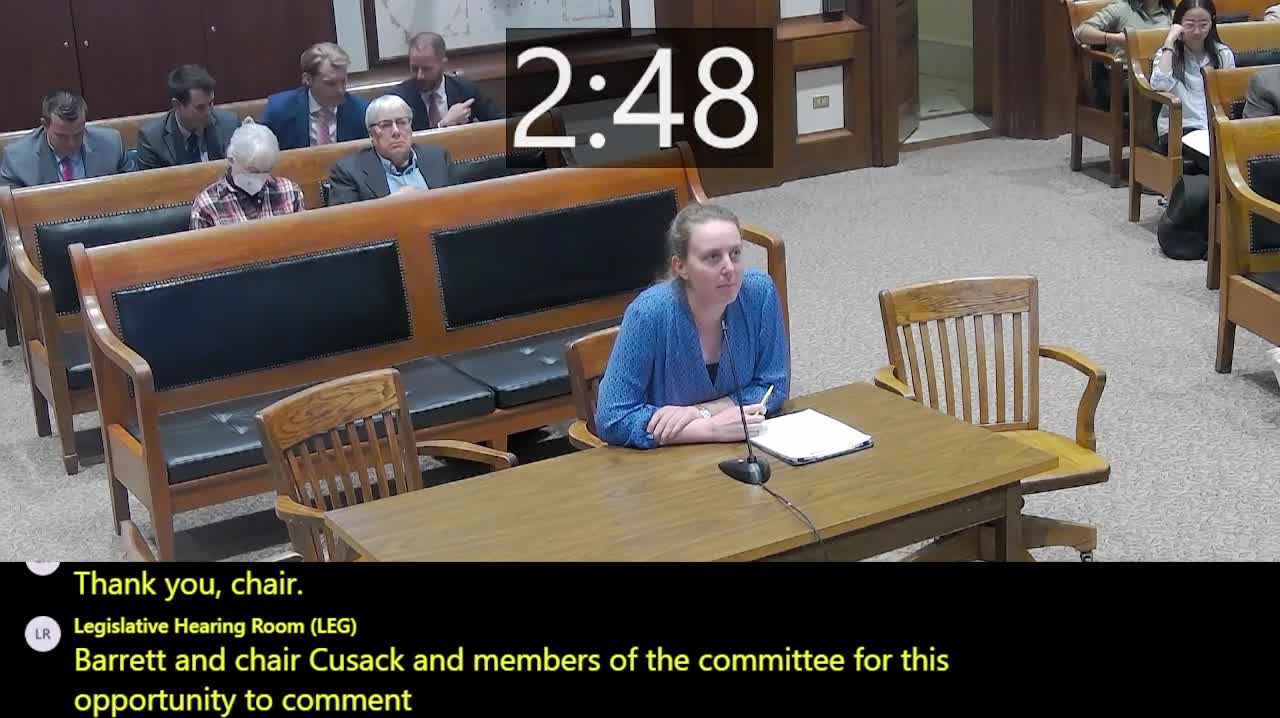
Alice Kwok of the World Resources Institute told the committee that more than 400,000 Massachusetts students rely on school buses and that over 95 percent of those buses still run on diesel. She said the federal EPA Clean School Bus Program and state ACT School Bus grant funding have already provided millions in rebates and grants to Massachusetts districts and that H.3448’s timelines would prioritize environmental justice communities and capture health and long‑term cost benefits for districts.
Committee members asked about funding, charging reliability and workforce needs for maintenance and operations; Representative Tyler emphasized workforce transition supports. Witnesses asked the committee to preserve and expand state funding programs and to coordinate DPU, MassDOT and the Electric Vehicle Infrastructure Coordinating Council for charging deployment.
Discussion only: testimony supported H.3448 and related incentives; no committee vote occurred.
Ending: Proponents said statutory timelines combined with targeted funding, depot charging buildout and workforce supports would accelerate fleet and school‑bus electrification and deliver public health and cost benefits, while urging continued state funding and agency coordination.