Get Full Government Meeting Transcripts, Videos, & Alerts Forever!
Get email alerts on the Textbook Adoption topic
No spam. Unsubscribe anytime.
Bassett Unified presents recommended high‑school textbook adoptions after teacher and student pilots
Summary
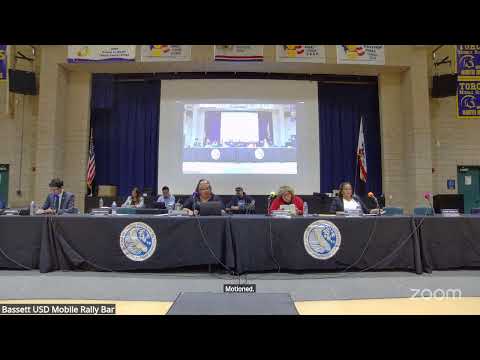
Bassett Unified School District officials presented recommended textbook adoptions for high‑school social science, AP courses and AP physics during the May 13 board meeting, and said the selections will be considered as part of the consent calendar.
Bassett Unified School District officials presented recommended textbook adoptions for high‑school social science, AP courses and AP physics during the May 13 board meeting, and said the selections will be considered as part of the consent calendar.
District staff described a formal, five‑step textbook adoption process that used teacher committees, two 30‑instructional‑day pilots and a public review period required by state education law. “We piloted 8 different courses, and we got a lot of feedback from our students and teachers,” a staff presenter said during the presentation.
The district said every teacher who instructs the affected courses participated in the review and that students completed more than 200 survey responses across the pilots. Staff recommended titles for AP psychology, AP human geography, AP world history, AP US history, AP physics, a one‑semester ethnic studies freshman course, general psychology and a college‑and‑career resource that includes online planning tools.
Why it matters: textbook adoptions determine the primary instructional materials students and teachers will use, affect classroom workflows and textbook budgets, and often include digital licenses and vendor‑provided professional development that districts must budget for and implement.
Staff described the five steps used this year: form a committee of teachers; select and pilot materials; collect teacher and student feedback; hold a public review of materials as required by the Education Code; and deliver a committee recommendation to the board. Pilots ran in two cycles (November–December and January–February), each lasting about 30 instructional days, and included teacher debriefs and vendor support during the pilots.
Board President Aaron Simmental asked for clarification about survey scoring shown on a slide and whether adoptions include online access. “And then my second question would be, aside from having the physical materials, is there any opportunity or will purchasing them come with a digital subscription with the books?” Simmental asked. The presenter replied, “Yes. . . . the adoption of the materials is there’s digital licenses for the students, and teachers to access the online materials,” and added that some courses include consumable workbooks and that many AP materials are bundled with study guides and professional development.
The presentation noted one case where teacher and student preferences were narrowly misaligned; staff said teachers’ technical reasons led the committee to recommend a specific option despite a close student split. The presenter also described outreach to parents (an on‑campus review March 17–21) and said parent turnout for written comments was limited even though some parents viewed displays.
Board members did not vote on individual titles during the presentation. The superintendent said the recommended adoptions appear on the meeting’s consent calendar; the board later approved the consent calendar as a single action.
What’s next: adoption of the recommended materials will move forward through the procurement and digital‑license processes described in the consent item, and staff said additional professional development opportunities will be provided after purchase.