Get Full Government Meeting Transcripts, Videos, & Alerts Forever!
Get email alerts on the Property Code Enforcement topic
No spam. Unsubscribe anytime.
Struthers council debates tightening property-code enforcement, fines and vehicle removal process
Summary
Council members and staff discussed draft ordinances and enforcement procedures for property nuisances — including grass-cutting charges, administrative citations, tax assessments for unpaid fines and the process to remove unlicensed vehicles from private property.
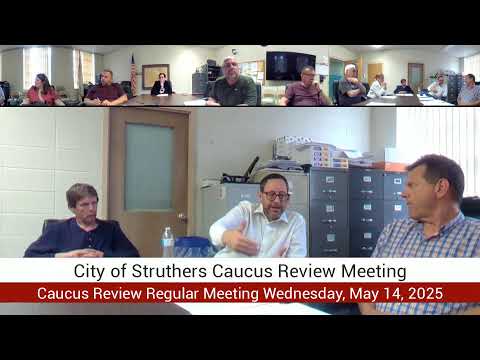
At a Struthers City Council meeting, council members and staff discussed draft ordinances and enforcement procedures for property-code violations, focusing on administrative citations, fines and when the city may seek court orders to remove unlicensed vehicles.
The discussion centered on a set of sample resolutions and ordinances circulated to council. Council members reviewed proposed fines that would assess $250 for an initial violation and up to $1,000 for a repeat violation, and debated whether the $1,000 penalty should apply only if the repeat violation occurred within one year. One participant said removing the one-year limit would simplify bookkeeping, while others said the higher fine should apply only to the same kind of violation.
Why it matters: changes to the city's enforcement rules would alter how the city addresses persistent property problems, how quickly work is done on neglected property and whether unpaid fines can be collected through the tax roll.
Council and staff outlined the difference between cutting grass as a maintenance activity and issuing an administrative citation. A staff speaker explained that nonpayment of administrative citations can be assessed to property taxes: "If the administrative citations do not get paid, then they can they can get assessed to the taxes." Council members also discussed whether city crews should issue a citation at the same time they cut grass; some said that if the city cuts grass it should count as a citation so the cost could be recovered.
City counsel and staff described the enforcement pathway when vehicle removal is sought. John (staff member) said the chief of police cannot simply remove vehicles from private property without court involvement: "In order for us to get to the point where we can actually the chief of police can go on to the property and tow it, the person has to be cited in to court." He added that if a court orders compliance and the problem is not fixed within the time specified by the judge, "the court can order the chief of police to go on to the property and remove the vehicle." Council members clarified that administrative citations and mowing assessments are separate tools and that unpaid administrative fines, like mowing costs, can ultimately be placed as a lien on the tax duplicate.
Council members raised appeal and oversight questions. The group discussed an appeal path that would move contested administrative citations to the Board of Building Appeals rather than to council. Staff described that if an appellant is dissatisfied after the administrative appeals process, the party could seek review in the county's Court of Common Pleas.
Officials also described more intrusive enforcement tools that require judicial authorization. A staff speaker said an administrative search warrant could be sought if probable cause is established that a violation exists and a warrant is necessary to access the property.
The council did not adopt new ordinances at the meeting. Members agreed to review the sample resolutions and ordinances at the next committee meeting and to refine the proposed fines and appeal language before formal introduction.
The meeting closed with a routine motion to adjourn.