Get Full Government Meeting Transcripts, Videos, & Alerts Forever!
Get email alerts on the Municipal Budget topic
No spam. Unsubscribe anytime.
Navasota begins FY2026 budget workshops, will evaluate tax rate and large debt proposals
Summary
City staff presented a budget calendar and asked council to confirm priorities for fiscal 2026; staff will return with detailed proposals on July 14 and in August and will analyze a proposed fire-station debt before any decision.
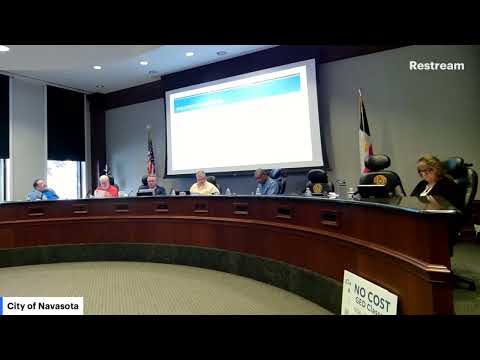
At a May 13 special meeting, staff outlined the City of Navasota’s Fiscal Year 2026 budget calendar and asked the Navasota City Council for high‑level priorities that will guide the proposed budget. "The council is the body that sets the priorities for us," Mr. Heminger, staff member, told the council as he reviewed the process for developing and adopting the budget.
The city will hold a second full workshop on July 14 (the first council meeting in July) to review draft budget components, staff said. Staff plans to send the proposed budget a week before the first council meeting in August, review highlights that night and schedule public hearings and final adoption during two council meetings in September, ahead of the Oct. 1 start of the 2026 fiscal year.
Why it matters: the council sets city priorities and adopts the tax rate that funds the budget; early decisions will determine whether programs, capital work and personnel changes move forward.
Mr. Heminger said staff will start from last year’s tax rate "and see where that gets us" as a baseline. He also said staff will do a conservative debt analysis before pursuing major capital projects: "I want to get a good feel for what is our fiscal condition, what is our current debt load... and what can they afford to absorb in as future debt," he said when describing plans to analyze a proposed fire‑station project that could require roughly $15 million to $18 million in debt. He said the city will not make a debt decision until staff completes a multi‑fund analysis showing the impact on the general fund and utility fund.
Council members asked staff to return with options if higher retirement or benefit costs push other items off the list. Mr. Heminger said staff will present tradeoffs—for example, whether to phase in a retirement contribution increase or take it all in one year—so council can prioritize projects and personnel within available revenues.
The workshop also reviewed existing planning documents (the strategic plan, the recently grant‑funded comprehensive plan effort and a proposed capital improvement program). Staff said several planning efforts are grant funded and therefore will have limited direct effect on the FY2026 operating budget, but that capital planning could identify future debt needs.
Looking ahead, councilmembers may be asked to approve contract(s) for financial or rate consultants, to review tax‑rate options visually at the July workshop, and to consider a multi‑month debt affordability analysis before authorizing major borrowing.