Get Full Government Meeting Transcripts, Videos, & Alerts Forever!
Get email alerts on the Government Buildings topic
No spam. Unsubscribe anytime.
Government buildings manager warns aging portfolio and funding cliff will strain Butte‑Silver Bow maintenance
Summary
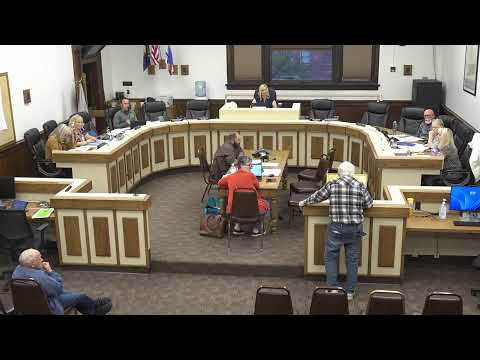
John Sullivan, government buildings manager, told the Butte‑Silver Bow Study Commission on May 12 that the county is responsible for about 59 facilities, lacks a long‑term maintenance strategy and faces a funding gap when COVID‑era money runs out.
John Sullivan, manager for government buildings, told the Butte‑Silver Bow Study Commission on May 12 that the county’s inventory of facilities and deferred maintenance present a major long‑term budget and operational challenge.
Sullivan said the department cares for roughly 59 county‑owned facilities and that the courthouse alone represents a large share of building maintenance costs. The department is organized into three operational areas: government buildings, a central trades/central services crew (painters, electrician, carpenter) and support for parks/other public buildings. He said the department employs roughly 16 workers across several bargaining units and listed typical annual pay ranges discussed in negotiations.
Sullivan described three principal problems: an aging building stock with deferred maintenance and mechanical systems approaching end of life; a lack of a cohesive multi‑year capital maintenance plan historically; and an administrative workload (permits, leases, insurance claims) that consumes staff time.
He told commissioners that a facilities or central capital fund would allow the county to plan replacements more efficiently rather than responding in crisis when major systems fail. “I think it should be facilities and there should be a facilities fund,” Sullivan said during the session.
Sullivan cited specific funding and procurement friction points: many recent repairs were paid with COVID relief or one‑time Hard Rock funds and those sources are time‑limited; insurance claims through MMIA (the Montana Municipal Interlocal Authority) require substantial paperwork and can take many months to resolve; and local procurement thresholds (Butte‑Silver Bow’s $5,000 rule) are lower than the Montana Code Annotated threshold for formal bidding, creating repeated small procurements that cost staff time.
He also described technical needs that commonly require large sums: roof replacements, HVAC and boiler replacements, fire/smoke damper actuators, and security and temperature controls in the detention center. Sullivan said some recent work revealed multiple hidden failures once modern controls were installed — for example, many fire/smoke dampers required actuator replacement after a control upgrade.
Sullivan urged the commission to consider consolidating capital improvement budgeting under a facilities account managed with a multi‑year plan. He said the county already maintains a capital account often referenced as the 40.40 account (used previously for Montana Street work) and recommended clearer, stable funding for building needs going forward.
No formal action was taken on the presentation. Commissioners asked follow‑up questions about surplus properties, outsourcing vs. in‑house work, and whether a facilities manager should have different title/compensation; Sullivan said the county’s mix of in‑house trades and contractors is common and that the trade‑offs depend on project size and funding.
Sources: presentation and Q&A with John Sullivan, Government Buildings Manager, Butte‑Silver Bow Study Commission meeting transcript, May 12.