
Council hears mixed testimony on overt video monitoring in city parks
Get AI-powered insights, summaries, and transcripts
Subscribe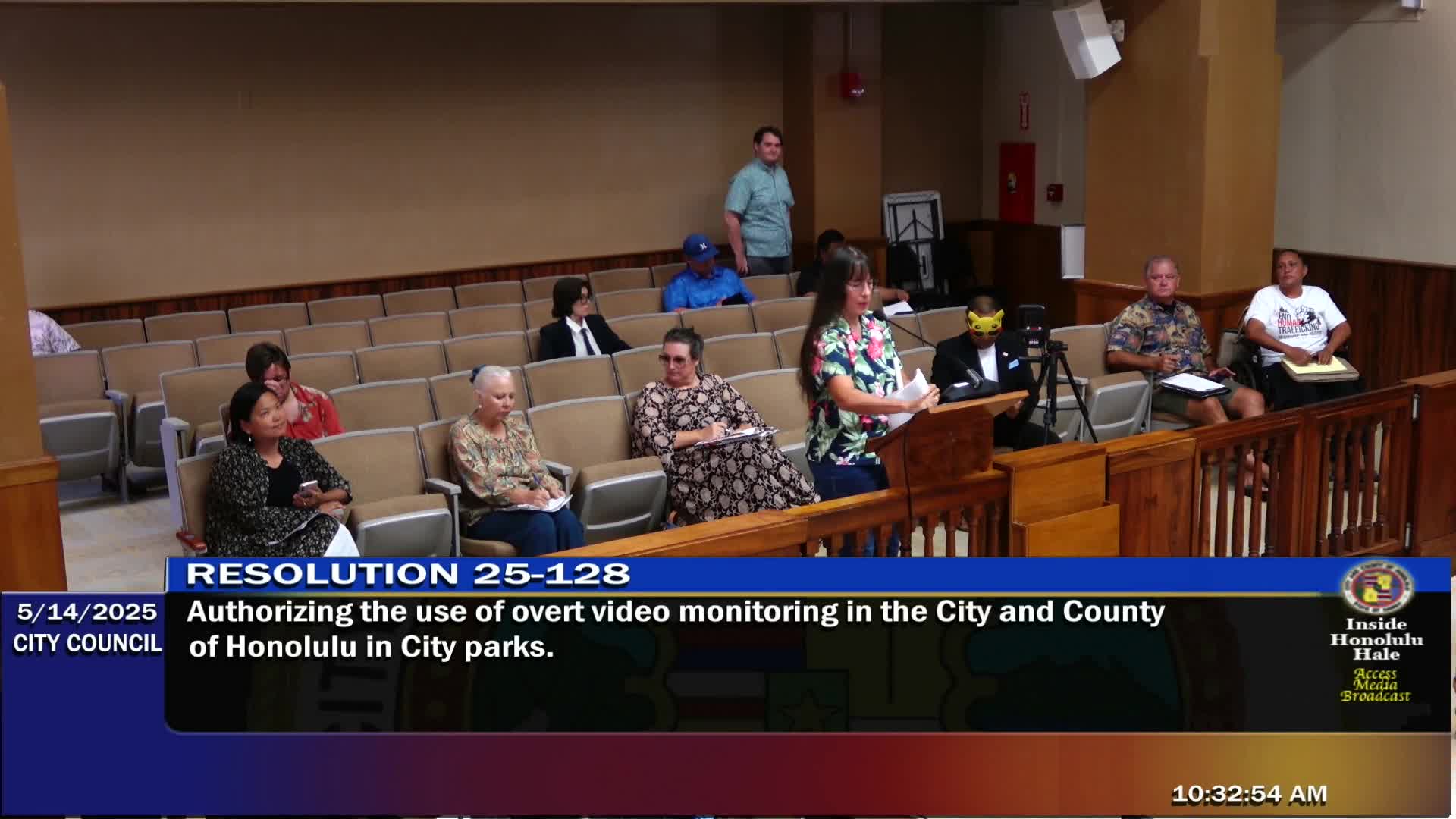
Summary
Supporters said overt cameras could deter vandalism and arrest suspects; opponents raised privacy and data-retention concerns and requested scope changes. The council referred the resolution to committee for further review.
A Honolulu City Council resolution authorizing overt video monitoring in city parks drew sharply divided public comment on privacy, retention, and scope, and the measure was referred to the council’s public safety committee for more study.
The most immediate policy choice is whether to authorize overt camera monitoring at specified city parks and to set rules for data handling, retention and access. The resolution would authorize monitoring on city-owned park property; proponents said the cameras are a tool to deter vandalism and help public safety investigations, while opponents warned of surveillance drift and demanded safeguards on data security and use.
Why it matters: Cameras mounted on public infrastructure capture people in public spaces and create law-enforcement and civil-liberty trade-offs. Testimony and council discussion centered on where cameras would be deployed, how long footage would be retained and who would be permitted to access recordings.
Natalie Wasa, who testified in opposition, told the council she wants clearer limits on where and how cameras would be used and asked for technical details about storage and encryption. “Currently, it is possible for the City to tell when you leave your home, when they come back, what time you go get the mail,” Wasa said. She also suggested amending the resolution to include bus routes rather than the coastal East Honolulu cameras listed in the draft.
Jacob Wintsek, testifying in support, said cameras can keep parks safer: “We do need to take all necessary steps to ensure that we have safe, clean, public spaces, including our parks,” he said, while also urging privacy protections to come alongside any monitoring.
Council members said the resolution aims to focus camera deployment on city-owned facilities and district parks with histories of vandalism or arson. Council member Cordero said cameras were proposed after break-ins and repeated arson incidents in Salt Lake District Park and other locations. Council member Weier emphasized privacy protections and said the resolution is limited to city infrastructure and park facilities.
What the council did: Resolution 25-128 was referred to the Committee on Public Safety and Customer Services for detailed policy drafting, including privacy protections, retention limits and specific deployment sites.
What’s next: Committee-level hearings will consider amendments on encryption, retention periods, permitted uses of footage, and any pilot or reporting requirements requested by council members. Staff and the police department are expected to provide operational details in committee.