Get Full Government Meeting Transcripts, Videos, & Alerts Forever!
Get email alerts on the Traffic Safety topic
No spam. Unsubscribe anytime.
Council debates county plan for traffic signals at Broadway/Tingley; staff say warrants met, design to take about a year
Summary
Town engineers and council members debated a county‑led plan to add traffic signals on Broadway/Tingley and nearby streets. Staff said traffic warrants and accident history support signals; residents and some council members warned about queueing, right‑of‑way needs and effects on local traffic patterns and school crossings.
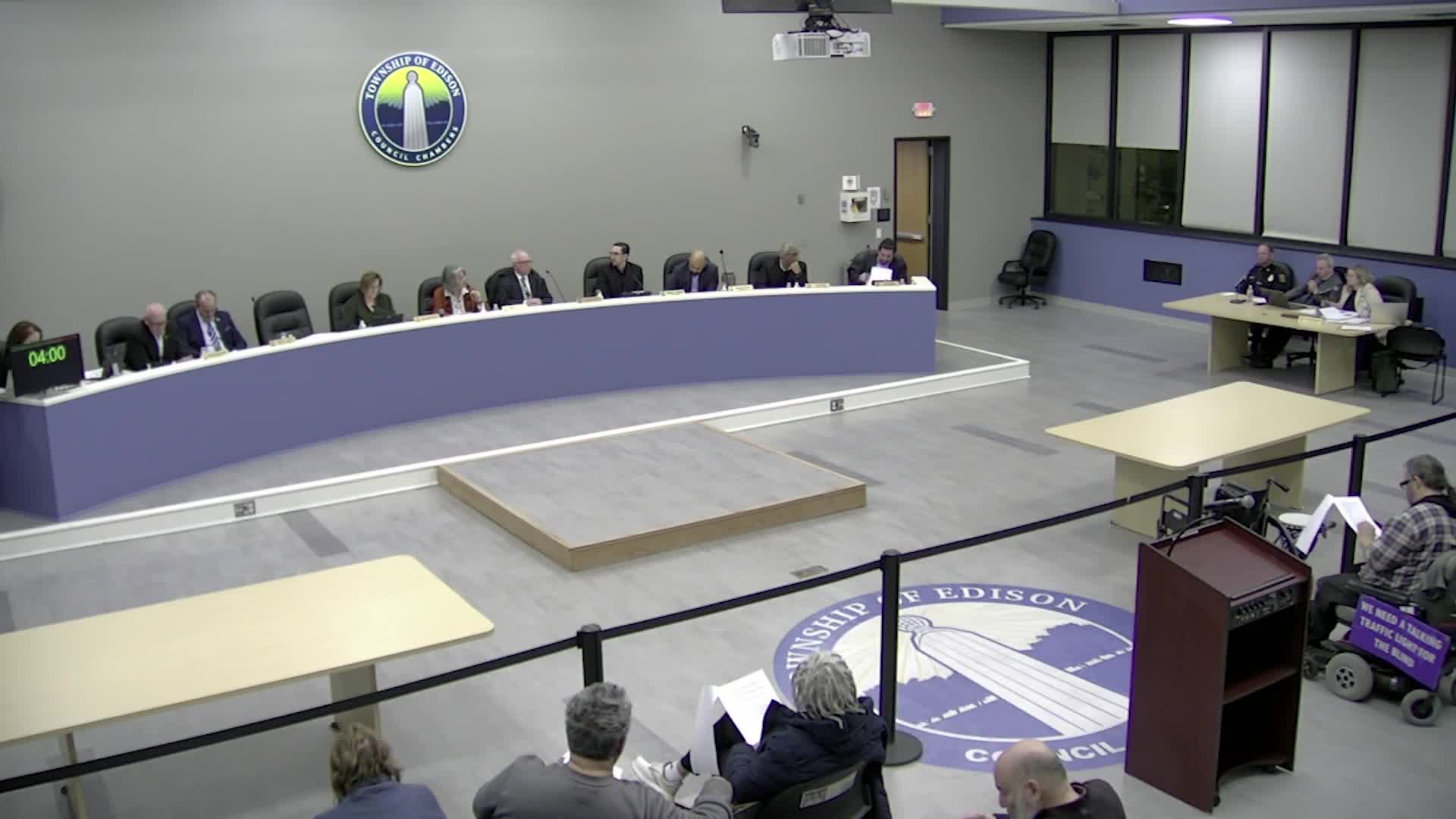
Edison Township council members spent an hour on Feb. 8 discussing a county proposal to add traffic signals at Broadway/Tingley and nearby intersections, a project officials said responds to traffic warrants and pedestrian‑safety concerns.
Town staff told the council the county performed a warrant analysis and that the sites met multiple Federal Highway warrants — including those based on accident history — that can justify signalization. "We did a traffic warrant analysis. We did one about a year or so ago... I believe it hit the warrant on accidents alone," a traffic division representative told the council.
Council members pressed staff for details about right‑of‑way, property impacts, signal spacing and effects on nearby school pick‑up and drop‑off. Town engineer Brian and administration staff said the county would lead design and pay a majority of construction costs; the county would control the signal timing and could provide a GPS preemption system so emergency vehicles can clear intersections when needed.
Residents and some council members raised objections or cautions. Councilman Brescher and others said the new signals could change local traffic flows, create additional queuing that could block driveways and affect adjacent streets. "If you put a light because we think it's safe, you're changing the dynamics of our town," one council member said. Several members asked to see the traffic study and any design plans before final approvals.
Staff said the county would cover a large share of the construction and design (administration cited about a 67% county share in earlier remarks) and that the design process typically takes about a year before the project is ready to be bid. Design steps will determine whether small right‑of‑way adjustments (frontal easements or five‑foot radius extensions) are needed at corners to accommodate signal foundations and equipment.
Pedestrian safety was a recurring theme: staff noted that signalization would provide marked crossings with push buttons and longer crosswalk time to reduce near‑misses reported during on‑site counts. Engineering staff also said nearby railroad proximity and signal offset between two close intersections will require special coordination; when intersections are within about 500 feet they must be managed together to prevent spillback.
What’s next: Council members asked staff to provide the county study and the design schedules and to follow up on questions about driveway impacts, signal spacing and school‑time operations. Administration said it will request the traffic study and provide the design timeline and funding split to the council at a future meeting.