Get Full Government Meeting Transcripts, Videos, & Alerts Forever!
Get email alerts on the Wildfire Preparedness topic
No spam. Unsubscribe anytime.
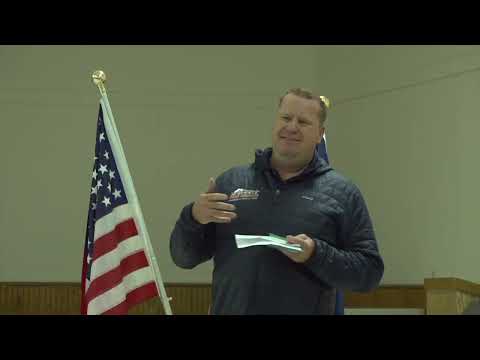
DNRC Firewise presentation urges Lolo residents to harden homes, plan evacuations
Summary
Montana DNRC wildfire staff briefed the Lolo Community Council on home ignition zones, Firewise USA recognition, and smoke-mitigation measures. Speakers emphasized ember risk, household evacuation planning and available free home risk assessments.
State wildfire staff told the Lolo Community Council that most homes that burn in wildfires ignite from embers, and that simple, targeted actions around a property can greatly reduce that risk.
"Ninety percent of homes though that burn in wildfires are due to ember ignition," said Ella Langer, fire adapted communities coordinator for the Montana Department of Natural Resources and Conservation (DNRC), explaining why property-level measures matter.
Why it matters: Presenters said ember cast — burning material carried ahead of a wildfire — often causes house fires more than direct flame contact. DNRC representatives encouraged homeowners to treat the 0–5 foot immediate zone, the 5–30 foot intermediate zone and the 30–100 foot extended zone around structures with different, evidence-based actions.
Key recommendations reported to the council
- Roofs and attachment points: Use noncombustible roofing and reduce ignition points where roofing meets decks and siding; inspect gutters and remove debris regularly.
- Decks and attachments: Consider noncombustible materials at structure attachments, move cushions and flammable furniture indoors during high-fire-danger periods.
- Landscaping and trees: Follow the “lean, green, clean” approach in the 5–30 foot band, maintain 18 feet between tree crowns where possible, and remove ladder fuels (small trees or shrubs that can carry fire into tree canopies).
- Evacuation planning and smoke mitigation: Prepare at least two evacuation routes, pack a “go bag” with prescriptions and important documents, and plan for pets and livestock. To reduce indoor smoke exposure, DNRC recommended HVAC systems with good filtration or portable purifiers with MERV-13 or higher filters; an inexpensive box-fan plus a MERV-13 filter can be an interim option.
Programs and services described
- Free home wildfire risk assessments: DNRC staff described a free assessment program; assessors enter non-public information in a Situation Analyst Montana (SAM) database to help first responders; information is not shared with insurers.
- Firewise USA recognition: DNRC staff outlined the Firewise USA voluntary recognition program run by the National Fire Protection Association (NFPA). A neighborhood that completes a community risk assessment and a three-year plan and documents volunteer hours can apply for recognition. "Firewise is an established framework that's easy for neighborhoods to follow," said Betsy Pichard, community preparedness and fire prevention specialist, who described how recognition can help neighbors organize mitigation work.
- Insurance and legislation: Council members asked whether Firewise status affects homeowners insurance. DNRC staff said some national insurers (USAA and others) partner formally with Firewise and may offer modest premium reductions; for other insurers results vary. Presenters referenced recently passed House Bill 83 as legislation intended to encourage insurers to offer rate deductions for preparedness work.
Local events and outreach
DNRC staff said they would host a wildfire film screening and panel on May 30 in Hamilton and were planning local community assessments at Alta Meadows the following weekend. They left plant lists and retrofit handouts on the meeting’s back table and encouraged residents to sign up for local emergency alerts and Smart 9-1-1.
Ending: takeaways for residents
DNRC presenters summed up the message simply: make concrete, prioritized improvements around homes today rather than waiting for a smoke event or an evacuation order. "The worst time to start preparing for wildfire is when you get an evacuation order," Pichard said.