Get Full Government Meeting Transcripts, Videos, & Alerts Forever!
Get email alerts on the Stormwater Management topic
No spam. Unsubscribe anytime.
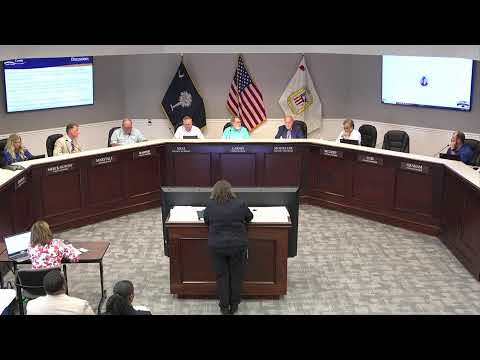
Lancaster County Council reviews stormwater department operations, fees and enforcement needs
Summary
Stormwater Director Terrence Barr told Lancaster County Council the department has increased plan reviews and inspections and is funded in part by a $60 residential stormwater fee.
Stormwater Director Terrence Barr told Lancaster County Council on an undisclosed meeting date that the county’s stormwater team has increased plan reviews and inspections and is funded in part by a residential stormwater fee of $60.
The update, presented during discussion of the administrator’s recommended budget, covered the department’s regulatory role in the county’s small MS4 area (the panhandle above Highway 5), staffing and recent workload increases, and a list of operational gaps staff say must be addressed before the first reading of the budget on May 27. "Our stormwater fee is $60 versus Pineville area about $78," Barr said during his presentation.
Barr and Deputy Angela Crockett described the department’s work under the MPDES/MS4 permit framework: reviewing development plans, inspecting post‑construction controls and preparing an annual stormwater management program plan that must be updated and reported to state regulators. The presenters said the department currently has seven employees and reported 228 plan reviews to date for FY25 and 812 inspections so far this year, up from about 700 last year. Staff also reported cost savings from moving some lab testing and inspection reporting in‑house.
Council members pressed staff on several operational issues. Barr said the county has not updated its stormwater management program plan since 2018 and recommended developing an enforcement response plan and an ordinance to give the county tools to require compliance. He identified other needs: clarifying the department’s level of service and easement/right‑of‑way rules, updating maps, more staff training to handle recent hires, and better tracking of complaint history.
Council Member Billy Mosteller and Council Member Brian Carnes raised concerns about long‑term developer responsibility for compaction and washouts. Carnes urged stronger warranties or bonds to ensure developers repair problems that appear years after construction; staff said the UDO rewrite will include infrastructure warranty ideas. County staff also said they will explore whether the stormwater program should move back under Public Works to improve synergies with compaction and road work reviews.
On fees, staff explained the base single‑family residential fee is $60 and that commercial fees are calculated differently based on impervious area; staff said the fee levels are set in the county budget. A council member noted a local church’s stormwater assessment was much higher and asked staff to clarify how impervious area and ERU calculations affect large properties.
No formal ordinance vote or fee change occurred at the meeting. Staff described directions and next steps: update the stormwater management program plan, draft an enforcement response plan and supporting ordinance, consider a warranty requirement for developers in the UDO rewrite, and explore organizational placement of the stormwater program for better coordination with Public Works.
The presentation and questions were recorded during the budget discussion; staff provided additional packet materials on facility rents, contractual services, and travel and training that the council requested at a prior retreat.