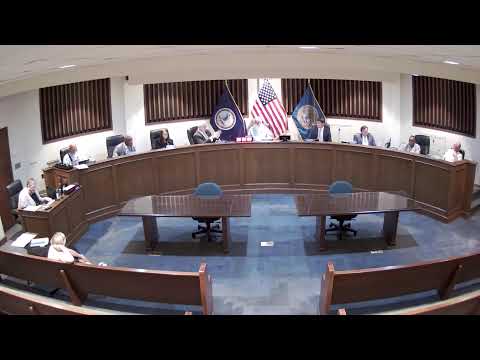
Prince Edward supervisors approve Oak Lane 5-MW solar permit and siting agreement after divided hearing
Loading...
Summary
Prince Edward County supervisors voted to approve a special-use permit and the related siting agreement for Oak Lane Solar Farm LLC, permitting a solar energy facility of up to 5 megawatts on roughly 95 acres adjacent to U.S. Route 360.
Prince Edward County supervisors voted to approve a special-use permit and the related siting agreement for Oak Lane Solar Farm LLC, permitting a solar energy facility of up to 5 megawatts on roughly 95 acres adjacent to U.S. Route 360.
The applicant, CEP Solar / Commonwealth Energy Partners, presented the proposal and detailed voluntary conditions, including a one-time voluntary payment of $112,500 to the county and an annual payment of $1,400 per megawatt-acre; county staff estimated total taxable revenue from the project at roughly $561,587. The board approved the siting agreement following the public hearing by a 7–1 vote.
Why it matters: the project represents the county’s continued consideration of small-scale solar development as a revenue source and land-use option. Supporters said it can generate local construction jobs, recurring payments to the county and landowners, and emission-free electricity. Neighbors and some supervisors pressed for clearer protections on erosion, stormwater, panel damage and end-of-life decommissioning guarantees.
Commonwealth Energy Partners’ manager Tyson Utt described the company as “a Virginia based small business” and said the site is “set back from the roads, be out of sight… and quiet once operational.” CEP’s presentation said the facility would likely use about 50 acres for panels, reserve roughly 45 acres for timber or other landowner uses, have no homes within 600 feet of the panel area, and aim for a 2027 construction start with a planned 40-year operation.
The applicant outlined technical and mitigation commitments the team proffered beyond ordinance minimums: a vegetative buffer and commercial timber use along Route 360, inverters set back 300 feet from property lines, early installation of vegetative buffers during construction, limiting active disturbance to no more than 50% of the site at any time, modeling panels as impervious surfaces for a conservative stormwater design, and commitments to maintain topsoil and to stabilize the site at decommissioning.
Opponents raised several concerns during the public hearing. Neighbors and property owners asked how the project would affect local streams and downstream creeks, worried about sediment and nutrient runoff, questioned the robustness of decommissioning surety and change-of-ownership notifications, and asked who would pay to remove damaged panels after a severe weather event. One nearby resident said he drives by the site “every day” and opposed the visual impact; others cited studies or anecdotes they said showed property values falling near solar installations.
Several speakers backed the project. Representatives of CEP, engineers and counsel were present to answer technical questions; local business and agriculture advocates said small, distributed solar projects can keep farmland in production while producing reliable local electricity. A local landowner and project proponent described the family’s long-term stewardship of the property and urged the board to approve.
Board and procedural issues: during questioning supervisors focused on specific permit conditions. One supervisor asked about the project’s decommissioning surety language in the proposed conditions and noted apparent tension between clauses that require the county be notified 30 days before cancellation and other clauses that say in no circumstance shall a surety be withdrawn before decommissioning obligations are met. Planning staff and applicant counsel said those examples were standard permit conditions and that the county would need to enforce bond and surety requirements; the permit conditions available to the board include a requirement that changes in the party responsible for decommissioning be reported within 60 days.
The planning commission earlier found the proposal “substantially in accord” with the 2014 comprehensive plan and recommended approval with conditions. The applicant said it had modified the design and added voluntary commitments after the commission and community input.
Formal actions and outcome: the board approved the site and agreement for Oak Lane Solar Farm LLC, including the one-time and recurring payments described in the siting agreement. The board also approved the special-use permit with the conditions forwarded by the planning commission and supplemented by the applicant’s proffers. A board member noted public comment counts and interests during his remarks: “By my account, we had 13 people sign up. Eight people spoke in favor… and five spoke against.”
What remains: the approved permit includes several conditions and requires state-level stormwater permits and other agency coordination. The applicant said the project would connect to distribution lines on Route 360 and would require roughly nine months of construction. The project’s decommissioning and panel-recycling practices were discussed but not modified with a specific county-administered disposal guarantee; several supervisors and commenters requested clearer, enforceable arrangements for end-of-life recycling and post-storm cleanup costs.
The board’s approvals allow the project to proceed to the permitting and state-review stages required for construction; staff and the applicant said they will continue coordination with county departments and state regulators as the project advances.