Get Full Government Meeting Transcripts, Videos, & Alerts Forever!
Get email alerts on the Group Homes Foster Care topic
No spam. Unsubscribe anytime.
Planning commission denies special-use permit for Impact 928 group home in Havasu Heights
Summary
After extensive public comment and questions about staffing, funding and location, the Mohave County Planning and Zoning Commission voted to deny a special-use permit for a proposed group home for teens operated by Impact 928 in Havasu Heights.
The Mohave County Planning and Zoning Commission on May 14 voted to deny a special-use permit request from Impact 928 to operate a group-style residential home for teenagers at assessor parcel number 12019125 in the Havasu Heights area of Lake Havasu City.
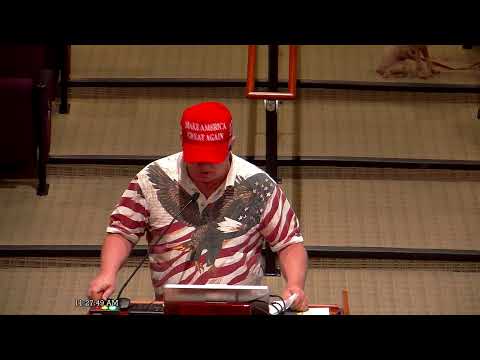
The commission’s denial followed about an hour of public testimony and questions from commissioners about staffing levels, funding, zoning and community notification. Opponents cited safety and sustainability concerns; supporters, including a former foster youth, urged local placements for teens.
Impact 928’s representative told the commission the group held a town hall on May 7 at the Lake Havasu Aquatic Center and that about 30 neighbors attended. The representative said the organization distributed flyers, left business cards with neighbors and “we have an online petition with 400 plus signatures supporting what we’re going to be doing.” The applicant also said paperwork had been completed and that the organization had formed a 501(c)(3).
Neighbors and other speakers pressed the applicant on operational details. Diana Santa said, “Staff, according to a lot of the information we find, it’s supposed to be 1 staff member per 4 people,” and questioned how the organization would sustain payroll, noting an estimate she prepared for staffing costs. Tammy Milke, a school counselor who identified herself as a Havasu Heights resident, said the project leaders “do not have any experience in what it takes to completely run a group home and meet the needs of these young girls.”
Other residents raised concerns about location and facility design. Roxy Gidocchio described the submitted floor plan as “very commercial,” noting multiple showers and plumbing arrangements, and urged that a commercial-style facility did not fit the residential-agricultural neighborhood. John Crowley and Jay Darien said outreach to neighbors had been incomplete. Lucetta Richard said the project’s scope and sustainability were unproven and urged caution, citing recent high-profile investigations of group-care facilities in Arizona as context.
A supporter, Christina Loya, who said she had been a foster youth, told the commission she was “given an opportunity to be removed from my unsafe home and able to . . . make a difference and change” and argued the county lacked homes for older teens. Laurie Graves, who said she taught at-risk teens for 30 years, cited a national association’s view that group care should be a last-resort placement and noted Arizona Senate Bill 1333 (as referenced in testimony) lists group care as a last-resort option under certain placement hierarchies.
Staff clarified zoning and permitting mechanics at the commissioners’ request. Staff said the underlying zoning would remain RE (residential recreation) and that a special-use permit allows a commercial-type use in that zoning; one condition of approval would require a site plan meeting commercial improvement standards. Staff also recapped outreach steps and the town-hall meeting described by the applicant.
After commissioners’ discussion of location, community support and operational uncertainty, a motion to deny the special-use permit was made and seconded. The commission chair called the vote and the motion to deny passed; the transcript records the commission approving denial but does not record a detailed roll-call vote or individual vote tally in the public record excerpt.
Because commission recommendations are forwarded to the Mohave County Board of Supervisors, staff noted items with recommendations will be heard by the board; the commission’s process information indicates recommended items will be scheduled for the board of supervisors on June 2, 2025. The denial from the planning commission will therefore go on the record and be part of the materials the Board of Supervisors receives.
Speakers who testified included multiple neighbors, an applicant representative for Impact 928, and a former foster youth who supports local placements. Commissioners asked specifically about staffing ratios, maximum residents, funding sources and whether the nonprofit was connected to Calvary Baptist Church; the applicant said the church address had been used temporarily for paperwork but said the organization is not run by the church and that no church funding was reported.
The commission’s denial does not, by itself, authorize or prohibit future applications; it records the commission’s current recommendation based on the materials and testimony presented at this hearing.