Get Full Government Meeting Transcripts, Videos, & Alerts Forever!
Get email alerts on the City Budget topic
No spam. Unsubscribe anytime.
Nogales budget workshop flags unpaid construction, unpaid engineering on WIFA projects, audit delays and a proposed tiered salary increase
Summary
At a May 14 budget workshop the Nogales finance director reported year‑to‑date revenues and expenses; council members pressed for answers about unfinished WIFA water/sewer projects and engineering costs, auditors delayed the FY23-24 report and the city manager proposed a modest, tiered pay package and incentive pay for police and fire.
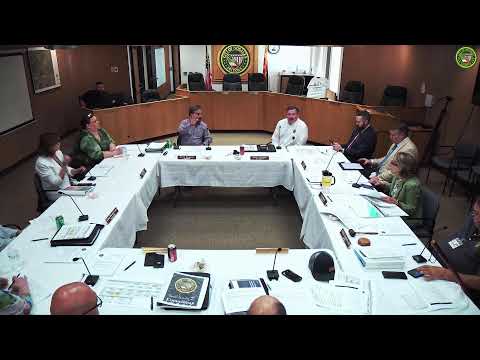
The Nogales City Council spent the May 14 study session reviewing city finances, unfinished water and sewer work paid for with a Water Infrastructure Finance Authority (WIFA) loan, delays in the city audit, business‑license enforcement and a proposed tiered employee pay plan.
Jean, the city’s chief financial officer, presented year‑to‑date numbers through March and told the council, “For our general fund for revenues, we are actually sitting at 91% of our budget at $24,798,498,” and reported general‑fund expenses and enterprise fund numbers for water, sewer and refuse. Jean said the water fund had collected $2,909,949 (83% of budget) and expended $3,409,179 (71%), leaving revenues below expenses by “499, almost 500,000.” She said the water carryover is $1,178,166 and warned the city is drawing on that carryforward when expenses exceed revenues.
City Manager Joel Kramer led much of the discussion on WIFA projects that funded engineering and plans for dozens of water and sewer streets. Kramer repeatedly told the council that many engineering designs were paid for but few projects completed: “How many did we get complete? 5,” he said when summarizing the WIFA portfolio. Council members pressed staff about the apparent mismatch between engineering payments and construction completions, with one council member noting engineering payments “700 and plus thousand dollars” and asking whether the city had bought plans it could not afford to build.
Kramer and other council members said some engineering work dated from earlier years, that construction cost estimates have since risen and that the city must decide which projects to prioritize. Kramer warned that without higher rates the city will keep needing loans; he summarized the tradeoff to the council: raise water and sewer rates to sustain infrastructure, or continue relying on loans with the risk of depleting carryforward funds.
Council members and Kramer also raised ADEQ (Arizona Department of Environmental Quality) paperwork and potential permit consequences. Kramer told council he and the city attorney had received new ADEQ documents and said staff planned to meet ADEQ; he told the council ADEQ could revoke permits or impose conditions if compliance issues are found.
Auditor timeline and status: Jean told the council she had met with the auditors and that the firm asked for an updated attorney letter; she said she would provide responses and expected to submit the requested materials the same day. Auditors from the firm currently doing Nogales’ audit (identified in the meeting as CLA) offered their principal for a June 4 presentation; council members asked that the audit be provided to them several days ahead of any presentation so they could review it in advance.
Business licensing and compliance: staff reported 2,854 active business licenses, 55 in process, 19 suspended or canceled and 18 new licenses in March. City staff noted many businesses begin operating while their licensing is still in process; staff said they are tracking businesses and sending applications when they find unlicensed operations. Kramer and other council members emphasized stronger code‑compliance and licensing enforcement to protect city revenue from transaction privilege tax (TPT) shortfalls.
Salary proposal: Kramer presented a tiered pay proposal designed to narrow market inequities. The approach splits non‑public‑safety staff into three tiers (lower, middle, upper) and combines a flat payment with a percentage increase so lower‑paid employees receive proportionally larger raises. Acting HR director Laurie (no last name provided) described the approach as “novel and different” and said it would help reduce turnover at lower pay grades. Kramer proposed a modest overall increase (in the materials provided to council the modeled average increase for the lower tier was roughly 3.93%) and an incentive pay schedule for police and fire tied to service dates. Staff said the proposal would be included in the budget packet the council requested for the June meeting.
What the council asked staff to do: provide full budget books ahead of the June 4 meeting, circulate the audit report before the presentation, bring a prioritized capital improvement plan for water and sewer projects and provide options for rates and project phasing. Kramer said staff would get the books to council in advance and that more detailed follow‑up on WIFA funding and ADEQ items would be provided as staff meets with those agencies.
No new rate increases or final budget actions were adopted at the May 14 session; the meeting was a study session and staff sought direction and priorities from council for the FY2025‑26 budget.