Get Full Government Meeting Transcripts, Videos, & Alerts Forever!
Get email alerts on the Drug Pricing Transparency topic
No spam. Unsubscribe anytime.
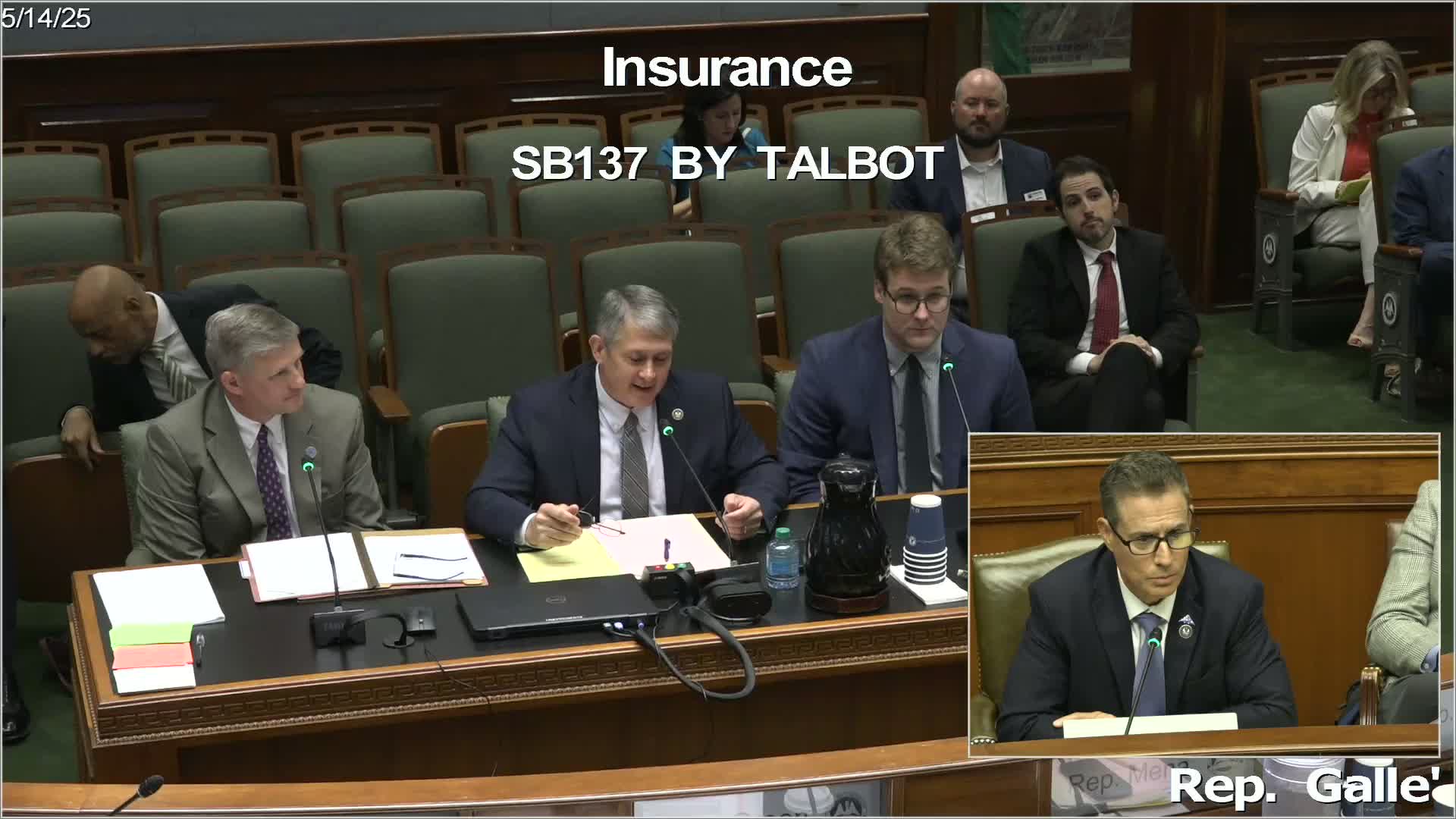
Committee approves PBM transparency amendments after pharmacy and insurer testimony
Summary
The House Insurance Committee reported House Bill 264 with amendments after testimony from independent pharmacists and insurers about transparency in PBM rebate and payment practices.
The House Insurance Committee adopted amendments and reported House Bill 264, a transparency measure for pharmacy benefit manager (PBM) rebate practices, after testimony from independent pharmacists, patient advocates and insurers.
Sponsor Representative Echols described the bill as a consumer‑ and pharmacy‑focused transparency measure. “This bill seeks to expose hidden profit mechanisms within the PBM industry,” he told the committee, adding the Department of Insurance should be empowered to review and enforce transparent reporting.
Independent pharmacists and trade representatives urged the committee to approve a version that would let the regulator see rebates and concessions that PBMs negotiate with manufacturers and retain rather than passing through to plans or pharmacies. Pharmacist Jonathan Hartman said the industry needs data to ensure plan sponsors and pharmacies are paid fairly and warned that modeling and projections of drug spend could be affected if contractual guarantees were removed without alternatives.
Insurers, PBMs and large health plans urged technical clarifications. Industry witnesses told the committee that definitions in the initial amendment were imprecise and that the Department of Insurance lacks staff and established processes to approve PBM contracts as drafted. Several witnesses supported giving DOI authority to examine relevant books and records but opposed a requirement that the commissioner pre‑approve contracts.
Representative Wilder moved favorable passage. The committee adopted the sponsor’s amendment set and accepted a related technical amendment offered by Representative Willard after negotiating language that narrowed contract‑approval authority and added an administrative appeal path to the division of administrative law. The bill was reported with amendments; committee members asked Echols to continue working with DOI and industry to refine definitions and implementation steps before floor action.