Get Full Government Meeting Transcripts, Videos, & Alerts Forever!
Get email alerts on the Legacy Oilfield Cleanup topic
No spam. Unsubscribe anytime.
Committee advances bill aimed at speeding remediation of legacy oilfield sites; opponents warn of reduced remedies
Summary
House Bill 602 would streamline cleanup by emphasizing a regulator‑approved remediation plan and clarify damages. Backers say the change reduces litigation and makes sites shovel‑ready for new activity; landowners caution it may cap certain non‑remediation damages and leave owners undercompensated.
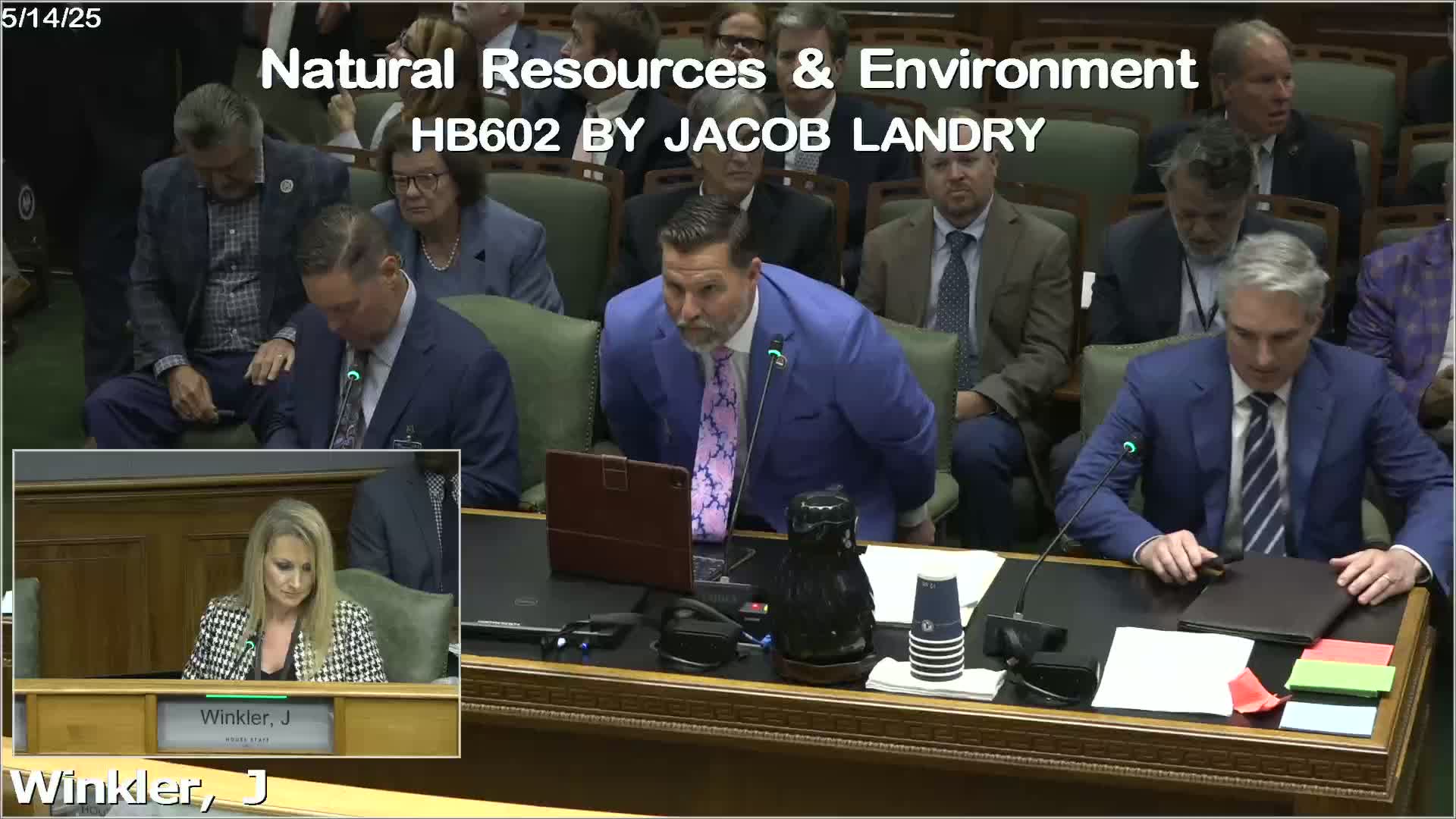
The House Natural Resources Committee on May 14 reported House Bill 602 favorable after substitute language that emphasizes Department of Energy and Natural Resources review and the use of the most feasible remediation plan.
Sponsor Rep. Jacob Landry told the committee the bill is designed to speed cleanup of legacy exploration and production properties so sites can be returned to productive use. Supporters — including the Louisiana Oil & Gas Association and several landowner groups — said protracted litigation and uncertainty have discouraged investment and delayed remediation efforts.
William Kaufman, an attorney who says he represents small operators and some landowners, told the committee the measure will not “relinquish oil and gas operators from cleaning up any environmental damages.” Logan representatives and energy‑sector witnesses said the bill will give the Department of Energy and Natural Resources clearer authority to approve remediation plans and will preserve the ability of owners to seek contract‑based remedies.
Still, landowners and community witnesses pressed for stronger safeguards. Melinda Brown, counsel for Delacroix Corporation and government affairs chair of the Louisiana Landowners Association, said several features need tightening before landowners can support the measure, including: (1) whether remediation standards should be those in LDEQ’s Recap/29B or another standard; (2) the evidentiary standard for economic damages (the substitute uses a clear‑and‑convincing standard for some non‑remediation damages, which landowners oppose); and (3) how market valuation will be set when leases are old or production has long ceased.
At the hearing, Don Caffrey of the Natural Resources Management Association said the legislation, as revised, would better align incentives and “signal to industry that we are open for business,” while retaining that remediation must take place. Several witnesses urged that anti‑indemnity language be included so legacy liabilities do not get passed to modern, responsible operators.
Why it matters: Louisiana has an inventory of legacy sites that contain old pits, orphaned infrastructure and other potential contamination. How the state balances faster cleanup with full restoration and fair compensation will affect future investment, tax revenue and property values.
What’s next: Sponsors said they will continue stakeholder negotiations on standards and evidence levels before floor consideration. Committee members urged the sponsor to work with landowners, industry and DENR staff to clarify valuation and damage mechanics.