Get Full Government Meeting Transcripts, Videos, & Alerts Forever!
Get email alerts on the Carbon Sequestration Mineral Rights topic
No spam. Unsubscribe anytime.
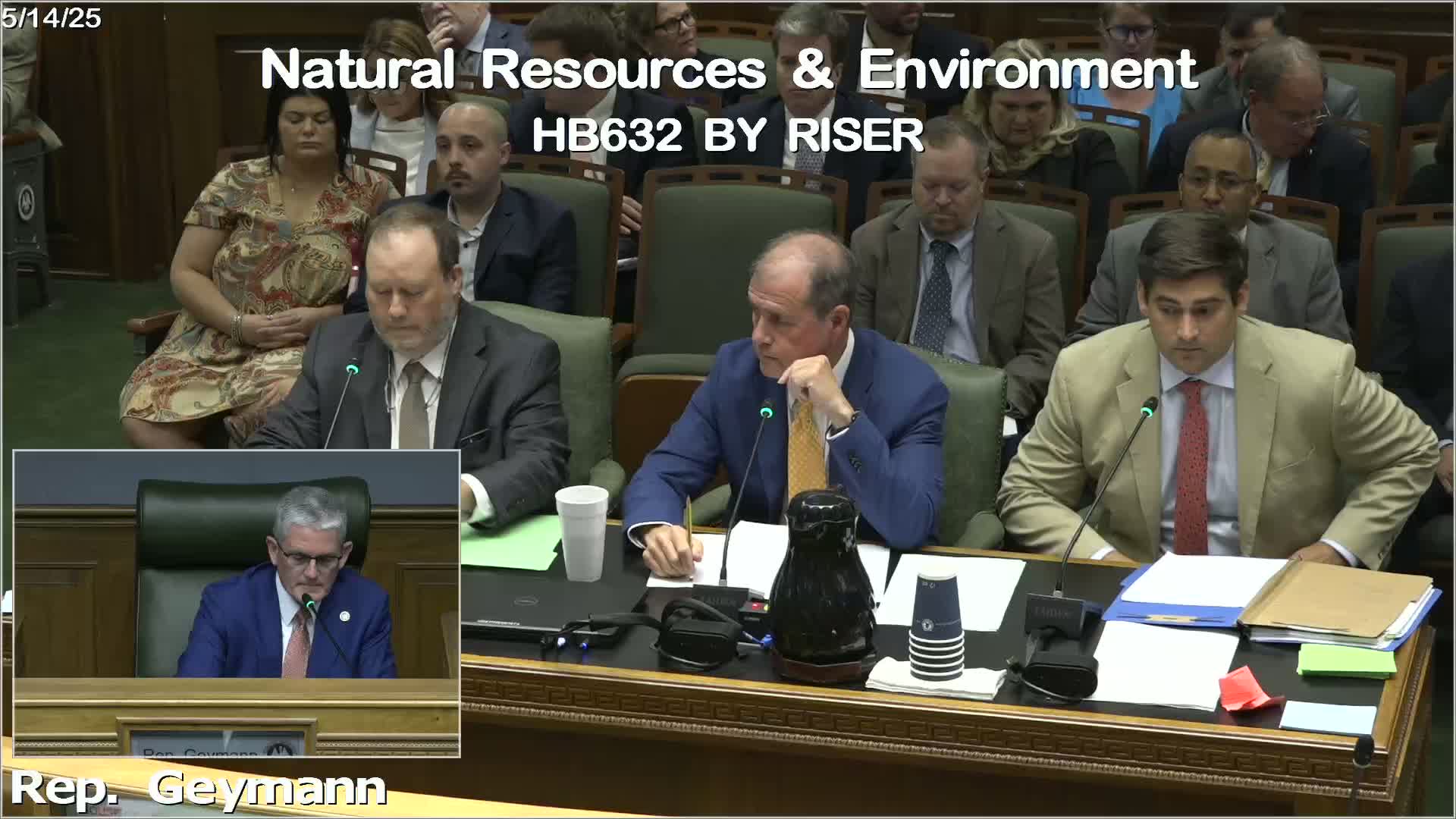
House committee backs bill to clarify mineral‑owner rights in carbon sequestration units amid contentious debate
Summary
The House Natural Resources Committee on May 14 reported House Bill 632 favorable after adopting amendments that narrow and clarify mineral‑owner protections in proposed CO2 sequestration units.
The House Natural Resources Committee on May 14 reported House Bill 632 favorable after adopting amendments that carve out a Caldwell Parish project and change the compensation standard for mineral servitude owners.
The measure, sponsored by Rep. Frank Reiser, responds to disputes over who controls subsurface rights when carbon dioxide (CO2) is injected for long‑term sequestration. Supporters said the bill recognizes mineral owners as stakeholders in unitization, sets a path for compensating owners forced into a sequestration unit and reduces the threat of state‑wide litigation. Opponents argued the proposal would make storage projects more costly, broaden mineral servitude definitions and invite protracted court fights.
Danny Ford, who testified for a group of mineral servitude owners, summarized the bill’s aim bluntly: “This bill does 3 things,” he told the committee, laying out that the measure (1) distinguishes sequestration from enhanced oil recovery, (2) makes mineral servitude owners parties of interest in unitization, and (3) creates a mechanism to compensate mineral owners forced into a unit. Ford and other landowner witnesses said the proposed changes are intended to preserve the value of mineral estates and avoid what they described as “effective condemnation” when injection plumes make future drilling uneconomic.
Department of Energy and Natural Resources officials told the committee the bill is meant to clarify roles, not to stop sequestration projects. Tyler Gray, Secretary of DENR, and Blake Canfield, the department’s executive counsel, testified that the measure is intended to preserve permitting standards while ensuring impacted owners are identified early and compensated where appropriate.
Several oil‑industry and business witnesses opposed key parts of the draft, saying they would push costs up and could deter development. Bob Baumann of Hood & Baumann warned the language’s breadth could allow a single mineral holder to “blackball” a project and that some data the industry regards as proprietary would be exposed under proposed notice and reporting provisions. Other industry representatives said many details — such as how to measure “fair market value” for mineral interests and how to compensate dispersed royalty owners — remain unresolved.
Committee amendments adopted during the hearing created a statutory carve‑out for a specific Caldwell Parish project governed under an earlier, project‑specific statute; changed a compensation reference to “fair market value”; and removed a provision that would have interrupted prescription for non‑use. After debate and public testimony the committee voted to report the bill favorable.
Why it matters: Louisiana is being targeted for CO2 sequestration projects as federal incentives and private investment grow. The bill attempts to balance two policy goals — enabling carbon storage development and protecting existing property and mineral interests — and reflects wider questions about who has decision‑making power under Louisiana property law.
What’s next: With the committee vote the bill moves to the full House. Sponsors and opponents said they will continue negotiations on defining compensation formulas, the scope of owners entitled to notice and whether additional protections should apply to smaller mineral owners who lack legal resources. The committee adopted changes on the record and requested follow‑up work to refine valuation and notice mechanics.