Get Full Government Meeting Transcripts, Videos, & Alerts Forever!
Get email alerts on the Hazing Prevention topic
No spam. Unsubscribe anytime.
Louisiana lawmakers back hazing study task force and advance mandatory anti‑hazing training bill with amendments
Summary
The House Education Committee voted to report a hazing prevention task force resolution favorably and advanced a bill requiring anti‑hazing education for postsecondary students, after testimony from survivors and university stakeholders and adoption of amendments that change the bill’s scope and effective date.
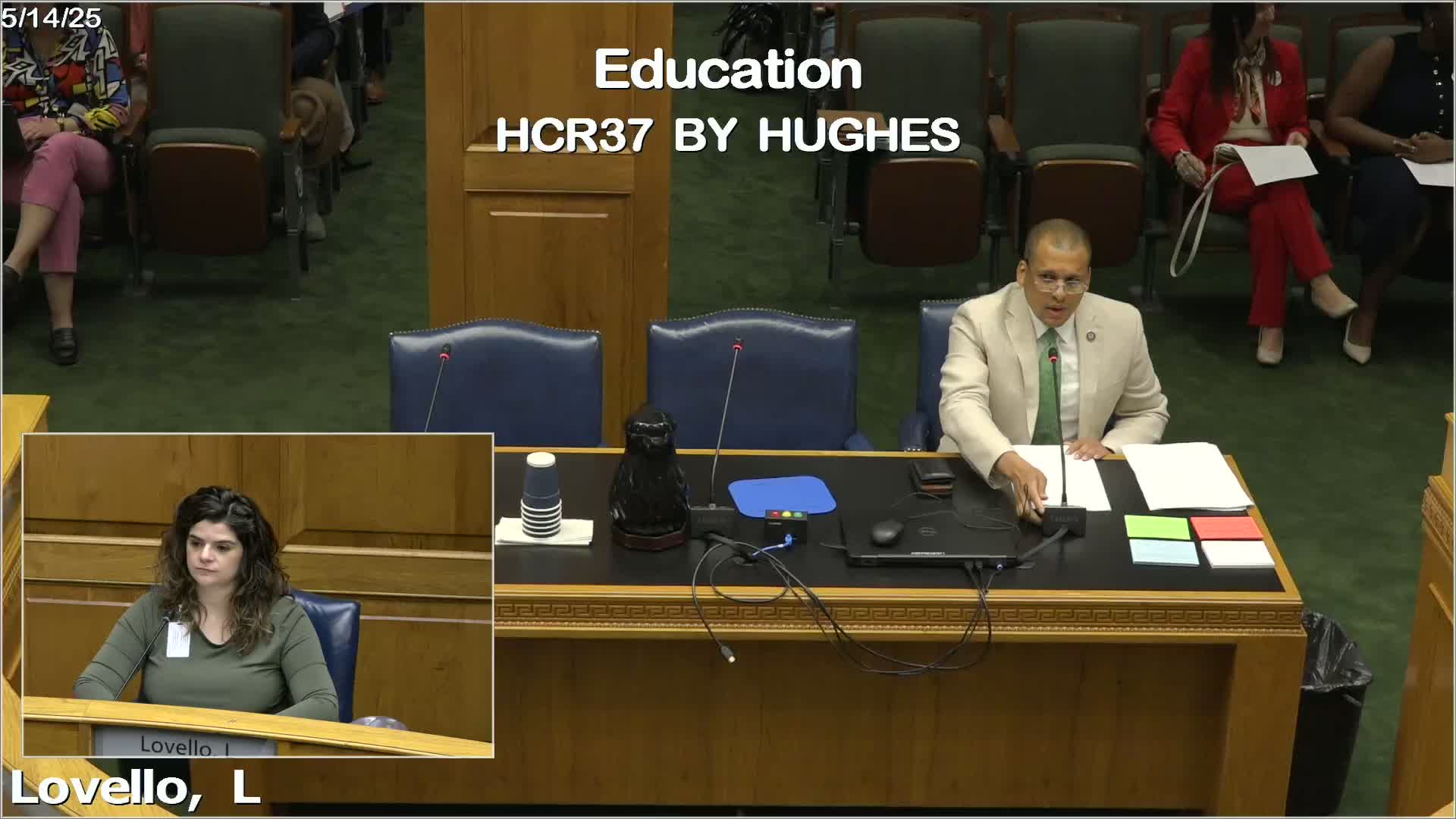
Representative Royce Hughes, who introduced House Concurrent Resolution 37, told the House Education Committee the measure would create a Hazing Prevention Task Force to review criminal and civil statutes and postsecondary policies following recent campus deaths related to hazing. “I come before you with House Concurrent Resolution 37, which would establish the Hazing Prevention Task Force,” Hughes said.
The committee voted to report HCR 37 favorably. The resolution directs the Board of Regents to staff the task force and includes representatives from higher education, students, campus public safety and legislators. Hughes said the family of Caleb Wilson supports forming the group and hopes it will produce policy and legislative recommendations.
Separately, the committee considered House Bill 279, the Anti‑Hazing Prevention Act introduced by Representative Barbara Boyd. Boyd described HB 279 as “a tool…to help empower and educate our children regarding hazing and what’s allowed, what hazing looks like, informing students that hazing is now a felony,” and said the measure would require anti‑hazing instruction for students who intend to pledge or join campus organizations.
Several students testified in support of HB 279, providing detailed accounts of alleged hazing within university bands. Catherine Erwin recounted derogatory treatment and humiliating initiation activities she experienced while on the LSU drumline; Dakota Espinosa described being coerced into substance use, alleged incidents of sexual misconduct and disciplinary actions they said followed after they reported misconduct. Erwin said the environment “never felt like a safe place for me to be.” Espinosa said reporting led to retaliation and lasting harm to their health and daily functioning.
Lawmakers debated the bill’s fiscal and implementation impacts. Representative Brett Fryberg and others raised concerns about the bill’s fiscal note and whether institutions need more time to implement a mandatory credit course. Boyd responded that an amendment converted the requirement to an elective for general students and a mandatory course for students intending to pledge or join organizations, and that the effective date was moved to Aug. 1, 2026, after Board of Regents officials said they would need more time for implementation.
Representative Ras Brass offered—and the committee adopted—an amendment that replaced the body of HB 279 with existing statutory requirements (cited in the hearing as RS 17:1801.1) for annual training, and doubled that training to two hours while adding an enforcement mechanism allowing an institution to terminate an organization’s campus recognition for noncompliance. Representative Brass said the change shifts most of the compliance burden to organizations rather than requiring a university credit hour for every student. Boyd said she will continue to work with Representative Hughes’ task force to align longer‑term policy and criminal accountability the Wilson family seeks.
After amendments were adopted, the committee voted to report HB 279 with amendments and to recommit the bill to the Appropriations Committee for fiscal review. Representative Boyd closed by saying the measure is meant to “protect our kids” and that she supports preserving the family’s request for separate legislation focused on penalties for instructors or others who enable hazing.
What’s next: HCR 37 will proceed as a concurrent resolution with Board of Regents staffing the task force; HB 279 was advanced with amendments and will receive further fiscal review in Appropriations. The task force, as configured in testimony, is expected to deliver stakeholder findings that lawmakers said could inform statutory and institutional policy changes.