Get Full Government Meeting Transcripts, Videos, & Alerts Forever!
Get email alerts on the Elections Campaign Free Zone topic
No spam. Unsubscribe anytime.
House panel splits 300- vs. 600-foot debate; bill to shrink campaign-free zone fails on tied vote
Summary
Representative Larvadain proposed reducing Louisiana’s campaign-free zone outside polling places from 600 feet to 300 feet and excluding designated parking lots; after testimony from the Secretary of State’s office and divided committee debate the bill failed on an 8–8 vote in committee.
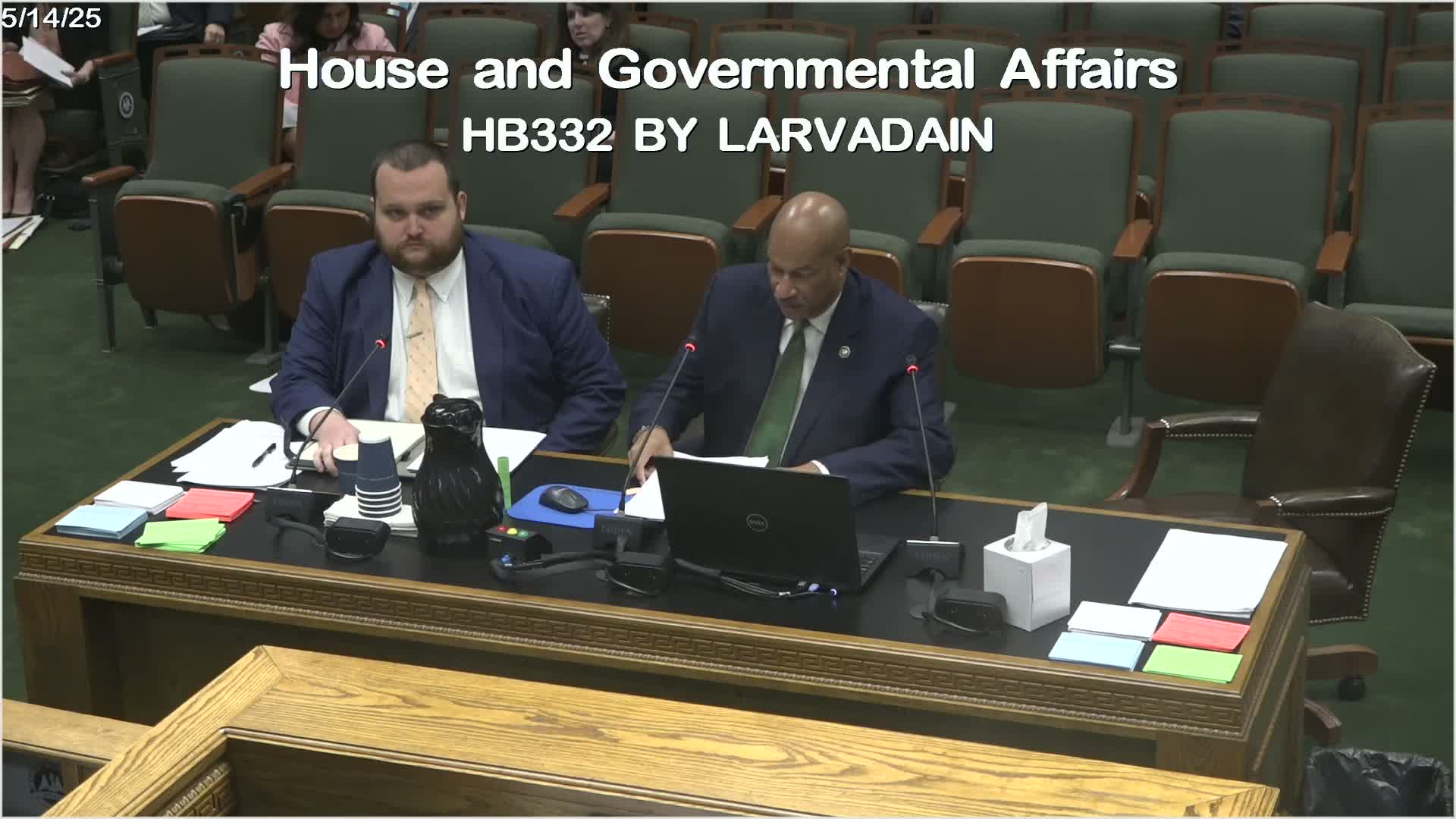
Representative Larvadain brought House Bill 332 seeking to reduce Louisiana’s no-electioneering radius around polling places from 600 feet to 300 feet and to clarify that designated parking lots attached to polling sites are within the protected area.
Proponents said the change would make enforcement clearer and reduce the large, unevenly applied 600-foot perimeter. Representative Larvadain told the committee that 600 feet is a “huge area” that sometimes sweeps in nearby property and creates enforcement inconsistencies.
“600 feet is a huge area and is constantly having, unequally enforced boundaries all around the state,” said a representative for proponents during the hearing. Supporters also added a proposed carve-out so the protected zone would explicitly include an attached or designated parking lot, which the sponsor said was intended to protect voters while they are in vehicles entering or exiting a site.
Secretary of State staff urged the committee to retain the 600-foot standard. Catherine Newsom, first assistant to the secretary of state, told members the 600-foot boundary had been upheld by Louisiana precedents and provided “clarity for commissioners to enforce.” Newsom cited prior state cases and argued a smaller zone could reintroduce confusion and potentially return the state to the intimidation and election-tampering concerns the larger zone has historically addressed.
Witnesses and committee members split on the balance between voter access and free-speech rights. Some representatives said lowering the radius would help grassroots notification and last-minute efforts in dense neighborhoods; others said the longer buffer is important for voter protection and for practical enforcement, especially where early-voting sites have a single entry point.
After extended questioning and public comment, the committee voted on Larvadain’s amendment and then on the bill. The motion to report House Bill 332 favorably as amended was objected to and, on a roll call, the committee was evenly divided at 8 yeas and 8 nays, and the measure failed to be reported from the committee.
The hearing included testimony from local clerks and civic groups. The Secretary of State’s office noted enforcement and operational concerns and recommended preserving the 600-foot radius that has been in place since the statute’s increase from 300 feet in 1980.