Get Full Government Meeting Transcripts, Videos, & Alerts Forever!
Get email alerts on the Insurance Claims Bad Faith topic
No spam. Unsubscribe anytime.
Committee backs bill narrowing insurers' bad-faith exposure after excess judgments
Summary
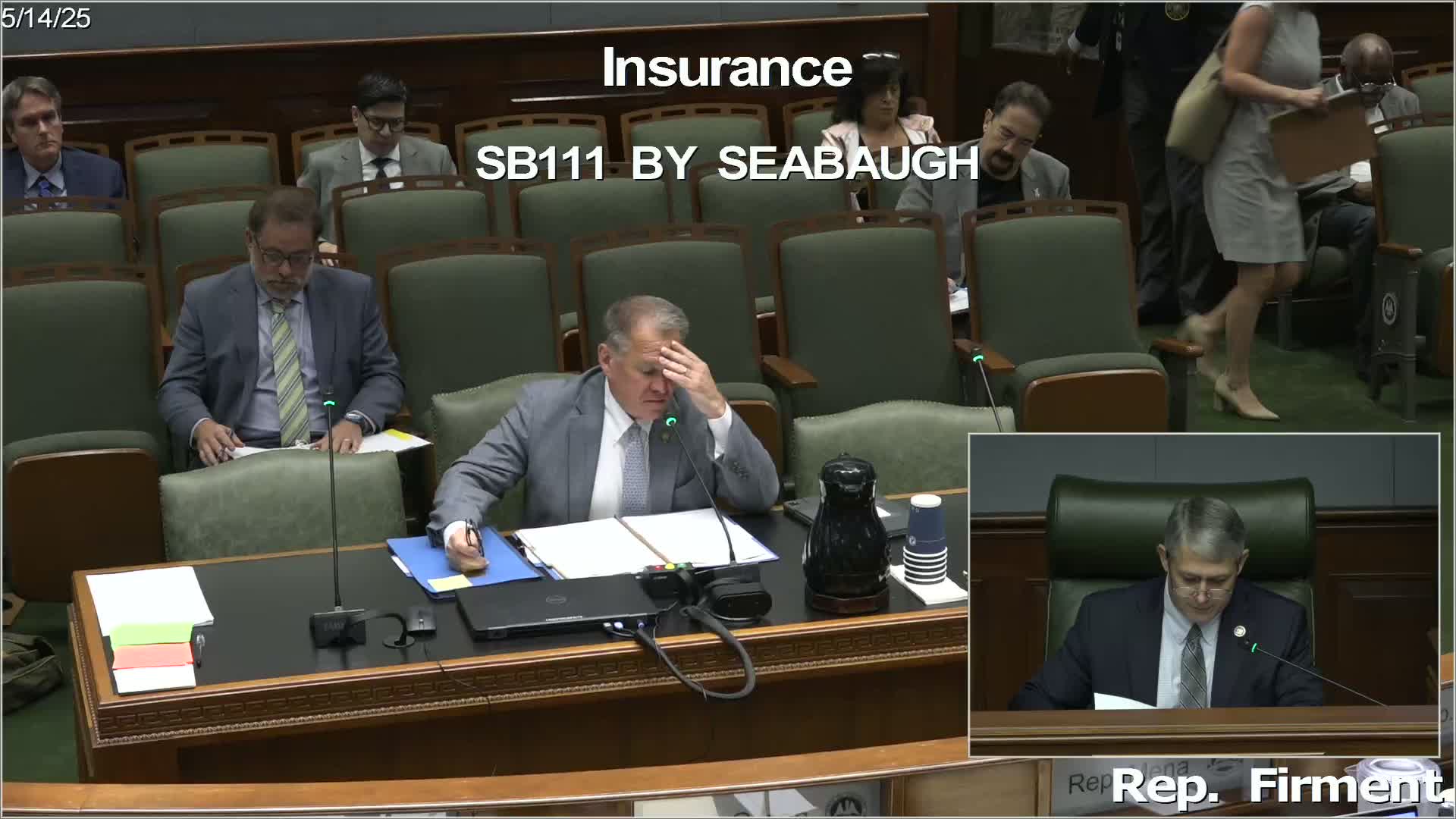
The House Insurance Committee on Wednesday reported Senate Bill 111 favorably (10-3). The measure would limit when an insured (or assignee) can bring a bad-faith claim against an insurer after a jury renders a judgment exceeding policy limits, focusing on whether the insurer had a good-faith dispute over liability or medical causation.
The House Insurance Committee on Wednesday voted to report Senate Bill 111 favorably, 10-3, after a lengthy debate over insurer duties and plaintiffs’ settlement practices.
Sponsor Senator Seabaugh said the bill would codify and limit a cause of action that the Louisiana Supreme Court created in Kelly v. State Farm. “If the insurer has a good faith dispute as to liability and they lose, they're not in bad faith,” Seabaugh told the committee, adding the measure would make bad-faith claims a fact question for juries rather than a near-automatic result of an excess judgment.
The bill responds to lawsuits that, supporters said, use short, time‑limited demands to pressure insurers into settling for more than policy limits. Seabaugh said plaintiffs’ lawyers sometimes “make a very short offer… and then refuse to accept policy limits offered thereafter going for an excess judgment in the hopes of making what's been called a Kelly claim.” The bill would clarify that where an insurer has a good‑faith dispute about liability or medical causation — or where no within‑limits offer was presented — a later bad‑faith claim should be resolved as a factual question rather than presumed.
Opponents warned the change could leave insureds exposed. Luke Williamson of the Louisiana Association of Justice argued the measure would likely increase litigation and allow insurers to pursue pre‑suit discovery that could delay relief for claimants. Industry witnesses including trade groups and insurers testified in support, saying the bill would let insurers defend cases they reasonably believe they can win without automatic bad‑faith exposure if they later lose at trial.
Committee members pressed sponsors on practical safeguards. Representative Glorioso asked whether the insurer’s duty to protect the insured’s interests still exists; Seabaugh answered that the bill recognizes a “good faith liability dispute” standard that must account for the insurer’s duty to the insured. Several members said they supported the bill’s goals while urging the courts and future legislation to monitor whether further statutory clarifications are needed.
A roll call recorded 10 yeas and 3 nays and the committee reported SB 111 favorably to the House floor.
What happens next: The bill was reported favorably to the House; if taken up by the full House it would proceed through the regular floor calendar and, if passed, return to the Senate for concurrence or further amendment.