Get Full Government Meeting Transcripts, Videos, & Alerts Forever!
Get email alerts on the Kratom Ban topic
No spam. Unsubscribe anytime.
Criminal Justice Committee advances bill to ban kratom after emotional testimony from families and health officials
Summary
The House Criminal Justice Committee voted to report Senate Bill 154 favorably after hours of testimony from doctors, law enforcement and families who lost loved ones they say were harmed by kratom; supporters urged a ban while industry and users urged regulation instead.
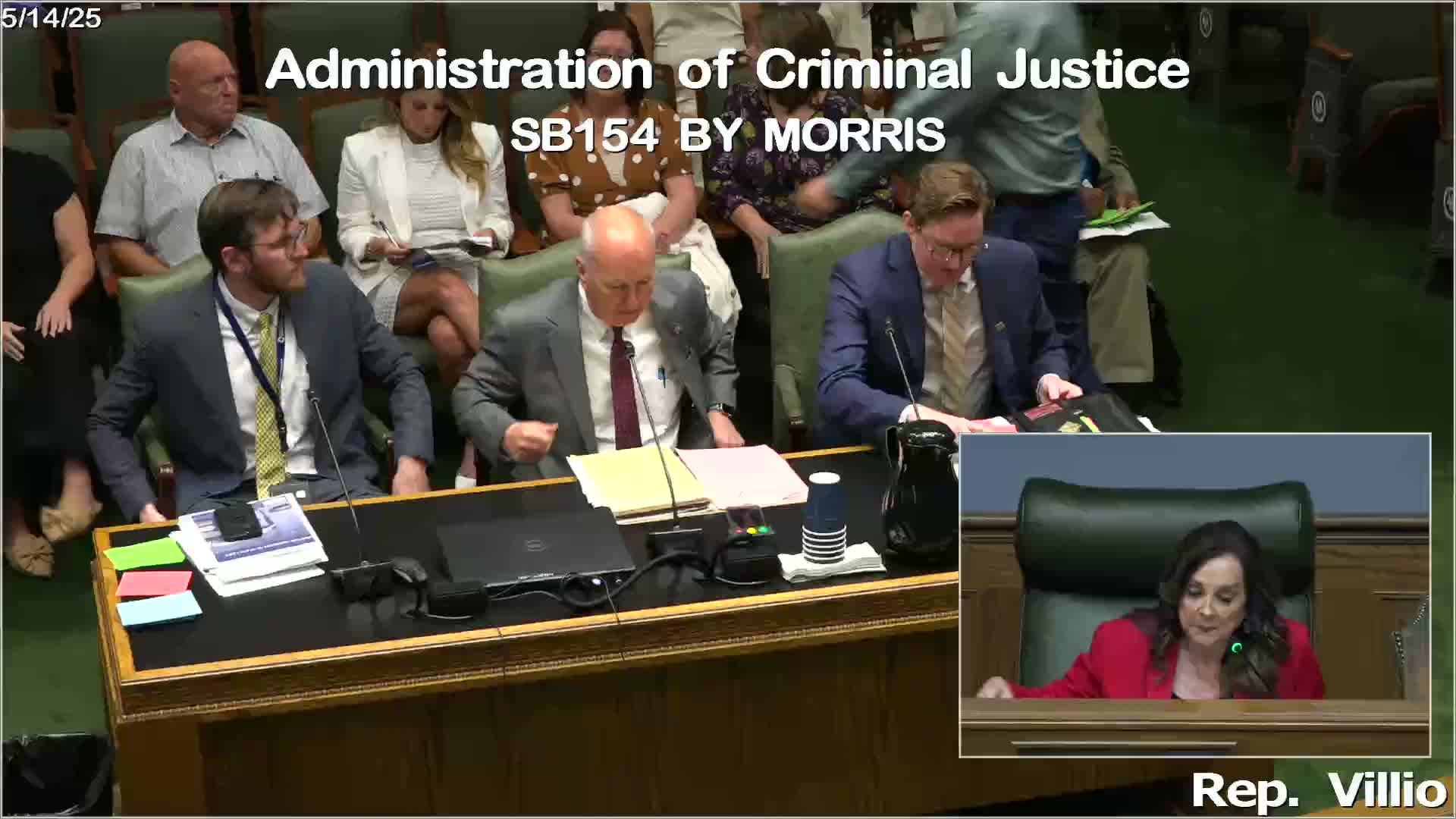
Senate Bill 154, a measure by Sen. Morris that would criminalize possession and sale of kratom, was reported favorably by the House Criminal Justice Committee on May 14, 2025, after a day-long hearing that drew dozens of witnesses and sharply divergent views.
Supporters led by Senator Morris and physicians from the Louisiana Department of Health described kratom as containing alkaloids that can produce stimulant effects at low doses and opioid-like effects at higher doses. Dr. Pete Croghan, deputy secretary at the Louisiana Department of Health, told the committee clinicians are seeing “an increasing number of patients suffering from kratom addiction,” and that treatment options and trial data remain limited. Sheriff Stephen McCain and other law-enforcement witnesses described purchases by children and easy retail access in convenience stores; Sheriff McCain said local ordinances had led to reduced availability in some parishes.
Family members gave the committee emotional testimony. David Labrano Sr. and Tara Ledoux said their adult relatives died after using kratom and urged lawmakers to keep the bill alive. Labrano said his son’s death certificate listed mitragynine toxicity. Multiple witnesses described overdose reports and families devastated by loss.
Opponents — including vendors, users and advocacy groups — urged a different approach. Matthew Lowe, executive director of the Global Kratom Coalition, and other users said natural kratom products are used by some to manage pain or to avoid prescription opioids. They argued the public-health problem is adulterated or concentrated products sold as “kratom” and urged consumer-protection laws or targeted bans of synthetic derivatives rather than a wholesale criminal prohibition. Industry witnesses said states that regulate kratom through consumer-protection acts instead of bans provide models for oversight.
The committee also heard technical evidence from Rebecca Chasson, chemistry manager at the Louisiana State Police lab, who testified that mitragynine is detectable in toxicology and that the lab identified it 82 times in DUI-related testing since adding it in 2023. Physicians including Dr. Smita Prasad, a Tulane addiction specialist, described case reports of liver toxicity, seizures and neonatal abstinence in babies exposed in utero.
During committee deliberations Representative Horton moved to report SB 154 favorably; Representative Boyer objected and quorum roll call followed. The committee voted to report the bill favorably (roll-call recorded on the transcript). The committee left open the prospect of additional fixes on the House floor but advanced the measure for further consideration.
Why this matters: The bill would shift regulation of a widely available botanical product into criminal law. Proponents say a ban addresses a rising number of severe harms and deaths; opponents say a ban would criminalize users and that the real public-safety risk is concentrated or synthetic products that can be regulated.
The committee record shows extended testimony from public-health officials, law enforcement and family members, and also robust industry opposition urging narrower regulation.
The Criminal Justice Committee’s vote sends SB 154 to the next stage of the legislative process; the bill’s language would make possession or distribution of listed kratom alkaloids a criminal offense if enacted.