Get Full Government Meeting Transcripts, Videos, & Alerts Forever!
Get email alerts on the Budget Deficit topic
No spam. Unsubscribe anytime.
Shasta County air board probes $1.8M deficit; staff to seek fee increases and review restricted funds
Summary
At a special April 22 meeting, Shasta County Air Pollution Control Board staff reported an approximately $1.8 million shortfall dating to fiscal 2013–14, outlined steps to examine restricted grant accounts and said fee increases will be proposed during the June budget cycle to reduce member jurisdiction assessments.
The Shasta County Air Pollution Control Board on April 22 learned that the district’s unassigned general purpose fund has gone negative and that restricted grant funds were masking a cumulative shortfall staff estimates at about $1.8 million to $2.0 million dating back to fiscal year 2013–14.
“It has recently come to my attention that the unassigned funds within the general purpose fund have gone negative and were being offset by restricted funds,” said Sean Ewing, director of Resource Management and the Air Quality Management District’s air pollution control officer, summarizing the finance review at the special meeting.
The shortfall matters because the district’s remaining operating gap will be covered through assessments on member jurisdictions — the county and the cities that participate on the board — unless staff can justify additional use of restricted funds or find other revenue. Ewing told the board staff is reviewing prior-year time accounting and grant administration to determine whether more restricted funds can be legitimately applied retroactively and said staff will bring proposed fee increases to the board during the June budget cycle.
Ewing outlined the district’s typical funding sources — state pass-through grants for nonstationary-source replacement programs, state subventions distributed on a per-capita basis, locally set permit fees (with some state- or federally-mandated components), penalties, and a motor-vehicle registration fee commonly referred to under AB 2766. He said district fees have not had a comprehensive update since the early 1990s and are constrained by the California Health and Safety Code cap that limits fee increases to 15% per calendar year.
According to the staff report cited at the meeting, the cumulative amount that was not appropriately time-accounted for is about $1.8 million covering roughly fiscal 2013–14 through 2023–24. Ewing said a specific restricted fund that staff is examining is “about 1.9” million dollars and that additional accounting work with the county auditor-controller is underway to confirm final amounts before assessments are sent to member jurisdictions.
Ewing told the board, “District staff is currently preparing fee increases to bring, before the air pollution control board in June of this year, and will prepare additional fee increases that will be brought to the board at the end of the calendar year to go into effect in January of 2026.” He added staff will also establish policies to improve time accounting and to ensure sufficient direct and indirect administrative costs are charged to grants and programs.
Board members pressed staff on next steps and the potential exposure for the county if one or more cities decline to pay assessments. A member noted that the City of Anderson’s unpaid portion for three years was “roughly” $30,000, and board members asked for a timetable that would allow member jurisdictions to review staff’s records before the county and cities finalize their budgets. Ewing said his goal is to have greater clarity before the June budget process and to provide member jurisdictions with supporting records once the review with the auditor-controller is complete.
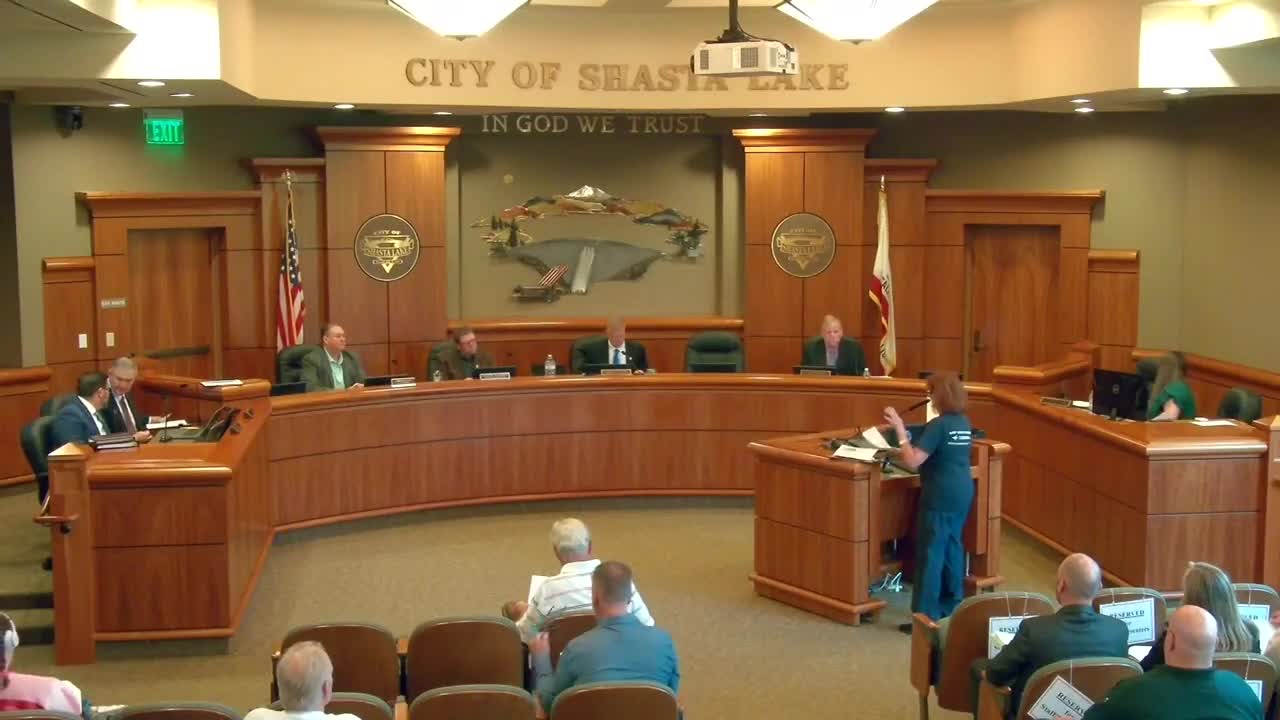
During public comment, Laurie Bridgeford told the board she was seeking an explanation of how the shortfall was discovered and raised other concerns about air pollution reporting and terminology. Bridgeford said, “I’m understanding there’s a $2,000,000 deficit. I would hopefully, be able to, determine through this meeting or soon after, how was this discovered,” and left informational materials for the board.
The board did not take any formal action on assessments at the meeting beyond directing staff to continue the financial review and to present fee proposals and budget materials during the upcoming budget cycle. Ewing and staff committed to further analysis with the county auditor-controller and to notifying member jurisdictions of confirmed assessment obligations after that review.
Votes at a glance
- Consent calendar (C‑1): motion to approve consent — passed, 4–0. (Motion and second not identified in the meeting record.)
Background and context
Ewing said the history of the district’s financing was discussed in prior board meetings, including a staff memo dated Nov. 1, 2016, that noted carryover balances were depleted in 2014–15 and that restricted funds had been used to supplement general-purpose revenues. That topic also appeared during budget hearings in 2016–17, when board members were told restricted carryover funds could be fully depleted within several years if expenditures continued to exceed revenues.
What’s next
Staff will continue to review prior fiscal years’ accounting and will coordinate with the county auditor-controller to confirm the carryover deficit and the availability of restricted funds. Proposed fee increases will be brought to the Air Pollution Control Board during the June budget process; additional fee adjustments are planned for later in the year to take effect in January 2026. After final amounts are confirmed, staff will notify member jurisdictions of their assessment obligations.