Get Full Government Meeting Transcripts, Videos, & Alerts Forever!
Get email alerts on the Opioid Prevention topic
No spam. Unsubscribe anytime.
Shasta County approves $4 million opioid prevention program focused on youth mentoring and outreach
Summary
The Board of Supervisors voted unanimously to fund a multi-year, community-led opioid prevention initiative that emphasizes mentoring, parent education and targeted services for at-risk youth. The contract is structured as a two‑plus‑two year program with midterm review.
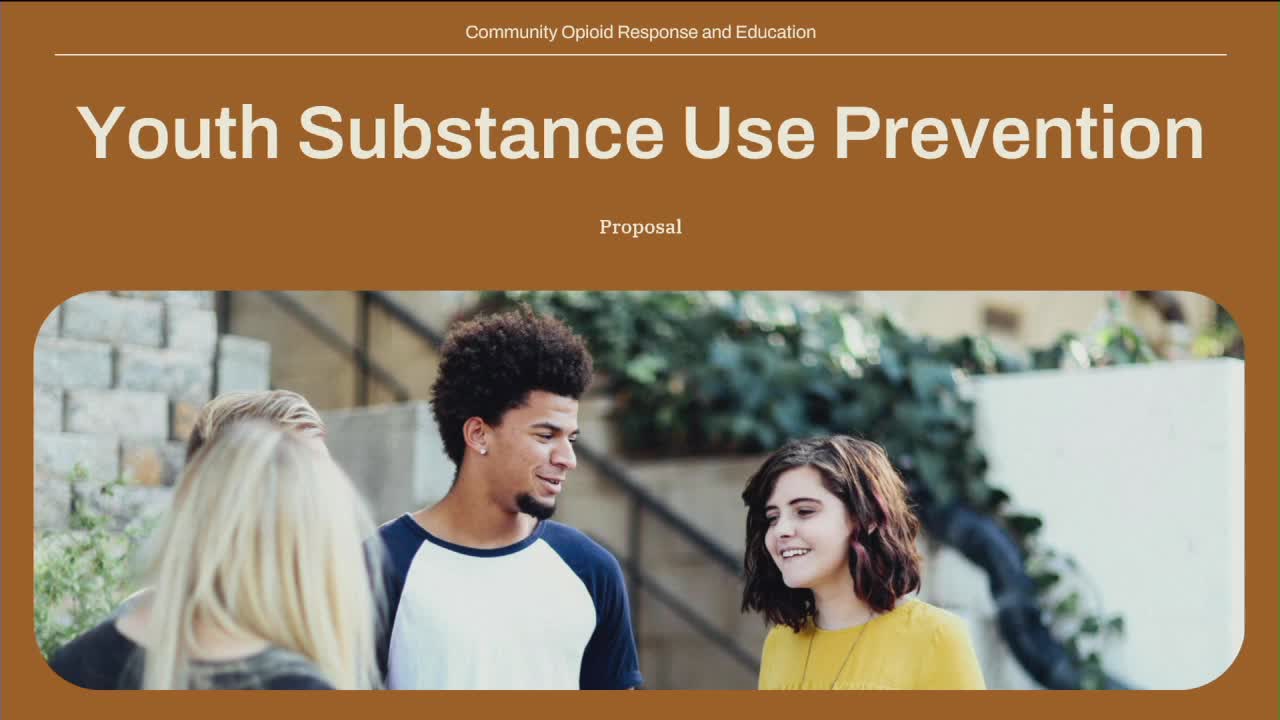
The Shasta County Board of Supervisors on Tuesday approved a multi‑year youth opioid prevention program called CORE (Stronger Together for a Substance‑Free Shasta), funding community partners with roughly $4 million over four years to build mentoring, parent education and school‑linked interventions.
The program will begin with a year‑one budget of about $1.5 million, stepping down to $1 million in years two and three and $750,000 in year four. County supervisors voted 5‑0 to authorize staff to negotiate a two‑year contract with a two‑year extension, and to require an 18‑month evaluation checkpoint before exercising the extension.
The initiative was presented to the board by a coalition of local organizations that developed a memorandum of understanding to coordinate prevention, mentoring and early intervention services. Amanda Faith, one of the coalition members, said the group’s needs assessment engaged 26 participants from 16 agencies and identified gaps in prevention and outreach. “By working together, we can leverage our collective resources and expertise to create a stronger, healthier and substance‑free Shasta County for all residents, especially our youth,” Faith said.
Clay Ross, superintendent of the Columbia School District and a presenter on the coalition, said schools will be a primary partner for deploying interventions and measuring outcomes. Ross described an early action plan to standardize surveys and data collection across school districts and community programs so the county can track impact. “We need a centralized approach to evaluation so we’re comparing apples to apples and not duplicating work,” Ross told the board.
Supervisors pressed the coalition on administrative costs and data collection. The coalition requested a 10% overhead allowance and a separate line for evaluation; board members asked staff and the coalition to sharpen performance metrics and promised semiannual progress updates. Supervisor Kevin Scribe emphasized accountability: the board asked for clear, measurable goals and two reports per year, with a formal review at 18 months.
The funding will be subject to a regular contract process and final board approval of the contract terms. Deputies said staff will return with a draft contract and budget details for the board to consider at a later date.
The board framed the measure as an investment in early intervention — targeting mentoring, parent outreach, and coordination among schools, healthcare providers and community groups — rather than a law‑enforcement approach.
If the program meets the coalition’s targets on youth engaged and behavioral measures at the 18‑month checkpoint, the board will consider continuing the second half of the program under the approved extension; if not, the board may amend or terminate the extension.
Quotes used in this account come from coalition presenters and board members during the March 18 meeting; direct quotations are attributed to those speakers as recorded in the meeting transcript.
The board’s 5‑0 vote authorized staff to prepare the contract documents and return to the board for regular reporting and the 18‑month evaluation described above.