Behavioral Wellness plans bed expansions and crisis system overhaul ahead of state transformation
Loading...
Summary
Behavioral Wellness presented a growth‑focused 2025–26 budget that adds treatment capacity, funds higher costs for psychiatric inpatient and skilled nursing placements, and implements crisis system changes ahead of statewide Behavioral Health Transformation.
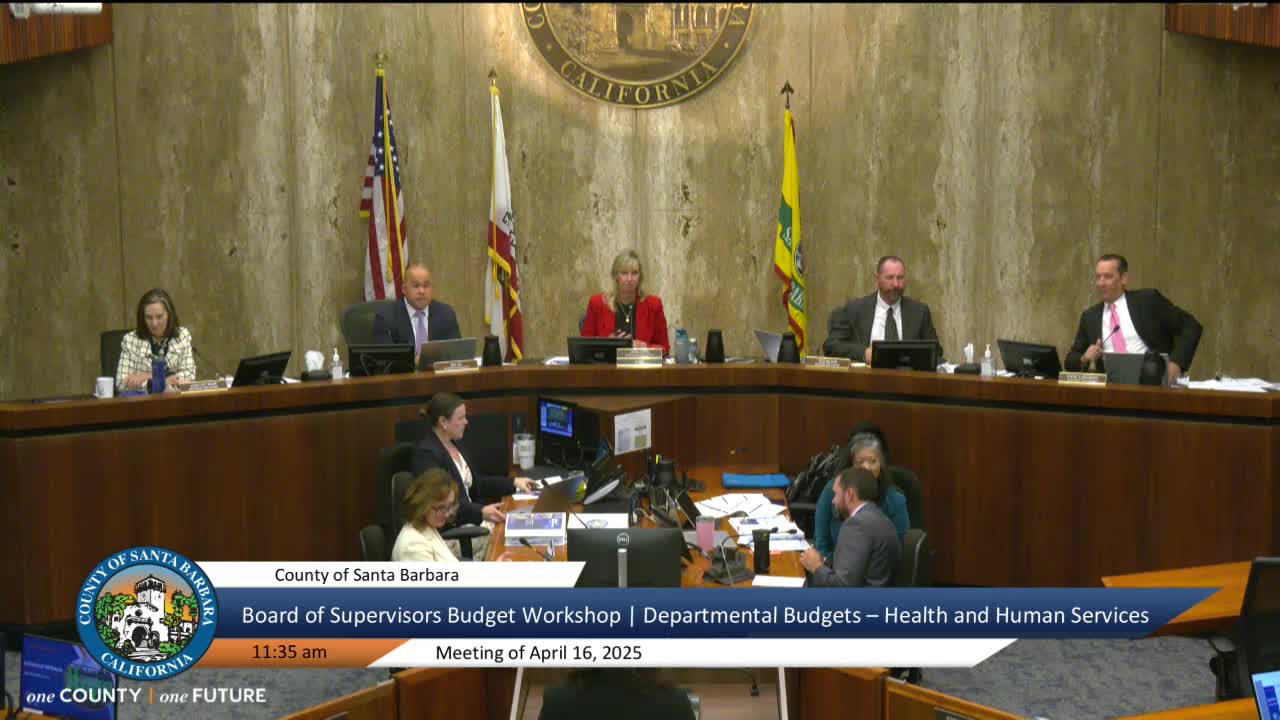
Santa Barbara County Behavioral Wellness department told supervisors April 14 that its 2025–26 budget will fund immediate expansions in capacity while preparing for state payment‑model changes under Behavioral Health Transformation (Prop 1 implementation beginning July 2026).
Director Tony Navarro said the budget increases primarily to cover higher utilization of acute and sub‑acute treatment beds, rising costs for specialized care (including psychiatric inpatient and skilled nursing placements that are not fully Medi‑Cal reimbursable), and one‑time investments to ready the county for payment reform and new crisis benefits. The department requested roughly a $19.3 million use of one‑time funds to support ongoing services and expansion during the transition year.
Crisis system changes: Navarro described a deliberate overhaul of the county’s crisis response system. The department has already contracted overnight mobile crisis services and reallocated staff to expand the access‑line and mobile crisis response. He reported preliminary outcomes that, since December 2024, access‑line call volume rose about 25% and mobile crisis responses rose about 30%; the share of crisis encounters resulting in hospitalization has fallen from roughly 65% to about 45% in recent months as more callers are redirected to lesser restrictive outpatient services.
Behavioral Health Transformation and Care Court: Navarro said the budget includes planning and some initial staffing to support the new statewide framework under Prop 1 (behavioral health transformation) as well as Senate Bill 43‑related implementation (Care Court). County staff noted a modest number of Care Court referrals so far and said a joint update with the public guardian will be scheduled for June.
Why it matters: the department serves a high‑need population with complex co‑occurring medical and psychiatric needs. Navarro said the county is seeing sharply increasing costs for inpatient placements for children with eating disorders and placements requiring nursing‑level care; many such placements are difficult to bill to Medi‑Cal. The department said the changes are intended to reduce unnecessary hospitalizations and create a more appropriate continuum of care in the community.
Board direction: supervisors asked for continuing performance reporting and pressed for coordination with county jail and public‑safety partners on co‑response and mobile crisis arrangements. Navarro said the department will return in June with a more detailed report on Care Court implementation and requests tied to SB 43.