Get Full Government Meeting Transcripts, Videos, & Alerts Forever!
Get email alerts on the Public Health topic
No spam. Unsubscribe anytime.
County Health budget highlights rising clinic and animal services costs; community pushes to revive Project PetSafe
Summary
County health leaders told supervisors rising clinic and pharmaceutical costs will push the department to use fund balance in 2025–26 while animal services and volunteers urged reviving Project PetSafe, a licensing and community outreach program, with one‑time funding.
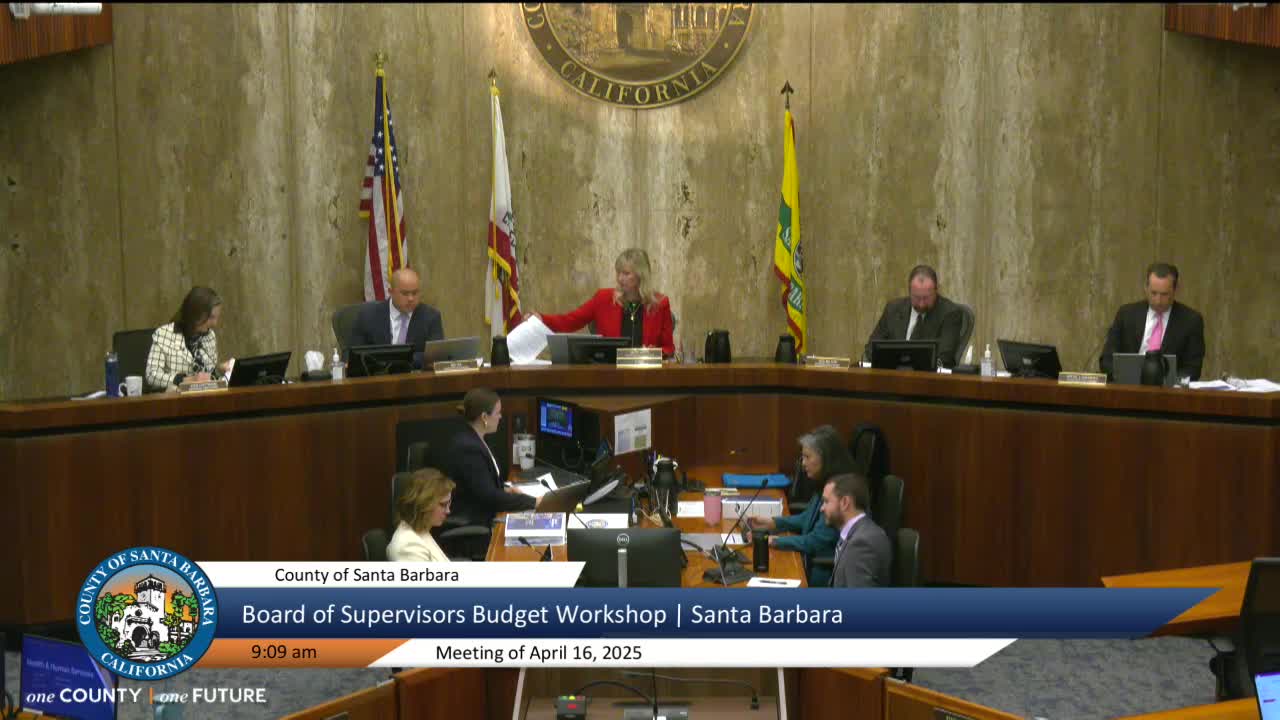
County health officials told the Board of Supervisors on April 14 that the Santa Barbara County Health Department’s 2025–26 operating budget must rely on fund balance to cover higher clinic and pharmaceutical costs and continued service demand.
Dr. Hamami (full name given in county materials as Dr. [First name not specified in transcript]), Director of County Health, said clinic revenue growth is modest but pharmaceutical costs have risen sharply following disruption of the 340B program and other supply pressures. The department requested about $11 million in general‑fund support and expects to use roughly $5 million of fund balance in 2025–26 to smooth the gap, Dr. Hamami said. She said the department is targeting $1.5 million per year in permanent efficiency gains over the next four years to reduce reliance on reserves.
Animal services and Project PetSafe: Supervisors and multiple public commenters pressed county leaders to revive Project PetSafe, a community‑facing licensing, education and low‑cost spay/neuter outreach program. Sarah Aguilar, Director of Animal Services, said Project PetSafe once operated with three staff and produced strong gains in license compliance and revenue. She and public commenters including volunteer coordinators and longtime shelter volunteers said licensing canvassing, paired with spay/neuter assistance and community education, reduces shelter intake and shortens shelter stays.
Public commenters asked the board for one‑time funds to restart the program. Michael Byrd, who described himself as a veteran and rescuer, and Jean Silva, a community volunteer with prior county budget experience, told supervisors that well‑run licensing outreach can generate revenue and reduce shelter demand. Volunteer foster coordinators and rescue partners said the shelter does substantial lifesaving work but remains understaffed and underfunded.
Why it matters: County health provides primary care at eight community clinics, operates disease prevention programs, and runs the county’s animal services and shelter system. Rising Medi‑Cal and pharmaceutical volatility, combined with the loss of certain federal COVID‑era funds, have tightened program budgets. Supervisors pressed for additional clarity on reserves and urged a plan that balances public health services, animal care and fiscal sustainability.
What supervisors asked for: Chair Capps and several supervisors asked staff to return with cost and revenue scenarios for Project PetSafe — including a cost‑benefit estimate, the likely up‑front expense to restart canvassing, and the expected license revenue uplift — before the June budget adoption. Several supervisors suggested pilot or phased options so the county could test outcomes without committing large recurring dollars.
Officials quoted: "We are the safety net," Dr. Hamami said of the county clinics, explaining why volume is not expected to drop even if federal and state revenues fluctuate. Sarah Aguilar described Project PetSafe’s prior staffing and revenue gains and urged a return to proactive licensing and community outreach.