Get Full Government Meeting Transcripts, Videos, & Alerts Forever!
Get email alerts on the Cannabis Policy topic
No spam. Unsubscribe anytime.
Board authorizes special meeting in Carpinteria for cannabis odor concerns; Brown Act rules and broadcasting sparked disagreement
Summary
Supervisors voted 3‑2 to hold a special Board meeting in Carpinteria to hear community input on cannabis odor and related policy options; debate focused on whether the event should be a community forum or special meeting subject to the Brown Act, and whether it will be broadcast or recorded.
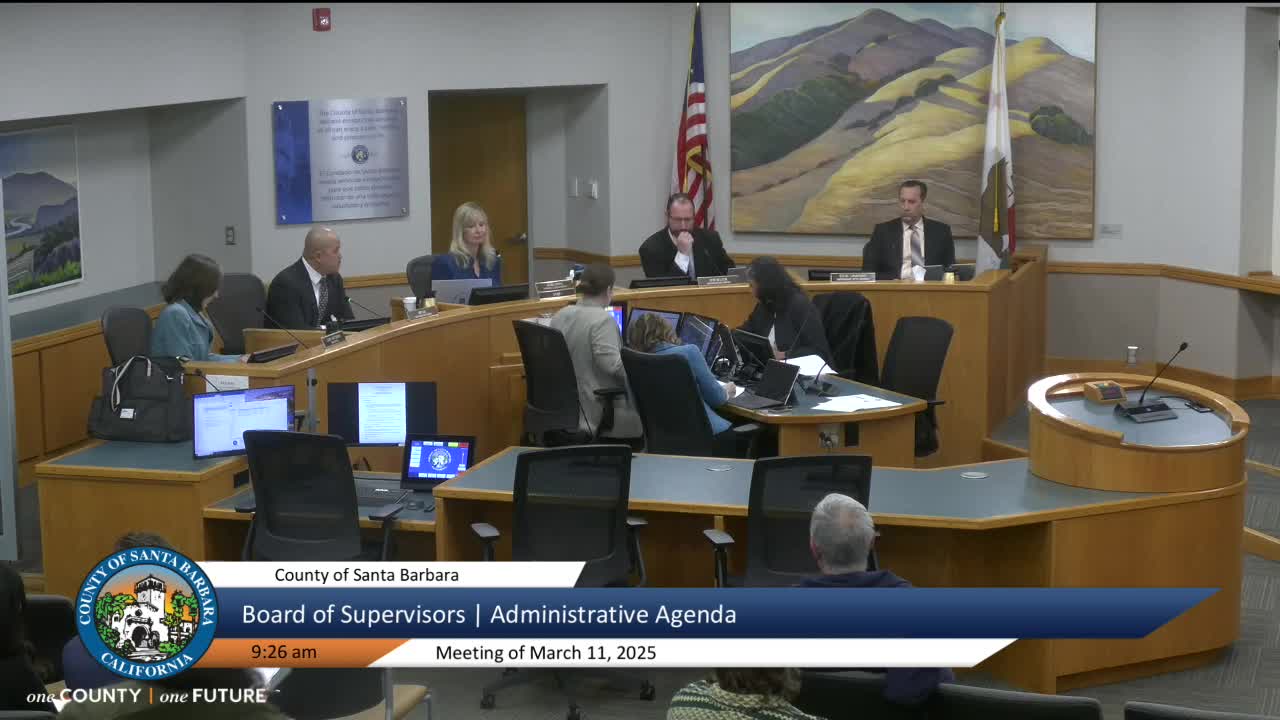
The Board voted 3‑2 on March 11 to authorize a special Board meeting to be held in Carpinteria on March 14 to hear public feedback about cannabis odor and policy options affecting Carpinteria and South County.
Supervisor Capps said the event was intended as a community forum hosted in Carpinteria so district residents could participate in more conversational dialogue than the standard three‑minute public comment format. Several supervisors — notably Supervisor Hartman — argued that any gathering where three or more supervisors attend is a special meeting under the Ralph M. Brown Act and therefore must comply with the Act’s public‑meeting rules, and that the county should avoid creating a practice that evades normal public‑meeting procedures.
County counsel explained that two supervisors (Capps and Nelson) had already “Brown‑acted” on the issue and therefore adding a third supervisor requires formal special‑meeting procedures. The board discussed whether county staff (CEO, county counsel, clerk) should attend and whether the County’s broadcast/Zoom capabilities would or could be available in Carpinteria. Staff said the Carpinteria City Council had offered its chambers but the facility presently lacks county broadcast/Zoom capability; staff said they would explore recorded or streamed options and estimate costs.
Public speakers and several supervisors argued the short public notice for the Friday meeting (two days’ notice) and the limited broadcast options risked excluding voices in the community. Supporters — including Supervisors Capps, Nelson and newly seated Supervisor Lee — argued the meeting would let supervisors “meet people where they are” and catalyze better policy feedback before the formal hearing scheduled for March 18.
The board voted to authorize the special meeting with direction to staff to: explore recording and streaming options (with a cost cap mentioned in Board discussion), allow written comments submitted at the special meeting to be folded into the formal hearing record on March 18, and keep the event open to public comment. The motion passed 3 to 2 (Nelson, Capps and Lee voted aye; Lavinino and Hartman voted no).
Ending: County counsel will notify the public and finalize Brown Act compliance steps; staff will investigate recording/broadcast capability and report back if costs or technical barriers arise.