Get Full Government Meeting Transcripts, Videos, & Alerts Forever!
Get email alerts on the Energy Safety topic
No spam. Unsubscribe anytime.
After citizen alarm over battery-storage plants, board orders stronger notice rules and hazard planning
Summary
Residents and first responders urged the Board of Supervisors to pause or reconsider large-scale battery storage projects after fires elsewhere; the Board directed staff to tighten public-notice rules, press for local‑control legislation and fold battery‑hazard protocols into county emergency planning.
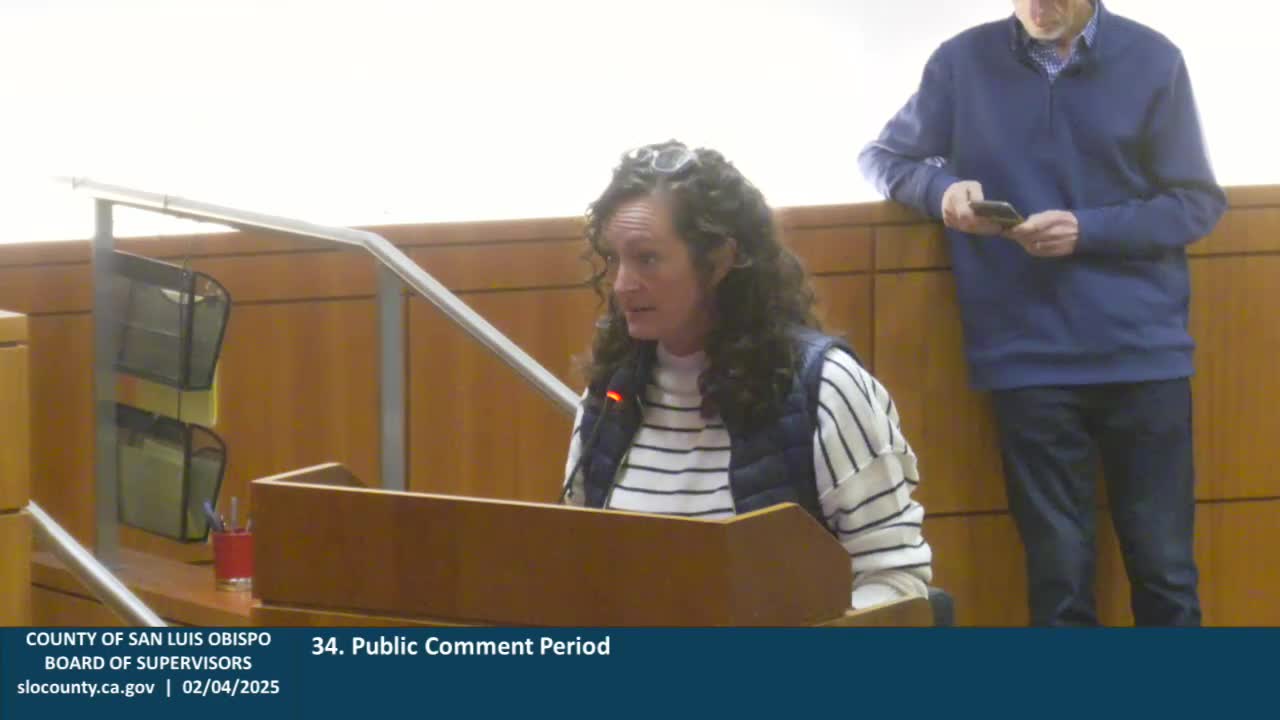
A spate of public comments and testimony about recent utility-scale battery-storage fires on the East Coast and at Moss Landing prompted a lengthy conversation at the San Luis Obispo County Board of Supervisors on whether the county should pause or exercise tighter controls over large battery‑energy storage system projects proposed in or near unincorporated communities.
Why it mattered: Recent high‑profile battery fires elsewhere — including Moss Landing — and the growing number of planned battery facilities led residents in Nipomo and other villages to demand more engagement, clearer notification and better emergency planning for first responders. County staff said an already-permitted project could not be paused without risk of litigation; the board instead directed policy and operational changes intended to increase local preparedness and notice.
What the board directed - Require staff to bring an ordinance or ordinance language updates as part of the county’s routine ordinance cycle that increases the official radius for mailed project notices to at least 1,000 feet for utility-scale battery storage facilities (the current practice uses a 300‑foot radius for many project notices). - Task staff to add support for “local control” of siting decisions to the county’s legislative platform and to pursue state legislation that preserves local permitting authority for battery facilities. - Instruct staff running the county hazard-mitigation and emergency-planning processes to develop protocols specific to lithium battery fires and to ensure local responders, hospitals and neighboring jurisdictions have coordinated training and evacuation plans; work to source additional water or fire‑suppression resources for potential incidents.
Staff and fire authority comments - County counsel and staff advised the board that a locally approved, vested and permitted project is legally protected; pausing or attempting to revoke an already-issued permit would create substantial legal and financial risk unless there were specific, documented compliance failures. - Fire and Office of Emergency Services staff described ongoing coordination: fire prevention reviewed the project plans, an independent fire‑protection engineer reviewed the submittals, and county Fire and OES have been developing standard operating procedures and multi‑jurisdictional response checklists; they will continue targeted drills and planning.
Public testimony and key concerns - Community members argued the county had not adequately notified neighbors and first responders of projects during the permitting process and called for longer notice radii, community meetings and transparent emergency plans. - Several speakers noted that fires at other storage facilities produced significant smoke and toxic byproducts and, in some cases, forced large evacuations and road closures; commenters pressed for assurance that nearby schools, vineyards and employees (including farmworkers) would be protected. - Industry and project proponents said the Nipomo facility differs from Moss Landing in chemistry and containerization and that operators follow current codes and recommended mitigation measures.
What staff will return with - Language for an ordinance update to require a 1,000‑foot notice radius and to add battery‑specific posting requirements for future projects as part of the county’s annual ordinance updates. - A proposed legislative‑platform language package urging state policy that protects local permitting authority for siting battery storage projects and pushes for statewide safety standards. - Integration of battery-storage incident protocols into the county hazard‑mitigation plan and additional joint training or mutual‑aid exercises with neighboring jurisdictions and the county’s fire and EMS providers.
Speakers and participants - County staff: Fire Chief John Owens, Office of Emergency Services Director Scott Jalbert, and Planning and Building staff. - Community commenters: residents of Nipomo and surrounding areas (Gianna Patchen, Sherry Fitzgerald, Victor Gutierrez, Lorena Chavez and others), representatives of React Alliance and other community groups. - Industry and project representatives and a developer were in the chamber and responded to technical questions.
Why the story matters: As counties implement energy‑transition projects, officials are balancing the benefits of clean energy and grid resiliency against emerging hazards and community concerns. The San Luis Obispo County board chose to strengthen local procedures and planning rather than attempt to pause an already‑approved and vested project.
Sections - lede: Residents and first responders pressed the Board of Supervisors to pause or rethink large battery‑storage projects after fires elsewhere; the board declined to pause an already‑permitted project but ordered stronger notice rules and hazard planning. - nut_graf: County counsel warned an approved project could expose the county to legal risk if the board tried a unilateral pause; instead the board voted to require larger notice distances, seek legislative protections for local permitting control, and fold battery‑hazard protocol into the county’s hazard‑mitigation planning. - ending: Staff will return with ordinance language, legislative‑platform language and joint emergency‑response plans to be integrated into training and public notice efforts.