Get Full Government Meeting Transcripts, Videos, & Alerts Forever!
Get email alerts on the Equipment Rental No Till Planter topic
No spam. Unsubscribe anytime.
Demonstration outlines safe use, maintenance and billing for county no‑till planter
Summary
At an Ashland County equipment demonstration, a staff member showed how to operate a no‑till planter, emphasizing road speed limits, field operating speeds, daily greasing, seed‑box use, and how acreage billing is recorded.
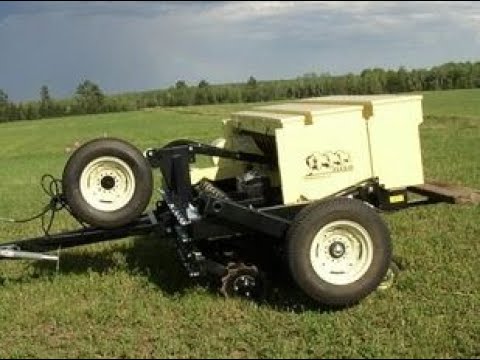
At an equipment demonstration in Ashland County, a staff member known as Dave walked attendees through operation, safety checks, maintenance and billing for a county no‑till planter, stressing limits for road travel, daily greasing and how renters report acreage for billing.
Dave, a staff member, said the planter is road‑legal only when configured for transport and marked with a slow‑moving‑vehicle sign: "This is a farm implement with a slow moving vehicle sign on the back and, you're only legally allowed to go 20 miles an hour." He told attendees to use four‑way flashers on busy state and county roads and to disengage the ground drive before higher‑speed travel.
The demonstration covered in‑field operation and metering. Dave said the planter is strictly ground driven and that the drive wheel must be engaged for planting: "When you engage the wheel and you drop the machine into the ground, it ... turns the apparatus and the meters out seeds and drops them down the tubes into the ground." He recommended planting at about 4 to 5 miles per hour: "Really, the plant with this machine, you shouldn't go over 4 to 5 miles an hour in the when it's in the ground." He also warned against turning sharply while the openers are in the ground and advised lifting the unit for tight turns to avoid damaging rigid cutters or frames.
Dave demonstrated the transport blocks and pins used to lock the cylinders in road position and explained the need to relieve hydraulic pressure and unpin the blocks before changing modes. He emphasized disengaging the ground drive for any long or faster road movement to avoid overstressing chains and bearings.
Maintenance instructions included daily greasing of the front cutters and several grease fittings on the frame, a routine check of sealed bearings on the wheels, and periodic replacement of worn bearings and tires. Dave said users should "grease it when you're done" and noted that the county has replaced multiple bearings over the machine's 11 years of service, estimating several bearings replaced across the fleet over nearly a decade.
Seed handling and metering were explained: the drill has three seed boxes (front for very small seeds such as clover and alfalfa, a middle box with a stirrer for hairy or native seeds, and a larger rear box for soybeans, oats and other large seeds). Dave demonstrated the sliding metering adjustments and pointed out charts inside the boxes showing approximate pounds per acre and suggested opening settings for common seeds. He also described the clean‑out flaps used to empty remaining seed after planting and warned that failing to clean boxes can allow moisture to swell seed and clog metering gears.
Renting and billing procedures were covered: the machine has an acreage meter the staff reads before and after a job; billing is by acreage, recorded to tenths, and renters are given a counting sheet to return with payment. Dave said the office accepts checks and that a contract packet outlining use, maintenance responsibilities and a counting sheet is provided to new customers.
Less critical details included toolbox contents (parts of the owner's manual, a few wrenches and spray for chains), the presence of a spare used tire, and an instruction that normal wear and tear is the responsibility of the owner while damage from abuse may be charged to the renter.
The demonstration was framed as an operational brief and Q&A for potential renters and conservation staff; no formal decisions or policy changes were proposed or adopted during the session.