Get Full Government Meeting Transcripts, Videos, & Alerts Forever!
Get email alerts on the Wildlife topic
No spam. Unsubscribe anytime.
Ashland County wildlife staff reports higher grouse counts, new deer management unit quotas
Summary
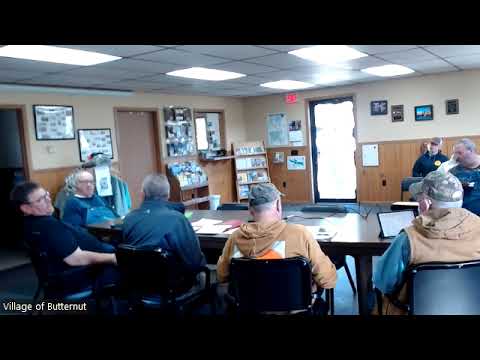
Wildlife staff told the Ashland County Forestry and Recreation Committee that rough grouse numbers look strong in parts of the county, the state is switching to deer management units (DMUs) this year with new quotas for several units, and wolf-collaring on private land would require prior permission.
Wildlife staff reported to the Ashland County Forestry and Recreation Committee that early-season ground and wood-pack surveys show higher-than-usual rough grouse counts in some areas, though other areas are lower and snow conditions remain an important factor.
The committee heard that the Department of Natural Resources is implementing deer management units (DMUs) this year instead of countywide quotas. Committee speakers said Unit 105 (Apostle Islands) is recommended for a quota of 35; Unit 113 (western/northern portion) has recommended totals in the thousands with private/public splits; and Unit 118 (deep-woods areas spanning Ashland and Iron counties) was discussed as a negotiated quota that will split tags between private and public land. A committee speaker said the shift to DMUs aims to align management with habitat types and that some DMU boundaries are similar to historic zones but larger in a few places.
Wildlife staff also said the office of applied science through the DNR is beginning a wolf-collaring program; they do not expect collars to be placed on county land, but if collars would be placed on county property the DNR would contact county staff first to request permission. Committee members asked about roadkill accounting; wildlife staff said contractors and county reporting are used in population estimates but noted reporting varies when people remove carcasses without registration.
Committee members asked whether the quota changes represent an increase compared with last year. Wildlife staff said last year used countywide quotas and some units had zero quota; with milder winters and improved deer condition the recommended quotas are larger in some DMUs. Staff also noted this first year under DMUs is conservative and will be refined as more data are collected.
Questions from committee members covered registration and reporting of harvested or road-killed deer, multi-county DMU negotiation (particularly between Ashland and Iron counties), and expectations for future refinements to DMU boundaries and quotas.
The exchange at the meeting was discussion and reporting only; no committee motions or formal actions on hunting quotas were taken during the session.