Get Full Government Meeting Transcripts, Videos, & Alerts Forever!
Get email alerts on the Public Safety Firearms Policy topic
No spam. Unsubscribe anytime.
Garfield County commissioners adopt resolution opposing Senate bill on firearms training and permits
Summary
The Garfield County Board of County Commissioners voted to approve a resolution opposing a recently enacted state Senate bill that commissioners said imposes training and administrative burdens related to firearm ownership and could be an unfunded mandate on counties.
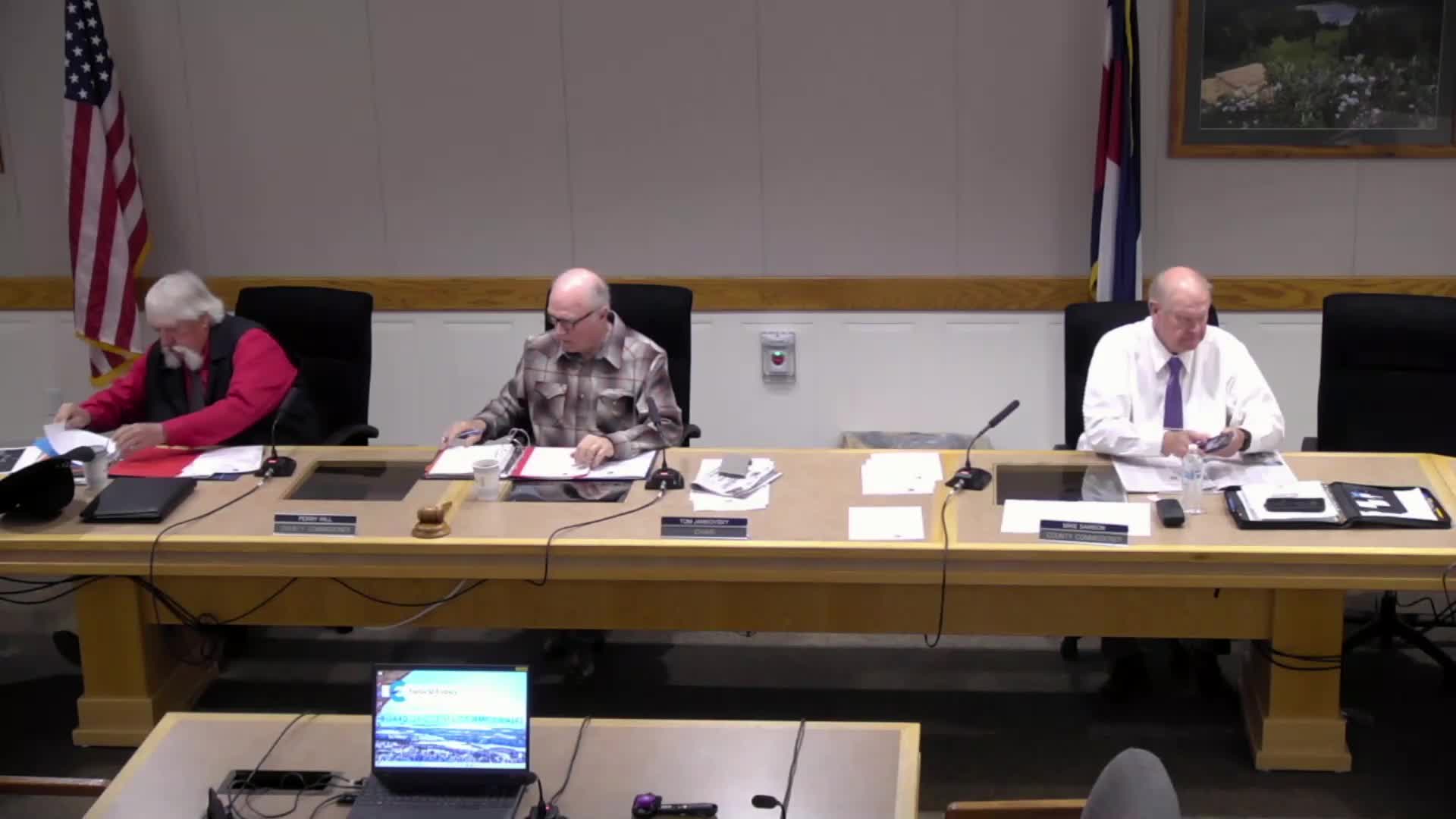
Garfield County commissioners voted April 14 to approve a resolution formally opposing a state Senate bill that commissioners described as imposing training requirements and administrative costs on gun owners and county sheriffs.
The resolution, presented by Commissioner Perry, called for the county to oppose what he described as “the most restrictive” gun-related legislation in the country and warned of fiscal and operational impacts on sheriffs and small, independent firearms businesses. Commissioner Perry urged removing a sentence in the draft asserting the bill had already been signed by the governor; the board agreed to strike that sentence before adopting the resolution.
The board’s discussion focused on potential county costs and enforcement burdens. Commissioner Sampson said the county sheriffs across Colorado oppose the measure and described the bill as an example of state officials “ramrodding” legislation. Commissioners raised estimates of county-level staffing needs and cited an aggregate county cost estimate included in the discussion materials. One commissioner described the measure as an “unfunded mandate,” noting an estimated county cost around $250,000 for Garfield County and suggesting that total costs multiplied across counties could be substantial.
Commissioners also discussed effects on local gun retailers and the shooting-sports economy. Commissioner Perry noted regional employment and tax figures tied to shooting and firearms-related businesses, saying the industry supports jobs and generates state and local tax revenue. Commissioners repeatedly emphasized support for firearms training generally, but said the bill’s training and permit structure was not the appropriate approach.
After discussion, a motion to adopt the resolution passed; the board agreed to distribute the resolution publicly and to coordinate press outreach to a broad set of local news outlets.
The action was recorded as a formal board resolution opposing the Senate bill and authorizing a press release; the adopted text will omit the sentence about the governor signing the legislation.