Get Full Government Meeting Transcripts, Videos, & Alerts Forever!
Get email alerts on the Black Maternal Health topic
No spam. Unsubscribe anytime.
Baltimore committee advances Black maternal health agenda, spotlights doula training and data gaps
Summary
At a Baltimore City Council Public Health and Environment Committee hearing, councilmembers and health officials discussed a Black Maternal Health Agenda that emphasizes doula training, midwifery pipelines, expanded Medicaid reimbursement and better data sharing to address racial disparities in maternal outcomes.
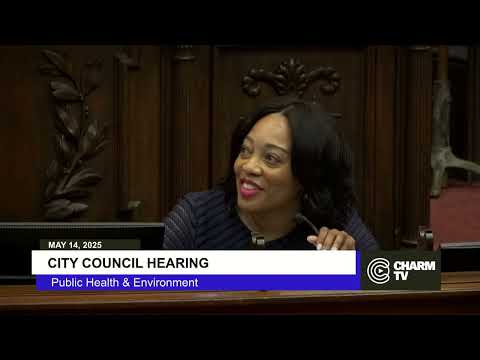
Councilwoman Felicia Porter, chair of the Baltimore City Council Public Health and Environment Committee, opened a committee hearing on a proposed resolution inviting city agencies and community partners to brief the council on perinatal and reproductive health needs facing Baltimore’s Black community and strategies to improve access to prenatal and reproductive care.
“The Black Maternal Health Agenda of Baltimore City outlines a comprehensive strategy to address systemic disparities in maternal care, particularly affecting black communities,” Porter said as she introduced resolution 25-0016R, which asks the Health Department, the Office of Equity and Civil Rights, the Mayor’s Office of Children and Families and other parties to appear before the council.
The council and agency presenters framed the agenda around data showing stark racial gaps in outcomes. Jana Goins, an epidemiologist with the Baltimore City Health Department’s Bureau of Maternal and Child Health, said, “In Baltimore City, Black birthing people experience a risk of death 2.5 times higher than white birthing people in Baltimore City.” Goins and other department staff told the committee that Baltimore recorded the highest number of maternal deaths in Maryland in 2022 and that leading causes include unintentional overdose and homicide.
Agency leaders described existing city efforts under the Be More for Healthy Babies (BHB) initiative, a collective-impact strategy led by the Baltimore City Health Department, Family League and the centralized intake unit described in testimony. Daphne Hicks, director of administration for the bureau, said BHB runs coordinated services including home visiting, family planning, WIC and community sites in neighborhoods such as Druid Heights, Patterson Park and Cherry Hill.
The hearing highlighted a 2022 pilot doula-training program at Morgan State University run by the National Association to Advance Black Birth. Dr. Kanika Harris, the association’s executive director, described the pilot’s curriculum and outcomes, saying the course produced 38 graduates out of 40 trainees and that the cohort served more than 200 families in Baltimore. Harris said midwifery and doula models are “recognized as life saving strategies to reduce mortality and postpartum complications” and added, “we know that we can save 1,600,000,000.0 as a country if we invested more in, providing Medicaid coverage for doulas and midwives.”
Community advocates who testified urged the council to move beyond short-term grants and to build durable workforce and payment pathways. Lydia Harris, a Baltimore doula and entrepreneur, told the committee, “What’s good for black women is good for all women,” and urged the council to fund community-led birth work. Anna Rodney of the Doula Alliance of Maryland and chair of the city’s maternal mortality review board urged expanded technical assistance so doulas can participate in Medicaid reimbursement and said the alliance can supply data and policy recommendations.
Several speakers urged the committee to make midwifery a central part of the city’s strategy. “The answer is midwifery care,” said Ashley Johnson, founder of Blackbird Central, arguing that midwives provide continuous, household-centered care that addresses many social determinants of health.
Committee members pressed agency staff for concrete resource and accountability details. Health Department staff said the Bureau of Maternal and Child Health’s total funds are about $28,000,000 and that city general-fund support is “very little,” roughly $2.8 million (staff said they would provide exact breakdowns on request). The chair asked for an official committee request for a budget breakdown and for the Department of General Services to confirm lactation-room locations in city buildings.
Council members and agency staff agreed on next steps. The committee will convene a stakeholder engagement group including community-based birth workers, hospital partners and city agencies before a follow-up hearing. Porter said the committee intends to pursue ordinances and other measures to codify supports discussed in the hearing: community doula and midwifery capacity, perinatal provider bias training, data transparency for maternal health metrics, and supports addressing social determinants of health.
No formal motions or votes were taken at the hearing; presentations and public testimony framed policy choices and identified budget and data items for the committee to pursue.
The committee recessed after public testimony and scheduled further stakeholder meetings and a subsequent hearing to refine legislative and budget proposals.