Get Full Government Meeting Transcripts, Videos, & Alerts Forever!
Get email alerts on the Health Neurological Conditions topic
No spam. Unsubscribe anytime.
Students, clinicians and Tourette Association urge state designation of June 7 as Tourette Syndrome Awareness Day
Summary
Youth ambassadors, clinicians from Mass General and the Tourette Association of America asked the Joint Committee on State Administration and Regulatory Oversight to designate June 7 as Tourette Syndrome Awareness Day to reduce stigma, improve diagnosis and speed access to treatments and school supports.
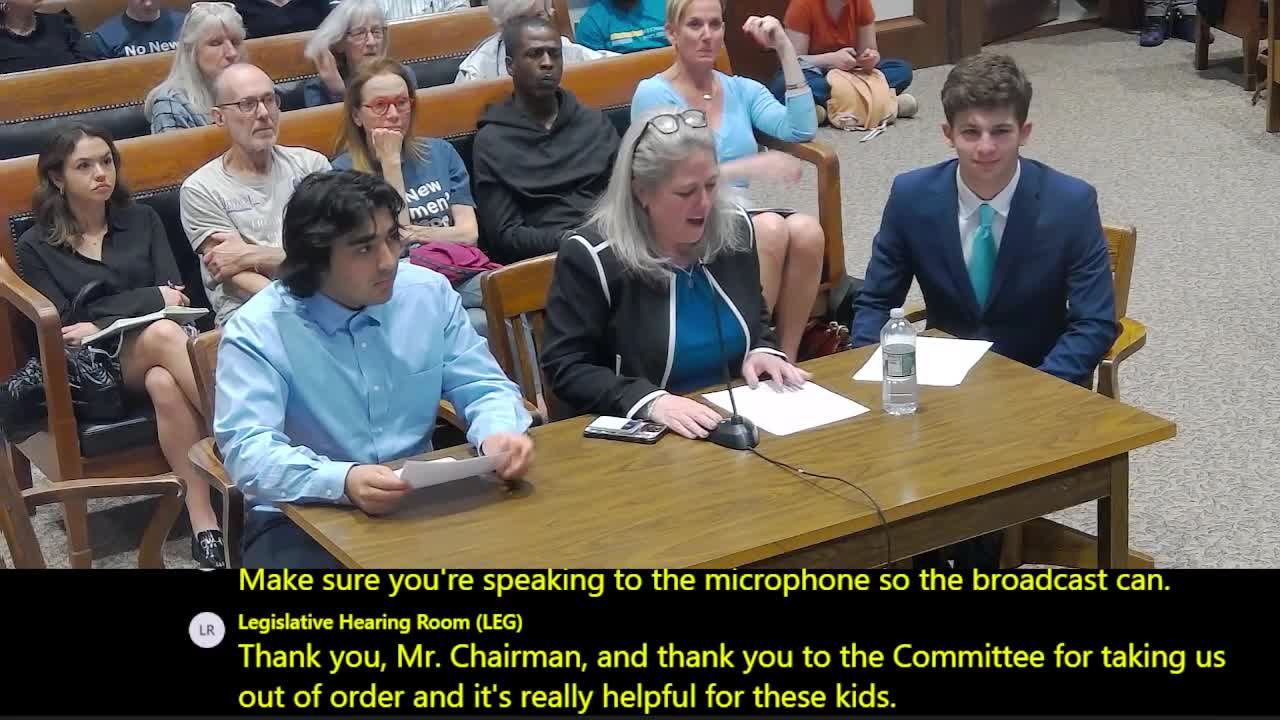
Parents, clinicians and youth ambassadors for the Tourette Association of America told the Joint Committee on State Administration and Regulatory Oversight on May 12 that designating June 7 as Tourette Syndrome Awareness Day would increase diagnosis, reduce stigma and help children get school supports sooner.
The committee heard three panels: an overview panel with family members and youth ambassadors; a medical panel that included a developmental pediatrician and clinical research staff from Massachusetts General Hospital; and a youth panel of young people diagnosed with Tourette Syndrome.
“My tics became intrusive and started to interfere with my daily life,” Owen Rosenthal, a Lexington High School junior and a youth ambassador for the Tourette Association, told the committee. “In a 1‑hour period, I might tic upwards of 200 times.” He described lengthy waits for specialty care and said the day would help undiagnosed people find care and reduce stigma.
Amanda Talty, president and CEO of the Tourette Association of America, said Tourette and other tic disorders are underdiagnosed and frequently misunderstood. She cited Centers for Disease Control estimates that many people with persistent tic disorders remain undiagnosed and that co‑occurring conditions — anxiety, ADHD, obsessive‑compulsive disorder and others — commonly complicate care. “This underscores the important need to increase diagnosis rates and to ensure adequate support services are in place,” Talty said.
Clinical research staff and a developmental pediatrician from Massachusetts General Hospital described treatment advances under study and the limits of current therapies. Mia Grossman, a clinical research coordinator, said novel therapies can improve school functioning and self‑esteem for some children but noted that many available medications cause “dizziness and other side effects.” A developmental pediatrician who is also Owen’s father described long specialist wait times and said greater public education could help children access school supports and evidence‑based therapies faster.
Students and family members described school‑level challenges, including misunderstandings by teachers and peers. “Getting laughed at by my classmates, lectured by my teachers, created an environment where I felt humiliated and ashamed,” Ryan Slatkov, a high‑school student with Tourette Syndrome, said. Young witnesses urged the committee to pass the designation quickly so Massachusetts could observe a first awareness day this year.
The committee did not take a vote. Chairs asked witnesses to submit written testimony for the record and thanked the panels for coming on short notice to accommodate students’ schedules.
Proponents said the declaration is a low‑cost, non‑partisan step that could prompt school training, public education campaigns and faster referrals to clinics. The committee accepted the testimony and will include written submissions in the bill record.