Get Full Government Meeting Transcripts, Videos, & Alerts Forever!
Get email alerts on the Transportation Streets Signs topic
No spam. Unsubscribe anytime.
Committee advances bill stepping up penalties for repeat commercial 'bandit' signs
Summary
House Bill 3611 would expand enforcement and fines targeting repeat commercial signs placed in public rights‑of‑way; the committee reported the bill with changes intended to protect political signs and to require written notice before fining a first‑time offender.
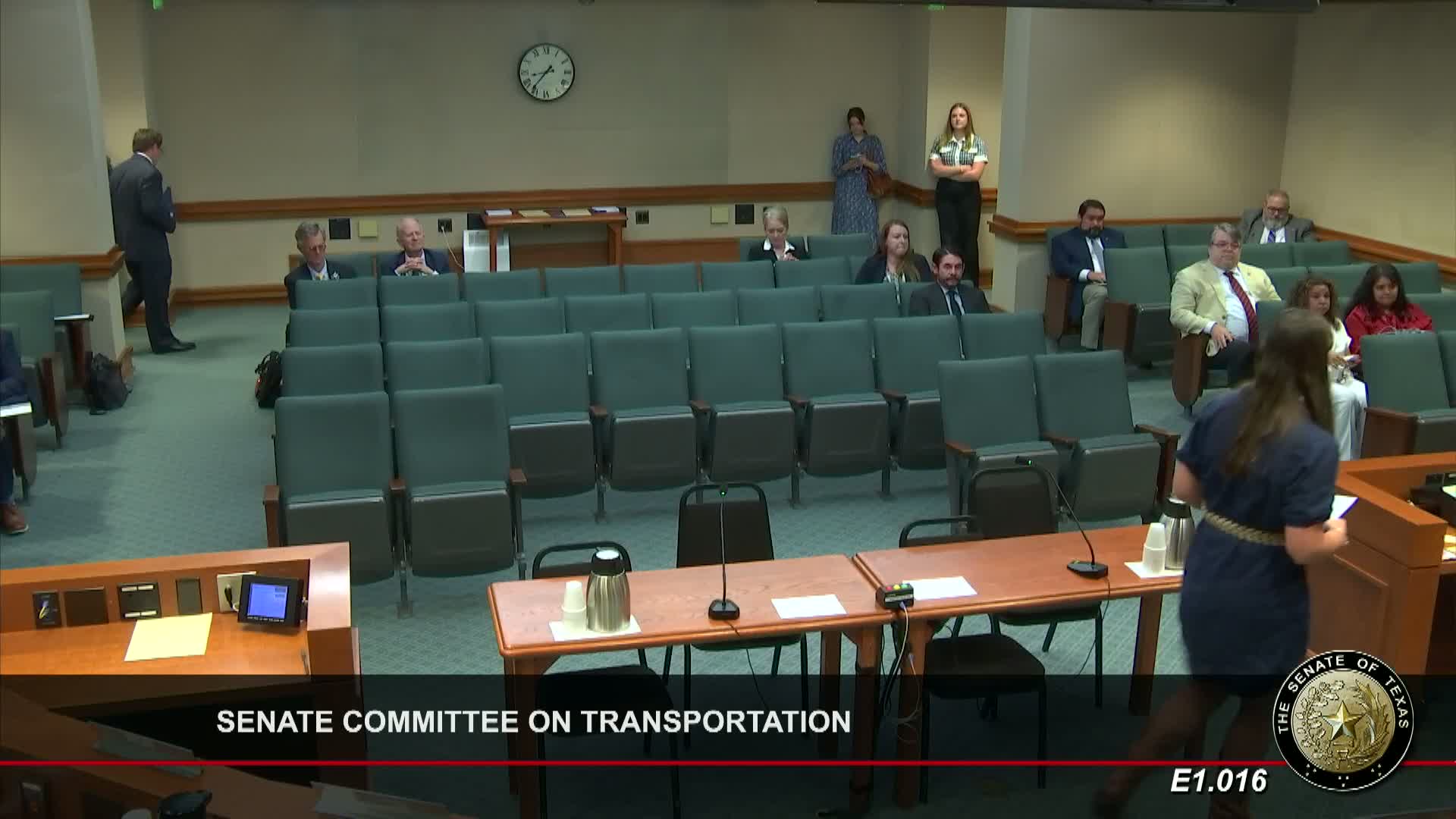
The Senate Committee on Transportation reported House Bill 3611, which targets repeated commercial signs — commonly called “bandit signs” — placed in medians, on utility poles and in other public rights‑of‑way. The bill, as presented, narrows its scope to commercial signs and adds a written‑notice requirement before a first fine may be imposed.
Sponsor testimony said the measure is aimed at large, repeat offenders who create visual blight, traffic hazards or fraud; municipalities have reported spending taxpayer funds to remove thousands of illegal signs each year. “This is a reasonable fix for all these problems and cities like Houston, Dallas, San Antonio and Austin need to do something about this blight problem,” Senator Miles told the committee.
Key provisions described in the hearing include a written notice requirement that gives a person an opportunity to remove posted commercial signage before a first fine is assessed, and an escalating fine structure: up to $1,000 for a first violation after written notice, $2,500 for a second violation and $5,000 for a third or subsequent violation. The bill explicitly excludes political signs, which remain protected under the election code, and committee language was tightened to target large‑scale repeat offenders rather than small businesses or candidates.
Public testimony was submitted by representatives of multiple cities and local governments (registers for the record), and no members of the public spoke in opposition at the hearing. After discussion, the committee voted to report the bill favorably; the clerk recorded an 8‑0 tally in favor and the measure was recommended to be passed and printed.
If enacted, the bill would give local governments stronger tools to remove commercial signs that repeatedly appear in rights‑of‑way and would place procedural limits (written notice) on first‑time enforcement.