Get Full Government Meeting Transcripts, Videos, & Alerts Forever!
Get email alerts on the Oil Gas Restimulation Tax Incentive topic
No spam. Unsubscribe anytime.
Senate committee debates tax break for restimulating inactive oil wells; fiscal note and scope questioned
Summary
Senate Bill 782 would allow a temporary tax exemption for restimulation of inactive horizontal oil and gas wells; proponents argued it could extend life of mature wells and spur local economic activity while the comptroller and others questioned the fiscal impact and definition of eligible wells.
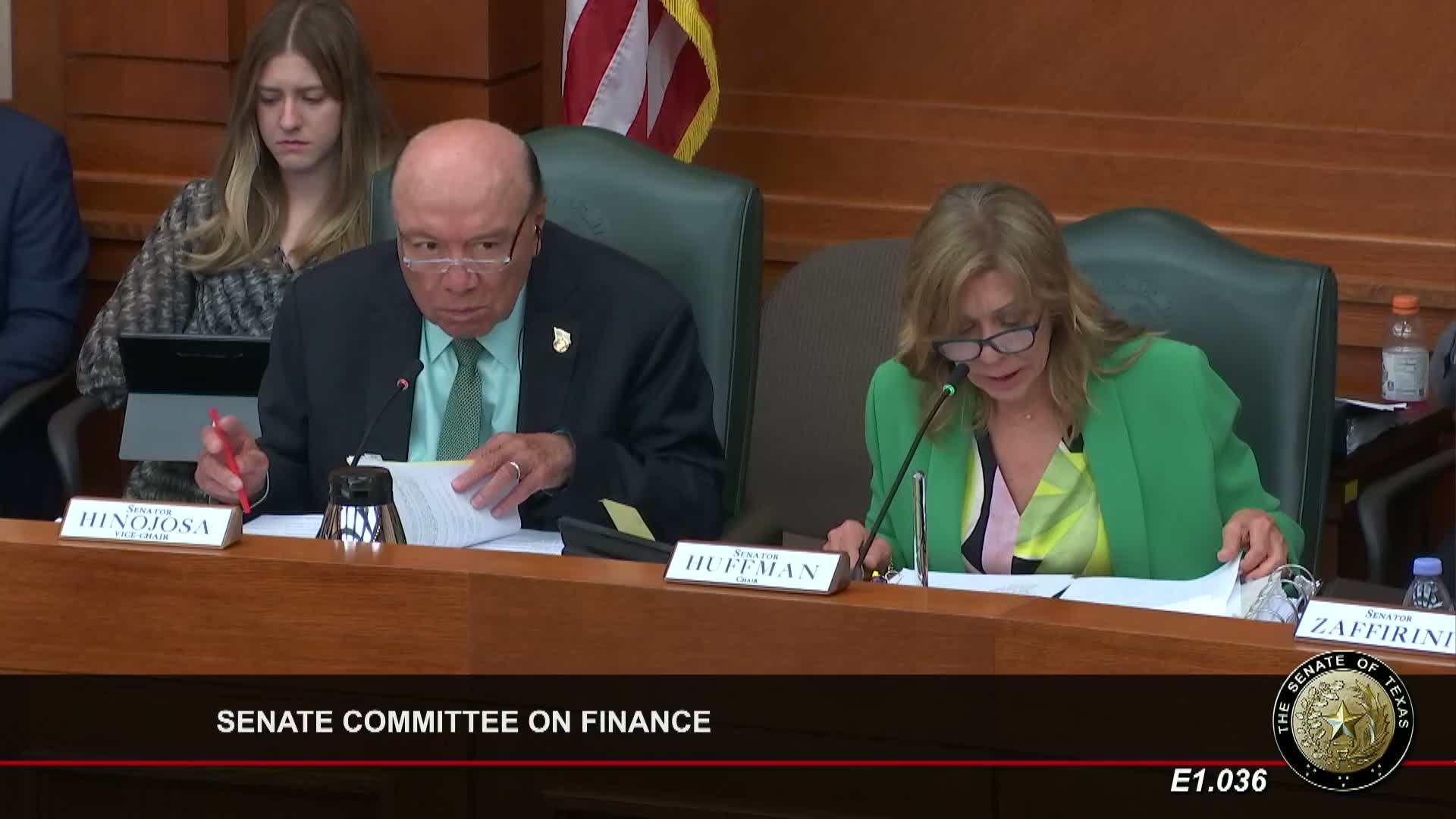
The Senate Finance Committee heard testimony on Senate Bill 782, which would create a temporary tax exemption to encourage restimulation of inactive horizontal oil and gas wells.
Senator Kelly King, the bill’s sponsor, told the committee the measure would exempt service taxes for a qualifying well for up to 36 consecutive months or until exempt taxes equal the lesser of the restimulation cost or $750,000. The bill would require certification of eligible wells by the Railroad Commission.
Proponents said the exemption could prompt operators to invest in mature wells that currently produce little or nothing. “This is an activity that largely is not happening today,” Dean Foreman, chief economist for the Texas Oil and Gas Association, testified. Foreman said restimulation has the potential to extend the life of mature wells, avoid liabilities, and generate mineral and tax revenue that otherwise would not occur.
Industry witnesses said restimulation of an inactive well can be costly; Lynn Pham, a resource witness from the comptroller’s office, told senators a typical restimulation (refrac) can cost about $4 million. Pham also explained the committee sub had been revised to focus on inactive wells with little to no current production, which comptroller staff said could reduce near-term fiscal exposure because many targeted wells now generate no taxable production.
Committee members pressed for clarity on the bill’s fiscal note. The comptroller’s office explained the original fiscal estimate was large but the committee substitute’s focus on inactive wells and other drafting changes reduced the projected near-term cost; staff said the intent is to capture additional production that otherwise would not be taxed and that final fiscal impacts will depend on how many operators take up the incentive and on certification by the Railroad Commission.
Witnesses from the Texas Alliance of Energy Producers and the Texas Oil and Gas Association said the policy would stimulate local economic activity and address inactive and orphan wells, while committee members asked for clearer definitions of “inactive” versus “abandoned” wells and how the Railroad Commission would certify eligibility.
The committee did not finalize the bill and left the committee substitute pending for further work and fiscal clarification.